
Published: 29 May 2026 | Last Updated: 29 May 2026
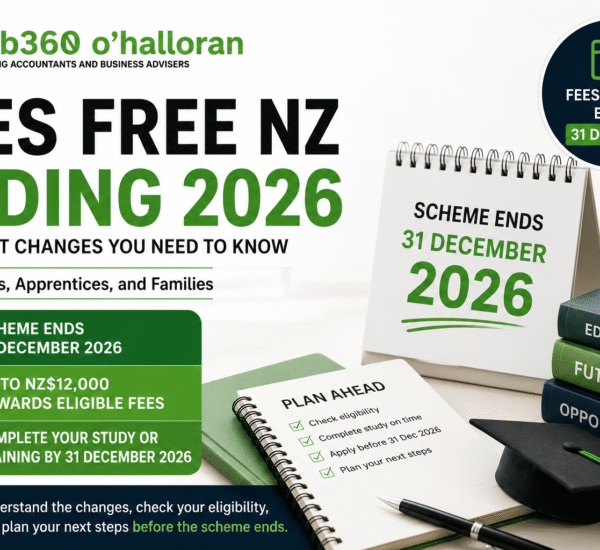
Fees Free NZ Ending 2026 is an important update for students, apprentices, and families across New Zealand. The Government has confirmed that the current Fees Free scheme will end on 31 December 2026, meaning eligible learners must complete their qualification by this deadline to receive support.
The New Zealand Government has confirmed that the current Fees Free NZ scheme will end on 31 December 2026. This affects the final year of eligible tertiary study and the final 2 years of eligible work-based learning, including apprenticeships.
Students who complete eligible study or training after 31 December 2026 will no longer qualify for Fees Free support under the current programme.
For students, families, apprentices, and employers, understanding these deadlines is essential for education planning and financial decision-making.
Fees Free is a government-funded programme that helps eligible learners recover some of the costs associated with tertiary education and work-based learning.
Under the current system, Fees Free covers:
Unlike the previous first-year Fees Free programme, students now receive support after successfully completing their qualification or programme.
According to Inland Revenue, learners may still qualify if they:
Eligible learners can receive up to NZ$12,000 towards approved fees.
This is one of the most common questions students are asking.
You may still qualify for Fees Free if all eligibility requirements are met.
You will not be eligible under the current Fees Free programme.
This makes completion timing especially important for students currently planning study pathways.
Many learners incorrectly assume Fees Free automatically reduces fees at enrolment.
The current process works differently:
Students usually pay fees upfront, often through personal funds or a student loan.
The qualification or work-based programme must be completed and passed before applying.
Applications are submitted through Inland Revenue’s myIR system.
If you have a student loan, the payment is applied to your loan balance.
If you do not have a student loan, the payment can be deposited into your bank account.
The end of Fees Free NZ means some learners may need to reassess future education funding plans.
Students and families should consider:
Understanding these financial commitments early can help reduce financial stress and improve education planning outcomes.
For many New Zealand students, apprentices, and families, Fees Free has been an important source of education funding support.
The end of the programme means future learners may need to rely more heavily on:
Understanding eligibility deadlines now can help learners make informed decisions before the programme closes.
For students currently planning tertiary education or apprenticeships, Fees Free NZ Ending 2026 is a key deadline to understand. Reviewing eligibility requirements, qualification completion dates, and funding options now can help learners make informed financial decisions before the programme closes.
Yes. The Government has confirmed that Fees Free for final-year tertiary study and final 2 years of work-based learning will end on 31 December 2026.
Yes. Eligible learners who complete their qualification by 31 December 2026 may still qualify.
Eligible learners can receive up to NZ$12,000 towards qualifying fees.
No. If you do not have a student loan, your entitlement may be paid directly into your bank account.
Eligible study or work-based learning must be completed by 31 December 2026.
If you are currently studying, planning tertiary education, or considering an apprenticeship, the most important action is to confirm whether your qualification can be completed before 31 December 2026.
Review your eligibility, understand application deadlines, and ensure your myIR information remains current.
Because education funding can have long-term financial implications, students and families should also consider budgeting, student loan planning, and future financial obligations when making study decisions.
Education costs, student loans, and long-term financial commitments can have a significant impact on personal finances.
DFK Orb360 helps individuals and families understand financial planning, budgeting, cash flow management, and long-term financial decision-making.
With Fees Free NZ ending in 2026, understanding future education costs and financial commitments is more important than ever.
Whether you’re planning tertiary study, an apprenticeship, or reviewing long-term financial goals, DFK Orb360 can help you make informed financial decisions.

Copyright © 2025 Marketing Transformers | All Rights Reserved.


 09 377 4238
 Level 2, 6 Kingdon Street, Newmarket, Auckland
 help@orb360.co.nz