

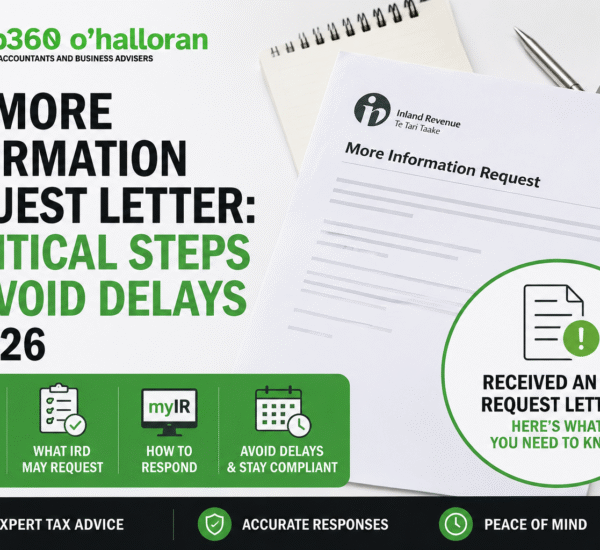
IRD More Information Request Letter: What It Means and What You Should Do
An IRD More Information Request Letter is sent when Inland Revenue requires additional details before finalising an individual’s income tax assessment. The request does not automatically mean you are being audited. In most cases, IRD simply needs supporting documents or clarification to ensure your tax assessment is accurate.
As Inland Revenue (IRD) processes individual income tax assessments across New Zealand, some taxpayers may receive an IRD More Information Request Letter before their assessment is finalised.
While receiving a letter from IRD can feel concerning, it is important to understand that these requests are often part of Inland Revenue’s standard review process. In most cases, IRD simply requires additional information or supporting documents to verify details before completing an assessment.
This guide explains why IRD sends More Information Request Letters, what documents may be required, and the steps taxpayers can take to respond effectively.
Understanding an IRD More Information Request Letter
An IRD More Information Request Letter is issued when Inland Revenue requires additional details before finalising an individual’s income tax assessment.
The request may relate to income records, tax credits, deductions, overseas income, investment earnings, or other information that needs verification. Receiving a request does not automatically mean you are being audited. Instead, it is often a routine step used by IRD to ensure tax assessments are accurate and complete.
Why Has IRD Sent Me a More Information Request Letter?
Inland Revenue receives information from employers, banks, KiwiSaver providers, investment platforms, government agencies, and other third parties. If the information held by IRD does not align with your tax records, further clarification may be required.
Common reasons for receiving an IRD More Information Request Letter include:
- Differences between employer-reported income and IRD records.
- Verification of interest, dividends, or investment income.
- Confirmation of overseas income declarations.
- Supporting evidence for tax credits or deductions.
- Missing or incomplete information within a tax assessment.
- Clarification of information submitted through myIR.
What Information Could IRD Request?
The specific information requested will depend on your individual circumstances. Common examples include:
- Payslips or salary records.
- Bank interest summaries.
- Dividend statements.
- Investment income reports.
- Rental income documentation.
- Donation receipts supporting tax credit claims.
- Foreign income records and overseas tax documents.
- Evidence supporting specific deductions or adjustments.
Providing accurate documentation promptly can help prevent delays in processing your assessment.
What Should You Do After Receiving an IRD Request?
1. Read the Letter Carefully
Review the request thoroughly and identify exactly what information IRD requires. Pay close attention to any deadlines specified in the correspondence.
2. Gather Supporting Documentation
Collect all relevant documents before responding. Ensure information is complete, legible, and consistent with your records.
3. Respond Before the Deadline
Meeting the response deadline can help prevent unnecessary delays in finalising your assessment.
4. Submit Information Through myIR
Many requests can be completed electronically through your myIR account, making the process faster and easier.
What Happens If You Do Not Respond?
Failing to provide the requested information may result in:
- Delays in processing your income tax assessment.
- Delays in receiving a tax refund.
- IRD making decisions based on available information.
- Additional follow-up requests from Inland Revenue.
- Potential adjustments to your tax position.
Responding promptly is generally the best way to ensure your assessment is completed accurately.
Does an IRD More Information Request Mean You Are Being Audited?
No. Most More Information Request Letters are part of IRD’s standard verification procedures and should not be interpreted as a formal audit.
Many taxpayers receive requests for clarification each year without any further compliance action being taken.
However, it is still important to take the request seriously and provide accurate information within the required timeframe.
Official IRD Guidance on More Information Request Letters
According to Inland Revenue, some taxpayers may receive a More Information Request Letter when additional details are required before an income tax assessment can be finalised. You can read the official IRD announcement here: Individual Income Tax Assessments – More Information Request Letters .
Submitting Information Through myIR
Many taxpayers can provide requested documentation electronically using their myIR account. This secure online service allows individuals to communicate with Inland Revenue, view tax records, and upload supporting information. Learn more about myIR here: myIR Online Services .
Understanding Your Income Tax Obligations
If you are unsure how your income, investments, or tax credits affect your assessment, Inland Revenue provides detailed guidance for individual taxpayers. Visit: Income Tax for Individuals for further information.
New Zealand Tax Rules and Legislation
Tax obligations in New Zealand are governed by legislation and regulations that are publicly available through the official government legislation portal. You can access New Zealand legislation here: New Zealand Legislation .
When Should You Seek Professional Tax Advice?
While many requests are straightforward, professional advice may be beneficial if:
- You have overseas income.
- You operate a business or are self-employed.
- You have multiple income sources.
- You are unsure which documents should be supplied.
- You disagree with information held by IRD.
- Your tax affairs involve complex investments or trusts.
Seeking expert advice can help reduce errors and ensure your response addresses IRD’s concerns effectively.
How DFK Orb360 O’Halloran Can Help
At DFK Orb360 O’Halloran, we assist individuals and businesses throughout New Zealand with tax compliance, IRD correspondence, income tax assessments, and Inland Revenue reviews.
If you have received an IRD More Information Request Letter, our experienced tax advisers can help you:
- Understand the information being requested.
- Review supporting documentation.
- Prepare accurate responses.
- Communicate with Inland Revenue.
- Reduce the risk of assessment delays.
Our team works closely with clients to ensure tax obligations are met while providing practical and timely advice.
Need Help Responding to an IRD Request?
If you have received an IRD More Information Request Letter and would like professional guidance, contact the DFK Orb360 O’Halloran team.
Contact us:
https://dfkorb360.co.nz/contact-us/
Related Resources
- IRD Home Office Square Metre Rate 2026
- How to Pay IRD Tax Online
- DFK Orb360 Tax & Business Advisory Services
Frequently Asked Questions
How long do I have to respond to an IRD More Information Request Letter?
The response timeframe is specified in the letter. Taxpayers should respond as soon as possible to avoid delays.
Can I provide documents through myIR?
Yes. Many information requests can be completed online through your myIR account.
Will my tax refund be delayed?
Potentially. IRD generally requires all requested information before finalising an assessment and issuing any refund.
What happens if I provide incorrect information?
Providing inaccurate information may lead to additional queries from IRD or further delays. Always ensure documentation is complete and accurate.
Is a More Information Request the same as a tax audit?
No. Most requests are part of routine assessment reviews and do not indicate a formal audit.
Final Thoughts
Receiving an IRD More Information Request Letter is not usually a cause for concern. In most situations, Inland Revenue simply needs additional information before completing your income tax assessment.
By responding promptly, providing accurate documentation, and seeking professional advice where necessary, taxpayers can minimise delays and ensure their assessment is processed correctly.
If you require assistance, the team at DFK Orb360 O’Halloran is available to help you navigate the process with confidence.
Disclaimer: This article is intended for general information purposes only and should not be relied upon as tax advice. Professional advice should be sought for your specific circumstances.



 09 377 4238
 Level 2, 6 Kingdon Street, Newmarket, Auckland
 help@orb360.co.nz