
Published: 9 July 2026 | Last Updated: 9 July 2026
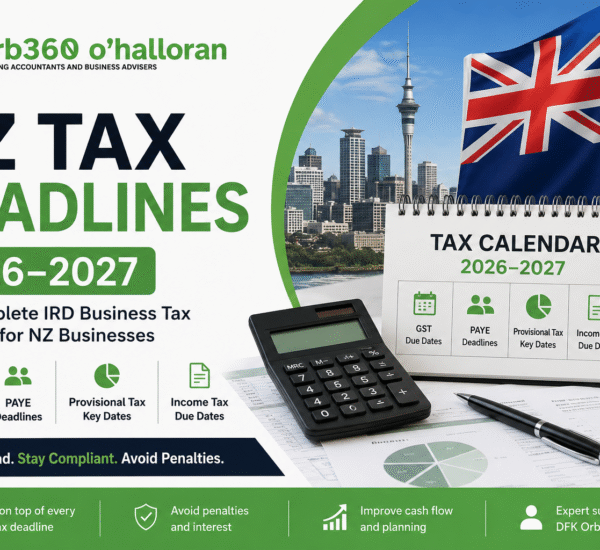
New Zealand businesses must meet several important Inland Revenue (IRD) tax deadlines throughout the financial year, including GST returns, PAYE reporting, provisional tax instalments, Fringe Benefit Tax (FBT) and annual income tax returns. Missing these deadlines can result in late filing penalties, interest charges and unnecessary compliance issues. Keeping an organised tax calendar or working with a Chartered Accountant helps ensure every return and payment is submitted accurately and on time. Official filing dates are published by Inland Revenue and may vary depending on your balance date, GST filing frequency and whether you have an extension of time through a registered tax agent. :contentReference[oaicite:0]{index=0}
Understanding NZ Tax Deadlines is one of the most important responsibilities for every New Zealand business owner. Following the correct filing schedule helps you avoid penalties and keep your business compliant.
If you’re a business owner, contractor, sole trader or company director, understanding NZ Tax Deadlines is essential for maintaining compliance, avoiding penalties and planning your cash flow effectively. This comprehensive guide explains every major tax obligation for the 2026–2027 financial year, including GST, PAYE, provisional tax and annual income tax requirements.
Meeting NZ tax deadlines helps businesses avoid IRD penalties, minimise interest charges, maintain healthy cash flow and remain compliant with New Zealand tax legislation.
Many businesses focus only on preparing tax returns, but successful financial management starts with understanding when returns and payments are due. Filing on time demonstrates good business governance and reduces the risk of unnecessary compliance reviews.
Whether you operate a small business, manage a growing company or work as a sole trader, keeping track of NZ Tax Deadlines allows you to:
Almost every individual or organisation earning business income in New Zealand has tax obligations. The exact deadlines depend on your business structure, GST registration, payroll responsibilities and provisional tax requirements.
This guide is designed for:
Your filing dates may differ depending on your accounting balance date or whether you use a registered tax agent who has an approved extension of time with Inland Revenue. :contentReference[oaicite:1]{index=1}
This guide explains the most important business tax obligations administered by Inland Revenue.
| Tax Type | Who It Applies To | Why It Matters |
|---|---|---|
| GST | GST-registered businesses | Goods and Services Tax returns and payments |
| PAYE | Employers | Employee tax deductions and payroll reporting |
| Provisional Tax | Eligible businesses and taxpayers | Income tax paid throughout the year |
| Income Tax | Individuals and businesses | Annual tax return and final tax obligations |
| Fringe Benefit Tax (FBT) | Employers providing fringe benefits | Tax on non-cash employee benefits |
Each section of this guide explains who the tax applies to, common due dates, practical compliance tips and how a Chartered Accountant can help simplify the process.
Every New Zealand business should monitor GST return due dates, PAYE filing deadlines, provisional tax instalments, annual income tax returns and Fringe Benefit Tax (FBT) obligations. The exact dates depend on your filing frequency, business structure and whether you use a registered tax agent with an extension of time.
The following overview explains the major Inland Revenue tax obligations that most businesses need to manage during the 2026–2027 financial year.
Businesses registered for GST must file GST returns and make any GST payments by their due dates. Filing frequencies can be monthly, two-monthly or six-monthly depending on the business.
GST (Goods and Services Tax) is one of the most common tax obligations for New Zealand businesses. Keeping accurate records throughout the year makes filing easier and reduces the risk of errors.
Businesses employing staff must report payroll information and pay PAYE to Inland Revenue according to their reporting obligations. Accurate payroll reporting helps employers remain compliant while ensuring employees pay the correct amount of tax.
PAYE obligations apply to most employers operating in New Zealand. Payroll software and cloud accounting platforms such as Xero simplify payroll processing and improve reporting accuracy.
Many businesses pay provisional tax throughout the year rather than paying all of their income tax in one payment. Provisional tax helps spread tax obligations across multiple instalments and improves cash-flow management.
If your business is required to pay provisional tax, your payment schedule will depend on the calculation method used and your accounting balance date.
Businesses and individuals must file annual income tax returns with Inland Revenue. Filing early provides more time to review financial information, identify tax planning opportunities and correct errors before submission.
Your annual income tax obligations depend on your business structure, accounting year and whether you use a registered tax agent.
| Business Type | Annual Income Tax Return Required? |
|---|---|
| Sole Trader | Yes |
| Company | Yes |
| Partnership | Yes |
| Trust | Yes |
Employers providing certain non-cash benefits such as company vehicles may need to file Fringe Benefit Tax (FBT) returns. FBT obligations vary depending on the benefits provided and the employer’s filing method.
Many businesses overlook FBT requirements until filing time. Regular reviews help ensure employee benefits are correctly reported and taxed.
| Tax Type | Who Must File | Typical Filing Frequency |
|---|---|---|
| GST | GST Registered Businesses | Monthly, Two-Monthly or Six-Monthly |
| PAYE | Employers | Monthly or Twice Monthly |
| Provisional Tax | Eligible Businesses | Usually Three Instalments |
| Income Tax | Individuals & Businesses | Annually |
| FBT | Employers Providing Fringe Benefits | Quarterly or Annually |
Managing GST, PAYE, provisional tax and annual income tax deadlines can be time-consuming. DFK Orb360 helps businesses across New Zealand stay organised, compliant and confident throughout the financial year.
New Zealand businesses have tax obligations throughout the year rather than only at year-end. Depending on your GST filing frequency, PAYE obligations and provisional tax requirements, you may need to file returns or make tax payments every month, every two months or quarterly. Keeping a monthly tax calendar helps you stay compliant and avoid Inland Revenue penalties.
If you’re unsure which deadlines apply to your business, speaking with a Chartered Accountant can help you create a personalised tax calendar based on your business structure and Inland Revenue obligations.
April marks the beginning of the new financial year for many New Zealand businesses. It’s the ideal time to review financial records, reconcile bank accounts and prepare for upcoming GST and provisional tax obligations.
Need help preparing your business for the new financial year? Visit IRD Guru for practical New Zealand tax resources and expert guidance.
Many GST-registered businesses have important GST filing obligations during May, depending on their taxable period. Businesses should also review upcoming provisional tax payments and annual tax planning opportunities.
Maintaining accurate bookkeeping throughout the year makes GST filing significantly easier. Inland Revenue notes that GST returns generally need to be filed by the due date for your taxable period, with specific exceptions such as the period ending 31 March being due on 7 May. :contentReference[oaicite:0]{index=0}
Related Reading: Complete GST Guides on IRD Guru.
June is an excellent month to review your business performance before the next round of tax obligations.
July is one of the busiest tax months for many New Zealand businesses. Depending on your filing cycle, GST returns and payments may be due, making early preparation essential.
Businesses using cloud accounting platforms like Xero can streamline GST preparation by reconciling transactions regularly instead of waiting until filing deadlines.
Learn more about GST compliance and filing best practices on IRD Guru.
August is a good time to review provisional tax estimates, outstanding invoices and financial performance for the first part of the financial year.
Businesses should continue monitoring GST, PAYE and provisional tax obligations while ensuring financial records remain accurate and complete.
October is an important month for reviewing tax planning strategies before the end of the calendar year. Businesses should also ensure all payroll records remain accurate and compliant.
The GST taxable period ending 30 November has a different filing deadline from most GST periods. Businesses should check Inland Revenue’s published due dates to ensure timely filing.
Inland Revenue states that GST returns for the taxable period ending 30 November are generally due on 15 January rather than the usual 28th of the following month. :contentReference[oaicite:1]{index=1}
December is also an excellent time to schedule a tax planning meeting with your Chartered Accountant before the new calendar year begins.
Many businesses miss important NZ Tax Deadlines because they rely on memory rather than maintaining a structured compliance calendar.
Using accounting software together with professional accounting advice helps businesses stay organised and significantly reduces the risk of late filing penalties.
To better understand your business tax obligations, explore these additional resources:
Tax compliance doesn’t have to be stressful. Whether you need help with GST, PAYE, provisional tax or annual income tax returns, DFK Orb360 provides proactive accounting support to businesses across New Zealand.
Missing an NZ tax deadline can result in Inland Revenue (IRD) late filing penalties, interest charges on unpaid tax and additional compliance actions depending on the type of tax and how long it remains overdue. Filing your returns on time—even if you cannot pay immediately—is generally better than failing to file altogether.
Every year, thousands of New Zealand businesses incur unnecessary penalties because they forget important filing dates or fail to prepare their accounting records in advance. Keeping track of NZ Tax Deadlines helps businesses remain compliant while avoiding avoidable costs.
Depending on your tax obligations, Inland Revenue may apply one or more of the following:
The exact penalty depends on the tax involved, the amount owing and how long the payment or return remains outstanding.
| Tax Type | Possible Consequences |
|---|---|
| GST Returns | Late filing penalties, interest and outstanding GST obligations. |
| PAYE | Late payment charges, payroll compliance issues and employer obligations. |
| Provisional Tax | Interest charges and increased tax payable if payments are delayed. |
| Income Tax | Late filing penalties, interest and potential Inland Revenue follow-up. |
| Fringe Benefit Tax (FBT) | Late filing charges and additional compliance obligations. |
Most missed tax deadlines happen because businesses wait until the last minute, keep incomplete records or don’t have a structured tax calendar.
Some of the most common reasons include:
Preventing tax penalties is much easier than fixing them afterwards. Businesses that adopt proactive financial management generally experience fewer compliance issues and better cash-flow planning.
A Chartered Accountant monitors your important tax deadlines, prepares accurate tax returns, reviews financial records and communicates with Inland Revenue when required, helping your business stay compliant throughout the year.
Use this checklist every month to reduce the risk of missing an important tax deadline.
To better understand New Zealand tax obligations, explore these useful guides:
Don’t let missed deadlines result in unnecessary penalties or interest charges. Our experienced Chartered Accountants help businesses across New Zealand stay organised, compliant and financially confident throughout the year.
💬 Speak with a Chartered Accountant
If you’re unsure which NZ Tax Deadlines apply to your business, speaking with a Chartered Accountant can help you create a personalised compliance calendar based on your IRD obligations.
Below are answers to the most frequently asked questions about NZ Tax Deadlines, GST, PAYE, provisional tax and Inland Revenue compliance. Each answer is written to help business owners quickly understand their obligations.
NZ Tax Deadlines are the official dates set by Inland Revenue (IRD) for filing tax returns, paying taxes and reporting financial information. These include GST returns, PAYE reporting, provisional tax instalments, Fringe Benefit Tax (FBT) and annual income tax returns.
Anyone operating a business in New Zealand—including sole traders, companies, partnerships, trusts, contractors and employers—may have tax obligations. The exact deadlines depend on your business structure and the taxes you are registered for.
GST returns may be filed monthly, every two months or every six months depending on your taxable supplies and the filing frequency approved by Inland Revenue.
PAYE (Pay As You Earn) is the tax employers deduct from employee wages before they are paid. Employers must report payroll information and pay PAYE to Inland Revenue according to their reporting schedule.
Provisional tax allows eligible businesses and taxpayers to pay their expected income tax throughout the year instead of making one large payment at year-end. It helps improve cash-flow management and reduces the likelihood of unexpected tax bills.
Missing an NZ Tax Deadline may result in late filing penalties, interest charges and additional Inland Revenue compliance action. Filing your return as soon as possible and contacting IRD early can help reduce further issues.
Yes, but late filing may attract penalties and interest depending on the type of return and how long it remains overdue. If you cannot file on time, contact Inland Revenue or your Chartered Accountant as early as possible.
Terminal tax is the remaining amount of income tax payable after provisional tax credits and other payments have been taken into account. It is usually paid after your annual tax return has been assessed.
Businesses should keep invoices, receipts, payroll records, bank statements, GST information, financial statements and supporting documentation required by Inland Revenue. Accurate record keeping makes tax compliance significantly easier.
Yes. A Chartered Accountant can prepare tax returns, monitor filing dates, calculate provisional tax, manage GST obligations and communicate directly with Inland Revenue on your behalf.
Many small businesses manage their own bookkeeping, but working with a Chartered Accountant helps improve compliance, reduce tax risks and identify valuable tax planning opportunities.
Yes. Sole traders must meet their GST obligations if registered, file annual income tax returns and may also have provisional tax obligations depending on their tax position.
Xero simplifies bookkeeping, GST reporting, payroll processing and financial reporting. While accounting software improves efficiency, businesses should still seek professional advice to ensure compliance with Inland Revenue requirements.
If you cannot pay your tax by the due date, you should contact Inland Revenue as soon as possible. In some situations, payment arrangements may be available depending on your circumstances.
The best way to avoid missing tax deadlines is to maintain accurate bookkeeping, reconcile accounts regularly, use cloud accounting software and work with an experienced Chartered Accountant who monitors your compliance obligations.
The latest Inland Revenue filing dates are available on the official IRD website. You can also read practical tax guides, GST resources and business compliance articles at IRD Guru.
If you’re unsure which NZ Tax Deadlines apply to your business, speaking with a Chartered Accountant can help you create a personalised compliance calendar based on your IRD obligations.
Whether you need help with GST returns, PAYE, provisional tax, annual income tax returns or overall business compliance, DFK Orb360 is here to help. Our experienced Chartered Accountants support businesses across New Zealand with proactive advice, accurate reporting and personalised tax planning.
Want an easy way to keep track of GST, PAYE, provisional tax and income tax deadlines?
Download our FREE NZ Tax Deadlines 2026–2027 Planner created by the Chartered Accountants at DFK Orb360.
Yes. A Chartered Accountant helps businesses meet NZ Tax Deadlines by preparing GST returns, managing PAYE obligations, calculating provisional tax, filing annual income tax returns and ensuring compliance with Inland Revenue (IRD) requirements. Working with a professional accountant reduces the risk of penalties while allowing business owners to focus on growing their business.
Managing tax obligations involves much more than remembering filing dates. Businesses must maintain accurate financial records, reconcile transactions, monitor cash flow and prepare tax returns correctly. A Chartered Accountant provides proactive advice throughout the year so your business remains compliant and financially organised.
A Chartered Accountant provides ongoing support that extends beyond annual tax returns.
By working with a professional advisor throughout the year, businesses can reduce compliance risks and make better financial decisions based on accurate reporting.
You should consider hiring a Chartered Accountant as soon as your business starts generating regular income, employs staff, registers for GST or requires ongoing financial reporting. Early professional advice often prevents costly mistakes later.
Many businesses wait until tax deadlines are approaching before seeking advice. However, proactive accounting throughout the year generally results in better tax planning, improved cash flow and more accurate financial reporting.
DFK Orb360 provides professional accounting and taxation services tailored to businesses throughout New Zealand. Our team combines practical experience with modern cloud accounting solutions to help clients remain compliant while achieving their financial goals.
Whether you’re a sole trader, startup, contractor or established company, we provide personalised accounting solutions designed around your business.
Looking for more guidance? Explore these helpful resources:
Whether you’re filing your first GST return, managing payroll, preparing provisional tax or planning for annual income tax, our Chartered Accountants are here to help. We’ll keep your business compliant so you can focus on what matters most—growing your business.
Download our printable IRD Business Tax Calendar and never miss another tax deadline.
Download Now →https://dfkorb360.co.nz/wp-content/uploads/2026/07/GST-Filing-Checklist.pdfThe most effective way to manage NZ Tax Deadlines is to plan throughout the year rather than waiting until filing time. Regular bookkeeping, cash flow forecasting, tax planning meetings and accurate financial reporting help businesses avoid surprises, reduce compliance risks and make informed financial decisions.
Successful businesses don’t just prepare tax returns—they build systems that make tax compliance simple. Proactive planning gives business owners more time to focus on customers, growth and profitability instead of rushing to meet Inland Revenue deadlines.
Instead of thinking about tax only when a return is due, establish a monthly routine that keeps your financial records accurate and up to date.
These habits make it easier to prepare GST returns, annual accounts and income tax returns while reducing last-minute pressure.
One of the biggest reasons businesses struggle with tax payments is poor cash flow planning. Forecasting future income and expenses helps you set aside money for GST, PAYE and provisional tax before payment dates arrive.
Cash flow forecasting also gives you greater confidence when making hiring decisions, purchasing equipment or investing in business growth.
Cloud accounting platforms such as Xero help businesses automate bookkeeping, reconcile bank transactions and generate financial reports in real time.
Benefits include:
Quarterly financial reviews help identify issues before they become larger problems. They also create opportunities to improve profitability, reduce unnecessary expenses and prepare for upcoming tax obligations.
| Quarterly Review Area | Why It Matters |
|---|---|
| Revenue | Measure business growth. |
| Expenses | Identify cost-saving opportunities. |
| Cash Flow | Prepare for future tax payments. |
| GST | Confirm accurate reporting. |
| Payroll | Check PAYE compliance. |
| Profitability | Support better business decisions. |
Preparing for year-end before your balance date reduces stress and creates more opportunities for effective tax planning. Businesses that organise their financial records early usually complete their annual accounts more efficiently.
Before year-end, consider:
Effective tax planning isn’t just about meeting deadlines—it’s about improving cash flow, making informed decisions and building a stronger business. DFK Orb360 works with businesses across New Zealand to provide proactive accounting, tax planning and business advisory services all year round.

Copyright © 2025 Marketing Transformers | All Rights Reserved.


 09 377 4238
 Level 2, 6 Kingdon Street, Newmarket, Auckland
 help@orb360.co.nz