
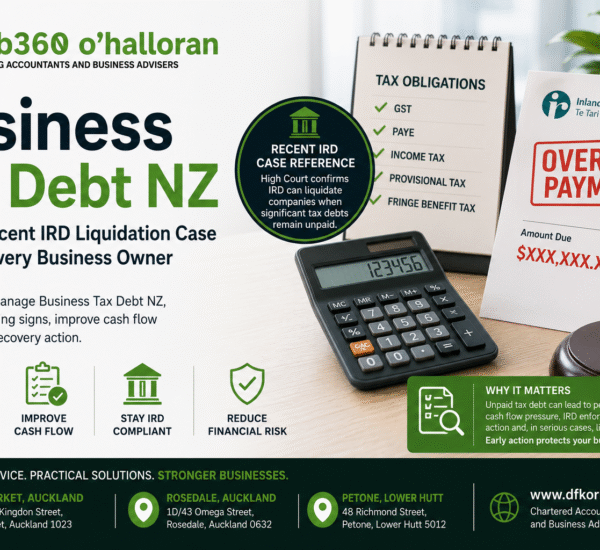
Business Tax Debt NZ is one of the most common financial challenges affecting small and medium-sized businesses. Whether it begins with overdue GST, unpaid PAYE, provisional tax or cash flow problems, unresolved business tax debt can grow quickly and may eventually result in Inland Revenue (IRD) recovery action. Understanding the warning signs and taking early action can help protect your business and improve long-term financial stability.
A recent high-profile Inland Revenue liquidation case highlighted the serious consequences businesses can face when significant tax liabilities remain unpaid. While every situation is unique, the case serves as an important reminder that proactive tax compliance and sound financial management are essential for every New Zealand business.
Most businesses don’t fail because of a single bad decision. Financial problems usually develop gradually through declining cash flow, unpaid GST, overdue PAYE, increasing operating costs and poor financial visibility. When these issues remain unresolved, tax debt can continue to grow until Inland Revenue (IRD) begins formal recovery action.
A recent high-profile Inland Revenue liquidation case, reported by New Zealand media, highlighted the serious consequences businesses can face when significant tax liabilities remain unpaid. While every situation is unique and depends on its individual facts, the case serves as a valuable reminder that ignoring tax obligations can place any business at risk.
For business owners, directors and shareholders, the lesson is clear—understanding how IRD liquidation in New Zealand works and recognising the early warning signs can help prevent financial challenges from becoming business-ending events.
This guide explains how Inland Revenue recovers unpaid tax, when business liquidation becomes a possibility, the warning signs every director should recognise and the practical strategies businesses can use to strengthen their financial position.
Yes. Inland Revenue can apply to the High Court to place a company into liquidation if significant tax debts remain unpaid and other recovery options have been unsuccessful.
Before liquidation, IRD will generally attempt to recover outstanding tax through reminders, collection activity and payment arrangements where appropriate. However, if a business continually fails to meet its tax obligations, legal recovery action—including liquidation—may become necessary.
A recently reported Inland Revenue case involving alleged tax liabilities exceeding NZ$15 million has attracted significant attention across New Zealand’s business community.
Rather than focusing on the specific parties involved, the case provides several important lessons for every business owner.
Whether your business is a startup, a growing company or an established organisation, maintaining strong financial controls and tax compliance can significantly reduce long-term business risk.
Many business owners assume Inland Revenue only pursues businesses that intentionally avoid paying tax.
In reality, tax debt often develops because of everyday business challenges such as:
When business finances aren’t reviewed regularly, tax obligations can quietly accumulate until they become increasingly difficult to manage.
This is why proactive financial management is just as important as meeting tax deadlines.
Inland Revenue’s objective is to encourage businesses to meet their tax obligations voluntarily. Legal action is generally considered after other recovery methods have been unsuccessful.
Depending on the circumstances, IRD’s recovery process may include:
The earlier businesses respond to financial challenges, the more opportunities they generally have to improve their situation before stronger enforcement action becomes necessary.
Concerned about your business’s financial position?
Our complimentary Business Financial Health Scorecard helps you evaluate key financial areas that commonly contribute to tax debt and business risk.
The guide includes:
Complete the form below to receive your complimentary copy.
By the end of this guide you’ll understand:
Next: We’ll explain how the IRD liquidation process works, what happens after a company enters liquidation, the most common causes of business tax debt and why cash flow management is one of the most effective ways to reduce financial risk.
When a business falls behind on its tax obligations, liquidation is not usually the first action Inland Revenue (IRD) takes. In most situations, IRD follows a structured debt recovery process that gives businesses opportunities to resolve outstanding tax liabilities before legal proceedings become necessary.
The exact process varies depending on the circumstances of each business, but if tax debts remain unresolved, IRD may ultimately apply to the High Court to place the company into liquidation.
| Stage | What Happens |
|---|---|
| 1 | Tax becomes overdue. |
| 2 | IRD issues reminders and requests payment. |
| 3 | Interest and penalties may begin accumulating. |
| 4 | IRD may contact the business to discuss payment options. |
| 5 | If the debt remains unresolved, legal recovery action may commence. |
| 6 | IRD may apply to the High Court for liquidation. |
| 7 | If approved, a liquidator is appointed to administer the company. |
Every situation is different, and businesses experiencing financial difficulties should seek professional advice as early as possible.
Once the High Court appoints a liquidator, the company’s directors generally lose control of the business.
The liquidator becomes responsible for:
The liquidator also prepares reports for creditors and may investigate transactions that occurred before liquidation if required under applicable legislation.
Tax debt is often a symptom of broader financial challenges rather than the primary issue itself.
Some of the most common reasons businesses accumulate unpaid tax include:
Without regular financial monitoring, these challenges can gradually affect a business’s ability to meet GST, PAYE and income tax obligations.
Healthy businesses don’t simply focus on profit—they actively manage cash flow.
Even profitable businesses can struggle financially if cash isn’t available when tax payments become due.
Some common cash flow challenges include:
When cash flow becomes tight, businesses sometimes postpone GST or PAYE payments to meet immediate operating expenses. Over time, this can lead to increasing tax debt and additional financial pressure.
Most businesses experience warning signs before significant financial problems develop.
Recognising these indicators early gives business owners more time to improve their financial position.
Some of the most common warning signs include:
Ignoring these warning signs can increase financial pressure and reduce the options available to resolve outstanding tax obligations.
Many business owners delay seeking professional advice because they believe financial problems will improve over time.
Unfortunately, unresolved tax debt can continue to increase through:
Reviewing your financial position early provides greater flexibility to improve cash flow, strengthen compliance and make informed business decisions before financial difficulties become more serious.
Liquidation is typically the result of ongoing financial pressure rather than a single missed tax payment. Businesses that maintain accurate financial records, monitor cash flow regularly and address tax obligations early are generally in a stronger position to manage risk and protect long-term business performance.
Next: We’ll explore practical strategies to reduce business tax debt, strengthen cash flow, improve IRD compliance and identify financial risks before they threaten your business.
While no business is immune to financial challenges, most tax debt problems can be reduced—or even avoided—through proactive financial management. The key is identifying issues early and taking action before they affect your ability to meet GST, PAYE and income tax obligations.
The following strategies can help businesses strengthen their financial position and reduce the risk of Inland Revenue recovery action.
Cash flow is often the first indicator that a business is experiencing financial pressure. Regular monitoring allows business owners to identify potential shortfalls before tax obligations become overdue.
Your monthly review should include:
Businesses with accurate cash flow forecasts are generally better prepared to manage tax obligations and unexpected expenses.
One of the most common reasons businesses accumulate tax debt is using GST or PAYE funds to cover day-to-day operating expenses.
A practical approach is to transfer GST and PAYE amounts into a separate bank account as soon as customer payments are received or payroll is processed.
This helps ensure funds remain available when payment deadlines arrive.
Many business owners only review their financial statements at the end of the financial year.
Regular management reports provide valuable insights into:
Better financial visibility enables better business decisions.
Submitting tax returns by their due dates is an important part of maintaining IRD compliance.
Businesses should ensure they lodge:
Timely filing helps maintain accurate records and provides a clearer understanding of outstanding tax obligations.
Many businesses experience compliance issues simply because they are unsure which tax obligations apply to them.
Regular reviews can help ensure your business understands:
If your business is experiencing temporary cash flow difficulties, delaying action can reduce the options available.
In some circumstances, Inland Revenue may consider payment arrangements for eligible businesses.
Seeking professional advice early can help you understand your obligations, prepare accurate financial information and determine the most appropriate course of action.
Identify financial risks before they become serious business problems.
Complete the form below to receive our Business Financial Health Scorecard, designed to help New Zealand business owners assess their financial position and improve long-term business performance.
Your complimentary guide includes:
Complete the form below to receive your free copy.
Many financial problems can be identified long before they affect business operations.
A Business Financial Health Check provides a structured review of:
Regular reviews help business owners make informed decisions based on accurate financial information.
Accurate bookkeeping supports stronger decision-making and reduces compliance risks.
Maintaining organised financial records makes it easier to:
One of the biggest mistakes business owners make is waiting until financial difficulties become overwhelming before seeking advice.
Working with experienced Chartered Accountants can help businesses:
Successful businesses don’t simply focus on surviving—they focus on building resilient financial systems that support future growth.
A long-term financial strategy should include:
Businesses that regularly review their financial performance are generally better prepared to manage uncertainty and seize new opportunities.
Whether you’re experiencing cash flow challenges, overdue GST, PAYE obligations or simply want greater confidence in your business finances, proactive advice can make a significant difference.
Book a Complimentary Business Financial Health Check with DFK Orb360.
Next: We’ll answer the most frequently asked questions about IRD Liquidation NZ, including what business owners should do if they receive an IRD notice, whether payment arrangements are available, and the key steps to protect their business from financial risk.
Yes. Inland Revenue (IRD) can apply to the High Court to place a company into liquidation if significant tax debts remain unpaid and other recovery options have been unsuccessful. Liquidation is generally considered a last resort after attempts have been made to recover outstanding tax through reminders, collection activity and other available processes.
Businesses can face recovery action if they fail to meet their tax obligations. Common types of unpaid tax include:
Keeping these obligations up to date is an important part of maintaining business compliance in New Zealand.
No. A single late payment does not usually result in liquidation. Inland Revenue generally follows a structured recovery process before legal action is considered. However, ongoing unpaid tax, repeated non-compliance or failure to address outstanding obligations can significantly increase business risk.
Yes. Businesses experiencing financial difficulties should communicate with Inland Revenue as early as possible. Early communication may provide more options than waiting until tax debt has continued to increase.
Depending on the circumstances, Inland Revenue may consider payment arrangements for eligible businesses. The availability of any arrangement depends on the business’s financial position and Inland Revenue’s assessment.
Do not ignore it. Review the notice carefully, understand what action is required and respond within the required timeframe. If you are unsure how to proceed, seek professional advice as soon as possible.
Businesses can reduce financial risk by:
Want to identify financial risks before they affect your business?
Download our Business Financial Health Scorecard to assess your business across key financial areas, including cash flow, profitability, GST compliance, tax obligations and business performance.
The guide includes:
Complete the form below to receive your complimentary copy.
The recent IRD liquidation case serves as an important reminder that financial challenges often develop gradually rather than suddenly.
Whether your business is a startup, a family-owned company or an established organisation, maintaining strong financial management practices can significantly reduce long-term business risk.
The most successful businesses regularly:
Taking action early gives businesses greater flexibility, improves financial resilience and supports sustainable growth.
IRD liquidation is generally the result of ongoing financial pressure rather than a single missed tax payment. Businesses that regularly review their financial position, monitor cash flow and maintain tax compliance are better positioned to respond to changing economic conditions and reduce financial risk.
The recent case reported in New Zealand reinforces the importance of proactive financial management. While every business faces challenges, early planning, accurate financial reporting and timely professional advice can often prevent relatively small issues from becoming significant financial problems.
At DFK Orb360, we work with businesses across New Zealand to improve cash flow, strengthen tax compliance and support sustainable business growth through practical financial advice tailored to each business’s circumstances.
Concerned about cash flow, GST obligations, PAYE, tax debt or your business’s overall financial health?
Our Chartered Accountants can help you understand your financial position, identify potential risks and develop practical strategies to strengthen your business.
Book a Complimentary Business Financial Health Check today.
If you’re concerned about tax compliance, business cash flow or financial performance, DFK Orb360’s Chartered Accountants can help you understand your options and build a stronger financial future.
Early advice can help businesses identify financial risks, improve compliance and make informed decisions with confidence.
Business Tax Debt NZ refers to unpaid tax obligations owed by a business to Inland Revenue (IRD). This may include GST, PAYE, Income Tax, Provisional Tax, Fringe Benefit Tax (FBT) or other business-related taxes. If Business Tax Debt NZ is not addressed promptly, it can increase through interest and penalties and may lead to IRD recovery action.
The most common causes of Business Tax Debt NZ include poor cash flow, late customer payments, inaccurate bookkeeping, unexpected business expenses, rapid growth without financial planning and missed tax deadlines. Regular financial reporting can help businesses identify these issues before tax debt becomes difficult to manage.
Yes. Business Tax Debt NZ can place significant pressure on cash flow because businesses may need to pay overdue tax, penalties and interest while continuing to meet wages, supplier payments and operating expenses. Early financial planning helps reduce this risk.
Businesses can reduce Business Tax Debt NZ by lodging tax returns on time, monitoring cash flow, keeping accurate financial records, budgeting for GST and PAYE, reviewing financial performance regularly and seeking professional tax advice before financial issues escalate.
In serious cases, unresolved Business Tax Debt NZ may result in Inland Revenue taking recovery action. If significant tax liabilities remain unpaid and other recovery options have been unsuccessful, IRD can apply to the High Court to place a company into liquidation.
Depending on the circumstances, Inland Revenue may consider payment arrangements for eligible businesses experiencing temporary financial difficulties. Businesses should communicate with IRD as early as possible and obtain professional advice regarding their obligations.
Common warning signs include overdue GST, unpaid PAYE, declining cash flow, increasing supplier debt, repeated IRD notices, poor profitability, inaccurate bookkeeping and difficulty meeting regular financial commitments. Identifying these warning signs early can help prevent Business Tax Debt NZ from becoming a more serious issue.
Business owners should review Business Tax Debt NZ every month as part of their financial reporting process. Regular reviews help businesses understand upcoming tax obligations, monitor cash flow and reduce financial risk.
Experienced Chartered Accountants can assist businesses with managing Business Tax Debt NZ, improving tax compliance, reviewing cash flow, preparing financial reports and developing strategies to reduce financial risk and support long-term business growth.
Business Tax Debt NZ can affect businesses of all sizes, whether caused by cash flow challenges, overdue GST, unpaid PAYE, provisional tax or unexpected financial pressures. If left unresolved, tax debt may increase through penalties and interest and, in serious cases, lead to Inland Revenue recovery action or business liquidation.
The best way to reduce financial risk is to monitor cash flow regularly, lodge tax returns on time, maintain accurate financial records and seek professional advice before tax debt becomes difficult to manage. Early action often provides more options than waiting until financial problems escalate.
DFK Orb360 helps New Zealand businesses strengthen their financial position through proactive tax planning, IRD compliance, cash flow management, business advisory and strategic financial reviews. Whether you need support with Business Tax Debt NZ, GST, PAYE, tax returns or improving your overall business performance, our Chartered Accountants provide practical, tailored advice to help you make informed financial decisions with confidence.
If you’re concerned about Business Tax Debt NZ or want to improve your business’s financial health, our team can review your current position, identify potential risks and recommend practical strategies to support long-term growth and compliance.
Need professional advice? Contact DFK Orb360 to book a complimentary Business Financial Health Check and discover practical ways to reduce Business Tax Debt NZ, strengthen cash flow and support sustainable business growth.

Copyright © 2025 Marketing Transformers | All Rights Reserved.


 09 377 4238
 Level 2, 6 Kingdon Street, Newmarket, Auckland
 help@orb360.co.nz