Working for Families Table 2026: Complete New Zealand Tax Credits & Income Guide
Last Updated: July 2026
What You’ll Learn
The Working for Families Table 2026 helps New Zealand families understand available tax credits, income thresholds, payment rates, and eligibility requirements. This guide explains Family Tax Credit, In-Work Tax Credit, Best Start Tax Credit, the Minimum Family Tax Credit, and how Working for Families payments are calculated so you can better understand your entitlements.
Raising a family comes with significant financial responsibilities, and the New Zealand Government’s Working for Families scheme is designed to provide eligible families with financial assistance through a range of tax credits.
Understanding the Working for Families Table 2026 is important because your entitlement depends on several factors, including your family income, number of children, their ages, your employment circumstances, and the specific tax credits available to your household.
Whether you’re a salaried employee, self-employed, running a family business, or welcoming a new child, understanding how Working for Families works can help you plan your finances and avoid unexpected adjustments at the end of the tax year.
At DFK Orb360, our Chartered Accountants help individuals, families, and business owners understand New Zealand tax rules, maximise legitimate entitlements, and remain compliant with Inland Revenue requirements.
Quick Answer
What is the Working for Families Table 2026?
The Working for Families Table 2026 outlines the tax credits available to eligible New Zealand families, including the Family Tax Credit, In-Work Tax Credit, Best Start Tax Credit, and Minimum Family Tax Credit. Payment amounts vary depending on your family income, number of dependent children, and personal circumstances.
What is Working for Families?
Working for Families is a government tax credit programme that helps eligible families with the costs of raising children.
Rather than being a single payment, Working for Families consists of several different tax credits that may be available depending on your family’s circumstances.
These tax credits are administered by Inland Revenue and may be paid weekly, fortnightly, or as part of your annual tax assessment, depending on how you choose to receive your entitlement.
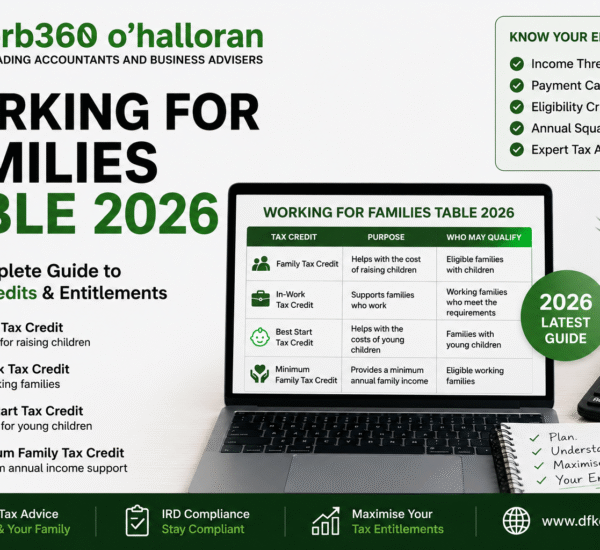
Working for Families Table 2026
The Working for Families Table 2026 includes four main tax credits available to eligible New Zealand families.
Tax Credit
Purpose
Who May Qualify
Family Tax Credit
Helps with the cost of raising dependent children.
Eligible families with dependent children.
In-Work Tax Credit
Supports families who meet employment requirements.
Working families who satisfy eligibility rules.
Best Start Tax Credit
Provides financial support for young children.
Eligible families with newborns and young children.
Minimum Family Tax Credit
Provides a minimum annual family income for qualifying working families.
Eligible working families meeting Inland Revenue criteria.
The actual payment you receive depends on your family’s income, number of children, their ages, and your eligibility for each tax credit.
Family Tax Credit
The Family Tax Credit is the largest component of the Working for Families programme for many households.
It provides financial assistance to eligible families with dependent children to help with everyday living expenses.
Your Family Tax Credit entitlement is generally influenced by:
Your annual family income.
The number of dependent children.
The age of each child.
Your family circumstances.
In-Work Tax Credit
The In-Work Tax Credit is designed to support eligible families who meet specific employment requirements.
Unlike the Family Tax Credit, eligibility depends not only on family income but also on whether qualifying work requirements are met.
This tax credit is intended to encourage workforce participation while helping families meet the costs of raising children.
Best Start Tax Credit
The Best Start Tax Credit provides financial support to families following the birth of a child.
Depending on your circumstances, Best Start may be available during your child’s early years and may later become income-tested.
Many parents receive Best Start alongside other Working for Families tax credits where eligible.
Minimum Family Tax Credit
The Minimum Family Tax Credit aims to provide a minimum level of annual family income for eligible working families.
Eligibility depends on meeting specific Inland Revenue requirements, including work-related criteria and family circumstances.
Because eligibility rules can be complex, professional advice may help determine whether your family qualifies.
Who Can Receive Working for Families?
Eligibility for the Working for Families Table 2026 depends on several factors rather than one single rule.
These may include:
Having one or more dependent children.
Your family’s annual income.
Your residency status.
Your employment situation.
The age of your children.
Your entitlement to individual tax credits.
Each family’s circumstances are different, so the amount received may vary significantly.
Need Help Understanding Your Working for Families Entitlements?
Working for Families payments can become more complex if you’re self-employed, own a business, have multiple income sources, or your family circumstances change during the year.
Our Chartered Accountants can help you understand your tax position, review your eligibility, and ensure your income reporting aligns with Inland Revenue requirements.
✔ Tax Planning
✔ Family Tax Advice
✔ Self-Employed Tax Support
✔ Business Tax Advisory
✔ Inland Revenue Compliance
✔ Annual Tax Returns
Why Professional Tax Advice Matters
While the Working for Families Table 2026 provides a helpful overview of available tax credits, calculating your actual entitlement can be more complex when income changes, self-employment, business ownership, investment income, or family changes are involved.
In the next section, we’ll explain how Working for Families payments are calculated, discuss income thresholds, annual square-ups, common mistakes families make, compare each tax credit, and answer the most frequently asked questions about the Working for Families Table 2026.
Get personalised advice from our Chartered Accountants on Working for Families Tax Credits, family income, self-employment, and Inland Revenue requirements.
Many families assume everyone receives the same payment, but that’s not how the Working for Families Table 2026 works.
Your entitlement is based on several factors, including your annual family income, the number of dependent children, their ages, the tax credits you qualify for, and your personal circumstances.
Inland Revenue uses this information to calculate your Working for Families Tax Credits and determine whether your payments should be made weekly, fortnightly, or after the end of the tax year.
Factors That Affect Your Working for Families Payments
The amount you receive under the Working for Families Table 2026 may change throughout the year if your circumstances change.
Your annual family income
The number of dependent children
The age of each child
Your employment status
Your eligibility for individual tax credits
Changes in your family circumstances
Income earned by both partners
Keeping Inland Revenue updated whenever your circumstances change can help reduce unexpected repayments or adjustments at the end of the tax year.
Working for Families Income Thresholds
The Working for Families Table 2026 uses income thresholds to determine whether your payments reduce as family income increases.
Generally, families with lower incomes receive higher levels of assistance, while payments gradually reduce once income exceeds applicable thresholds.
Because income thresholds and payment rates may change over time, it’s important to use the latest Inland Revenue information or seek professional tax advice before estimating your entitlement.
Annual Square-Up Explained
Working for Families payments are often based on estimated family income during the year.
After the tax year ends, Inland Revenue compares your estimated income with your actual income. This process is known as the annual square-up.
Depending on the outcome:
You may receive an additional payment if you were underpaid.
You may need to repay some Working for Families payments if your actual income was higher than estimated.
Providing accurate income estimates throughout the year can reduce the likelihood of unexpected repayments.
Common Changes That Affect Working for Families
Many families experience changes during the year that can affect their Working for Families entitlement.
Starting a new job
Becoming self-employed
Receiving a salary increase
Having another child
Children leaving school
Changes in relationship status
Receiving investment income
Changes in business income
Updating Inland Revenue as soon as these changes occur helps ensure your Working for Families payments remain accurate.
Working for Families for Self-Employed Individuals
Self-employed individuals often have more complex income arrangements than employees.
Business profits, drawings, expenses, provisional tax, and fluctuating income can all influence eligibility under the Working for Families Table 2026.
Professional accounting advice can help ensure income is correctly reported while maintaining compliance with Inland Revenue requirements.
Working for Families for Business Owners
Business owners should carefully review how company income, shareholder salaries, dividends, and other income sources affect their Working for Families entitlement.
Tax planning should never focus solely on increasing government assistance. Instead, business owners should aim to optimise their overall financial position while remaining fully compliant with New Zealand tax legislation.
Common Mistakes Families Make
Not Updating Estimated Income
One of the most common reasons families receive unexpected repayments is failing to update estimated income during the year.
Ignoring Business Income Changes
Business profits may change significantly throughout the year, affecting Working for Families eligibility and payment calculations.
Not Reporting Relationship Changes
Marriage, separation, or changes in household circumstances can all influence Working for Families payments.
Assuming Payments Stay the Same Every Year
Eligibility and payment amounts may change as children get older, income changes, or Inland Revenue updates tax rules.
People Also Ask About Working for Families Table 2026
Who qualifies for Working for Families in New Zealand?
Eligibility depends on factors including your family income, dependent children, residency, employment circumstances, and the specific Working for Families Tax Credits available to your household.
How is the Working for Families payment calculated?
Payments are based on your annual family income, the number and ages of dependent children, eligibility for individual tax credits, and other family circumstances.
Can self-employed people receive Working for Families?
Yes. Self-employed individuals may qualify for Working for Families if they meet Inland Revenue’s eligibility requirements and accurately report their taxable income.
Do I have to repay Working for Families?
If your actual annual family income is higher than the estimate used during the year, Inland Revenue may require repayment following the annual square-up.
Can DFK Orb360 help with Working for Families?
Yes. DFK Orb360 assists families, self-employed individuals, and business owners with tax planning, income reporting, Inland Revenue compliance, and Working for Families enquiries.
Need Help Understanding Your Working for Families Payments?
Whether you’re employed, self-employed, or operate your own business, our Chartered Accountants can help you understand how your income may affect your Working for Families Tax Credits.
✔ Family Tax Advice
✔ Self-Employed Tax Support
✔ Business Tax Planning
✔ Inland Revenue Compliance
✔ Annual Tax Returns
✔ Tax Advisory Services
Book a consultation with DFK Orb360 for personalised tax advice.
Frequently Asked Questions About Working for Families Table 2026
Can I receive more than one Working for Families Tax Credit?
Yes. Eligible families may qualify for multiple Working for Families Tax Credits depending on their income, employment circumstances, and family situation.
How often are Working for Families payments made?
Depending on your circumstances and payment preference, Inland Revenue may pay Working for Families weekly, fortnightly, or after the end of the tax year.
Should I update Inland Revenue if my income changes?
Yes. Updating your income estimate promptly helps reduce the risk of overpayments or repayments following the annual square-up process.
Can DFK Orb360 review my family’s tax position?
Yes. Our Chartered Accountants can review your tax situation, explain how different income sources may affect your Working for Families entitlement, and help ensure accurate Inland Revenue reporting.
Working for Families Table 2026: Understanding Your Family’s Entitlements
The Working for Families Table 2026 provides valuable financial support for many New Zealand families. Understanding how payments are calculated, keeping your income information up to date, and seeking professional advice when your circumstances change can help you manage your entitlements with confidence.
At DFK Orb360, we provide trusted tax advice for employees, self-employed individuals, business owners, and families across New Zealand, helping you navigate Inland Revenue requirements and make informed financial decisions.
The Working for Families Table 2026 explains the main tax credits available to eligible New Zealand families.
Working for Families payments depend on family income, dependent children, and eligibility for individual tax credits.
Income changes throughout the year may affect your entitlement and annual square-up.
Self-employed individuals and business owners should carefully review how taxable income affects their Working for Families payments.
DFK Orb360 provides personalised tax advice to help families understand Working for Families and Inland Revenue requirements.
Why Choose DFK Orb360 for Working for Families Tax Advice?
Understanding Working for Families can become more complicated when your income changes, you’re self-employed, own a business, receive investment income, or have changing family circumstances.
At DFK Orb360, our Chartered Accountants provide practical tax advice that helps families understand Inland Revenue rules, remain compliant, and make informed financial decisions.
This article is intended for general informational purposes only and should not be considered tax, accounting, or legal advice. Working for Families eligibility, payment rates, and income thresholds may change. Your entitlement depends on your personal circumstances and Inland Revenue requirements. Seek personalised advice from a qualified Chartered Accountant before making financial or tax-related decisions.




 09 377 4238
 Level 2, 6 Kingdon Street, Newmarket, Auckland
 help@orb360.co.nz