
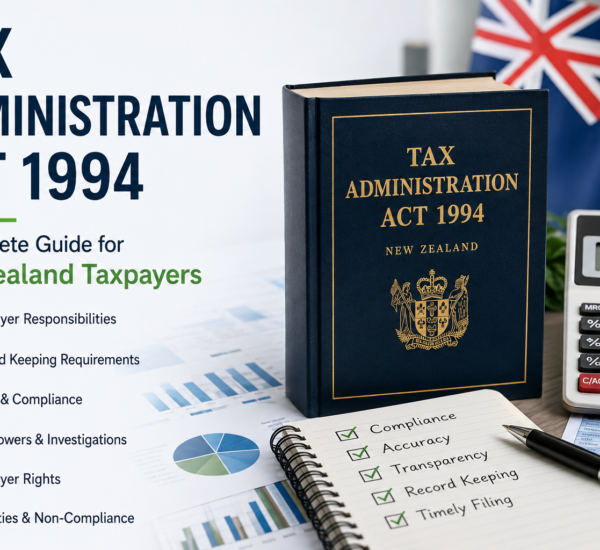
The Tax Administration Act 1994 is one of the most important pieces of legislation governing New Zealand’s tax system. While laws such as the Income Tax Act 2007 determine how tax is calculated, the Tax Administration Act 1994 establishes how Inland Revenue (IRD) administers, monitors, and enforces tax compliance across individuals and businesses.
For business owners, understanding the Tax Administration Act 1994 goes beyond simply filing tax returns. The legislation outlines your responsibilities for maintaining accurate financial records, submitting tax returns on time, responding to Inland Revenue requests, and complying with New Zealand’s taxation laws.
Whether you operate a small business, manage a growing company, employ staff, or oversee multiple entities, complying with the Tax Administration Act 1994 is essential for reducing tax risks, avoiding unnecessary penalties, and maintaining strong financial governance.
At DFK Orb360, our Chartered Accountants help businesses across New Zealand navigate complex tax legislation through proactive compliance, strategic tax planning, and practical business advice. By understanding the requirements of the Tax Administration Act 1994, businesses can strengthen their financial systems while building confidence in their ongoing compliance with Inland Revenue.
The Tax Administration Act 1994 is the legislation that governs how Inland Revenue administers New Zealand’s tax system. It establishes taxpayer obligations, record-keeping requirements, filing responsibilities, audit procedures, dispute resolution processes, taxpayer rights, and IRD’s enforcement powers. Businesses that understand and comply with the Tax Administration Act 1994 are better positioned to minimise compliance risks, maintain accurate financial records, and avoid costly penalties.
The Tax Administration Act 1994 provides the legal framework for administering New Zealand’s taxation system. Rather than determining how much tax is payable, the Act explains how tax laws are applied, administered, monitored, and enforced by Inland Revenue.
The legislation works alongside several important tax laws, including:
Together, these Acts ensure New Zealand’s tax system operates fairly while encouraging voluntary compliance and protecting the integrity of the country’s revenue system.
Every business operating in New Zealand has responsibilities under the Tax Administration Act 1994. The legislation affects how businesses maintain accounting records, prepare financial statements, file tax returns, respond to Inland Revenue enquiries, and manage ongoing tax compliance.
A strong understanding of the Act helps businesses:
Businesses that proactively manage compliance often experience fewer tax issues while creating stronger foundations for sustainable growth.
The Tax Administration Act 1994 applies to almost every individual and organisation with tax obligations in New Zealand.
This includes:
Although reporting obligations vary depending on the taxpayer, the legislation establishes consistent administrative rules that support fairness, transparency, and compliance across New Zealand’s tax system.
Effective business governance depends on more than simply meeting tax deadlines. The Tax Administration Act 1994 encourages businesses to maintain reliable financial systems, accurate documentation, and strong internal controls that support informed decision-making.
Working with experienced Chartered Accountants allows businesses to strengthen compliance processes, reduce regulatory risks, and confidently respond to changing tax requirements while focusing on long-term growth and profitability.
The Tax Administration Act 1994 establishes several ongoing obligations for businesses operating in New Zealand. These responsibilities are designed to promote voluntary compliance while ensuring Inland Revenue has accurate information to administer the country’s tax system.
Business owners are generally expected to:
Meeting these responsibilities helps businesses minimise compliance risks while maintaining a positive relationship with Inland Revenue.
Accurate record keeping is one of the most important obligations under the Tax Administration Act 1994. Well-maintained financial records support accurate tax reporting, simplify audits, and provide valuable insights for business decision-making.
Businesses should retain records such as:
Using cloud accounting platforms such as Xero or MYOB can help businesses maintain organised records while improving financial visibility throughout the year.
The Tax Administration Act 1994 gives Inland Revenue a range of powers to administer and enforce New Zealand’s tax laws. These powers allow IRD to verify the accuracy of tax returns and ensure businesses are meeting their legal obligations.
Inland Revenue may:
Businesses that maintain accurate accounting records and adopt proactive compliance practices are generally better prepared should Inland Revenue request additional information.
Complying with the Tax Administration Act 1994 involves more than simply meeting filing deadlines. Strong compliance processes help businesses reduce financial risk while supporting informed decision-making.
Best practices include:
Taking a proactive approach to compliance can reduce costly errors and improve operational efficiency.
At DFK Orb360, we help businesses confidently meet their obligations under the Tax Administration Act 1994. Our experienced Chartered Accountants work closely with business owners to strengthen financial systems, improve tax compliance, and provide strategic advice that supports long-term success.
Our services include:
Businesses that treat compliance as an ongoing process rather than an annual obligation are often better positioned to manage risk, improve cash flow, and respond confidently to changing tax legislation.
By understanding the Tax Administration Act 1994 and working with experienced Chartered Accountants, businesses can strengthen governance, improve financial reporting, and reduce the likelihood of unexpected compliance issues.
Understanding tax legislation can be challenging, especially as your business grows. DFK Orb360 provides practical advice, proactive tax planning, and ongoing compliance support to help your business meet Inland Revenue requirements with confidence.
Whether you need assistance with tax compliance, bookkeeping, financial reporting, GST, payroll, or business advisory services, our experienced Chartered Accountants are here to help.
Book a consultation today and build a stronger compliance strategy for your business.
The Tax Administration Act 1994 provides the legal framework for administering New Zealand’s tax system. It establishes taxpayer responsibilities, record-keeping requirements, filing obligations, Inland Revenue’s audit and investigation powers, dispute resolution processes, and penalties for non-compliance. Businesses that understand the Tax Administration Act 1994 can strengthen governance, improve financial reporting, reduce compliance risks, and maintain accurate accounting records. Partnering with experienced Chartered Accountants such as DFK Orb360 helps businesses remain compliant while supporting long-term growth.
The Tax Administration Act 1994 is New Zealand’s primary legislation governing how Inland Revenue (IRD) administers the country’s tax system. It establishes taxpayer obligations, IRD’s powers, filing requirements, record-keeping standards, dispute resolution procedures, and penalties for non-compliance.
The Tax Administration Act 1994 applies to businesses, companies, sole traders, partnerships, trusts, employers, contractors, investors, property owners, and individuals with tax obligations in New Zealand.
The legislation helps businesses understand their tax obligations, maintain accurate records, comply with Inland Revenue requirements, minimise compliance risks, and prepare for potential audits or reviews.
Yes. Under the Tax Administration Act 1994, Inland Revenue has the authority to request financial records, review tax returns, conduct audits, investigate compliance issues, and recover unpaid taxes where appropriate.
Businesses should retain invoices, receipts, payroll records, bank statements, GST records, contracts, financial statements, asset purchase documentation, and other records that support their tax returns and financial reporting.
DFK Orb360 provides tax advisory, accounting, bookkeeping, payroll, cloud accounting, financial reporting, and business advisory services that help businesses meet their obligations under the Tax Administration Act 1994 while improving overall financial performance.
DFK Orb360 is a trusted Chartered Accounting and Business Advisory firm supporting businesses across New Zealand with practical financial solutions and proactive tax advice. Our experienced professionals help clients navigate changing tax legislation, improve compliance, and strengthen business performance through tailored accounting and advisory services.
From tax compliance and financial reporting to strategic business planning and outsourced CFO support, we work alongside businesses to deliver practical advice that supports sustainable growth and long-term success.
This article is intended for general informational purposes only and should not be considered accounting, taxation, financial, or legal advice. While every effort has been made to ensure the information is accurate, tax legislation may change and individual circumstances vary. Businesses should seek professional advice before making decisions based on the information contained in this guide.
The Tax Administration Act 1994 covers the administration of New Zealand’s tax system, including taxpayer responsibilities, Inland Revenue powers, audits, investigations, record-keeping requirements, tax return filing, dispute resolution, and penalties.
Small businesses must comply with the Act by maintaining accurate accounting records, filing tax returns on time, paying taxes when due, and providing information requested by Inland Revenue.
Yes. DFK Orb360 can help businesses prepare for Inland Revenue reviews by ensuring financial records are accurate, compliance obligations are met, and professional advice is available throughout the process.
Good record keeping supports accurate tax reporting, simplifies financial management, helps businesses respond to Inland Revenue requests, and reduces the risk of penalties arising from incomplete or inaccurate information.
Businesses should review their compliance regularly throughout the year rather than waiting until year-end. Ongoing reviews help identify issues early and support better financial planning.

Copyright © 2025 Marketing Transformers | All Rights Reserved.


 09 377 4238
 Level 2, 6 Kingdon Street, Newmarket, Auckland
 help@orb360.co.nz