

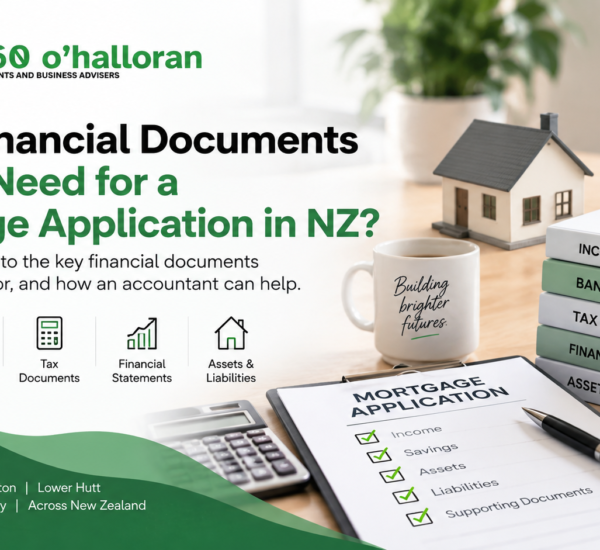
What Financial Documents Do You Need for a Mortgage Application in NZ?
Preparing for a home loan or mortgage application in New Zealand? One of the first things to consider is whether your financial information and supporting documents are organised and up to date.
The exact documentation required varies between lenders and applicants. However, mortgage application financial documents NZ applicants may need can include income information, bank records, tax information, financial statements, details of assets and liabilities and other supporting documentation.
This guide explains the types of financial information you may need to prepare and how an accountant can help you organise the accounting records that may be requested during a mortgage application.
If you are self-employed, operate a business or have multiple income sources, preparing your financial information can involve additional accounting records.
Quick Answer: What Financial Documents Do You Need for a Mortgage Application in NZ?
The mortgage application financial documents NZ applicants need depend on their circumstances and the requirements of the lender. Commonly requested information can include proof of income, bank statements, tax information, financial statements, details of assets and liabilities and other supporting documents.
Self-employed applicants and business owners may need additional information such as business financial statements, tax records, company accounts and other evidence of income.
Your lender or mortgage adviser should confirm the exact documents required for your individual application.
Why Are Financial Documents Important for a Mortgage Application?
A mortgage application requires a lender to assess information about your financial circumstances. Depending on the application, this may include income, expenses, debts, assets and other relevant financial information.
Having your records organised can make it easier to provide the information requested by your lender or mortgage adviser.
Accurate and current accounting records can be particularly important for business owners and self-employed applicants, whose income may not appear as a simple salary or wage.
If you need accounting support before applying, you can also read our guide on how an accountant can help prepare your finances for a mortgage application .
9 Essential Mortgage Application Financial Documents NZ Applicants May Need
There is no single checklist that applies to every borrower. Lenders can request different documents depending on your circumstances.
However, the following categories cover many of the types of mortgage application financial documents NZ applicants may be asked to provide.
1. Proof of Income
Income information helps establish your ability to meet the proposed loan repayments.
Depending on your circumstances, this could include salary or wage information, employment records, business income or other relevant sources of income.
Your lender or mortgage adviser can confirm which income evidence is required for your application.
2. Bank Statements
Bank statements may be requested as part of the mortgage application process. They can provide information about income deposits, regular expenses, existing commitments and other transactions.
The timeframe and type of bank statements required can vary, so applicants should confirm the requirements directly with their lender or mortgage adviser.
3. Financial Statements
Financial statements can be particularly relevant if you are self-employed or operate a business.
Depending on your circumstances, these may include a profit and loss statement and balance sheet.
A current set of financial statements can help provide a clearer picture of the financial position of a business.
4. Tax Records
Tax information may form part of the financial documentation requested during a mortgage application.
For business owners and self-employed people, relevant tax records can help support information about business income and financial performance.
An accountant can help organise relevant accounting and tax information where appropriate.
5. Business Accounting Records
Business owners may need to provide additional accounting information as part of their application.
This may include financial statements, accounting records, business income information and other documentation requested by the lender.
Having these mortgage application financial documents NZ businesses rely on organised before beginning an application can make it easier to respond to requests for information.
6. Information About Existing Debts and Liabilities
Applicants may need to provide information about existing loans, credit commitments and other liabilities.
The lender may use this information as part of its assessment of your overall financial position.
7. Information About Assets
Depending on your circumstances, information about assets may also be relevant to your mortgage application.
Assets could include property, investments, savings or business interests. Your lender will determine what supporting evidence is required.
8. Property and Supporting Documents
Depending on the type of mortgage application, you may need documents relating to the property being purchased or other relevant property information.
The exact requirements will depend on the transaction and lender.
9. Other Documents Requested by Your Lender
Every mortgage application is different. A lender may request additional information based on your income, employment, business structure, existing lending or other circumstances.
For this reason, it is important to follow the specific document checklist provided by your lender or mortgage adviser.
Mortgage Application Financial Documents NZ Self-Employed Applicants May Need
Self-employed applicants can have more complex financial circumstances than applicants receiving a straightforward salary.
Business income may involve revenue, expenses, drawings, shareholder salary, company structures and other accounting considerations.
As a result, the mortgage application financial documents NZ requirements for a self-employed applicant may include additional business and tax information.
Depending on the lender, you may be asked for information such as:
- Current business financial statements
- Profit and loss information
- Balance sheet information
- Business tax information
- Business bank statements
- Evidence of business income
- Details of business debts and liabilities
- Other supporting business records
The exact requirements vary, so confirm the documentation required with your lender or mortgage adviser.
Mortgage Documents for Business Owners in NZ
Business owners may need to provide financial information from both their business and personal financial position.
For example, your financial circumstances could involve:
- Company income
- Shareholder salary
- Drawings
- Business expenses
- Company debt
- Personal lending
- Property investments
- Multiple income sources
An accountant can help you understand and organise your accounting information before it is provided to a lender or mortgage adviser.
How Can an Accountant Help Prepare Mortgage Documents?
An accountant can help organise accounting and financial information that may be required during a mortgage application.
Review Financial Statements
An accountant can help prepare or update relevant financial statements and explain what the figures show about the financial position of a business.
Organise Income Information
Business and self-employed income can involve multiple records. An accountant can help organise relevant information from your accounting system.
Review Accounting Records
Reviewing your records before an application can help identify outdated or inconsistent information that may require attention.
Prepare Supporting Financial Information
Where appropriate, your accountant can help prepare relevant accounting information requested by your lender or mortgage adviser.
Accountant vs Mortgage Adviser: Who Does What?
An accountant and mortgage adviser have different roles in the mortgage application process.
| Accountant | Mortgage Adviser |
|---|---|
| Helps prepare and explain accounting and financial information | Provides advice about home loans and lending products |
| Prepares financial statements and accounting records | Advises on lending options within their authorised scope |
| Helps organise tax and business financial information | Can assist with the mortgage process and lender interactions |
The Financial Markets Authority provides guidance on mortgage advice and explains the role of mortgage advisers in relation to home loans and lending products.
DFK Orb360 does not provide mortgage advice or recommend mortgage products or lenders.
Our role is to help clients prepare and understand accounting and financial information that may be required during a mortgage application.
Mortgage Application Financial Documents Checklist
Use this general checklist when preparing your financial information. Your lender may request additional documents.
- ☐ Proof of income
- ☐ Recent bank statements
- ☐ Current financial statements
- ☐ Profit and loss statement
- ☐ Balance sheet
- ☐ Relevant tax records
- ☐ Business accounting records
- ☐ Existing loan and liability information
- ☐ Asset information
- ☐ Property-related documents where applicable
- ☐ Other supporting documents requested by your lender
Mortgage Application Accounting Support Across New Zealand
DFK Orb360 O’Halloran provides accounting, tax and business advisory services to clients across New Zealand.
Our team works with clients in Auckland, Newmarket, Albany, Wellington and Lower Hutt, as well as businesses and individuals in other locations across New Zealand.
If you are preparing a mortgage application and need help organising your accounting information, our team can help you understand and prepare relevant financial records.
You can contact DFK Orb360 O’Halloran to discuss your accounting requirements.
People Also Ask: Mortgage Application Financial Documents NZ
What financial documents do I need for a mortgage application in NZ?
The mortgage application financial documents NZ applicants need depend on their circumstances and lender requirements. They may include income information, bank statements, tax records, financial statements and information about assets and liabilities.
What documents do self-employed people need for a mortgage in NZ?
Self-employed applicants may need additional financial information, such as business financial statements, income records, tax information and other business documentation. The exact requirements depend on the lender and applicant.
Do I need financial statements for a mortgage application?
Some applicants may be asked to provide financial statements, particularly if they are self-employed or operate a business. Your lender or mortgage adviser can confirm whether financial statements are required.
How many months of bank statements are needed for a mortgage?
There is no single timeframe that applies to every mortgage application. Requirements vary between lenders and applicants. Confirm the required period directly with your lender or mortgage adviser.
Do I need tax returns to apply for a mortgage?
Tax information may be requested depending on your circumstances, particularly if you are self-employed or operate a business. Your lender or mortgage adviser can confirm the specific documentation required.
Can an accountant help prepare mortgage documents?
Yes. An accountant can help organise financial statements, accounting records, income information and relevant tax documents that may be requested during a mortgage application.
Can an accountant help self-employed people prepare for a mortgage?
Yes. An accountant can help organise business income, expenses, financial statements and tax information that may be requested during a mortgage application.
Can an accountant guarantee mortgage approval?
No. An accountant cannot guarantee mortgage approval. The lender makes the final lending decision based on its own lending criteria and assessment process.
Does DFK Orb360 provide mortgage advice?
No. DFK Orb360 provides accounting, tax and business advisory services and can help clients prepare financial information for mortgage applications. DFK Orb360 does not provide mortgage advice or recommend mortgage products or lenders.
Need Help Preparing Your Mortgage Financial Documents?
Preparing your financial information before applying for a mortgage can make it easier to respond when a lender or mortgage adviser asks for supporting documents.
DFK Orb360 can help business owners, self-employed professionals and property investors organise relevant accounting and financial information.
Whether you are based in Auckland, Newmarket, Albany, Wellington, Lower Hutt or elsewhere in New Zealand, our team can help you prepare your financial records.
Get your financial information organised before you approach your lender or mortgage adviser.
About This Article
Written by: DFK Orb360 O’Halloran Content Team
Reviewed by: DFK Orb360 O’Halloran Chartered Accounting Team
Published: 22 September 2026
Last reviewed: 22 September 2026
Expertise: New Zealand accounting, taxation, financial reporting, property investment and business advisory.
Editorial approach: This article focuses on accounting and financial information preparation and distinguishes these services from mortgage advice.
Disclaimer: This article provides general information only and does not constitute mortgage, lending or financial product advice. Mortgage advisers and lenders determine their own requirements, lending criteria and decisions. For regulated mortgage advice, speak with an appropriately authorised financial adviser.


 09 377 4238
 Level 2, 6 Kingdon Street, Newmarket, Auckland
 help@orb360.co.nz