

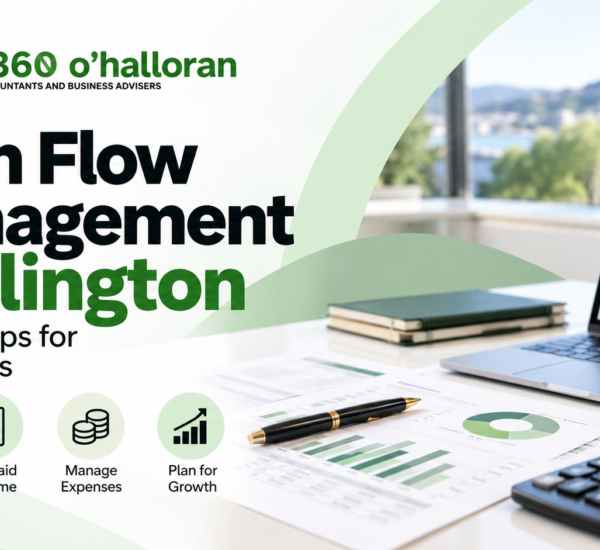
Effective cash flow management Wellington businesses can rely on is essential for meeting operating costs, preparing for tax payments and planning for growth. Even a profitable business can experience financial pressure when customers pay late or expenses fall due before expected income arrives.
For small and medium-sized businesses across Wellington, Lower Hutt and Petone, understanding when money comes in and goes out can make everyday financial decisions easier. A clear cash flow forecast helps business owners anticipate potential shortfalls and plan ahead rather than reacting when funds become tight.
What Is Cash Flow Management?
Cash flow management is the process of monitoring, forecasting and managing the money entering and leaving a business. It involves tracking customer payments, operating expenses, tax obligations, loan repayments and other cash movements. Good cash flow management helps businesses prepare for upcoming costs, identify possible cash shortages and make informed financial decisions.
DFK Orb360 O’Halloran provides accounting and business advisory support from its Wellington-region office at 48 Richmond Street, Petone, Lower Hutt.
Why Is Cash Flow Management Important for Wellington Businesses?
Cash flow reflects the money available to run your business at a particular time. Revenue and profit are important, but they do not necessarily mean that cash is available when bills need to be paid.
For example, a Wellington business may complete a large project and issue an invoice, but if the customer takes 30 or 60 days to pay, the business may still need to cover wages, rent, suppliers and tax obligations in the meantime.
Effective cash flow management can help businesses:
- Prepare for wages, rent, supplier payments and other operating costs.
- Identify potential cash shortages before they become urgent.
- Plan for GST, income tax and other applicable tax obligations.
- Manage seasonal changes in sales and expenses.
- Assess whether a planned purchase or expansion is affordable.
- Make more informed decisions about borrowing and business investment.
New Zealand’s Business.govt.nz cash flow forecasting guidance explains how forecasting income and outgoings can help businesses plan ahead and prepare for future financial commitments.
7 Cash Flow Management Tips for Wellington Businesses
1. Prepare a Regular Cash Flow Forecast
A cash flow forecast estimates the money your business expects to receive and pay over a future period. It helps you understand whether you are likely to have enough cash available to meet upcoming commitments.
A useful forecast should include:
- Your opening bank balance.
- Expected customer receipts and other income.
- Supplier payments and operating expenses.
- Wages, loan repayments and tax payments.
- Your projected closing cash balance.
Many businesses benefit from reviewing a rolling forecast regularly. Weekly forecasts can be useful when cash is tight, while monthly forecasts can support broader planning. The appropriate frequency depends on your business and its financial activity.
You can start with the Business.govt.nz Cash Flow Forecaster and adjust your estimates as new information becomes available.
2. Get Customer Invoices Paid on Time
Outstanding invoices can place pressure on cash flow, particularly for businesses that must pay staff and suppliers before customers settle their accounts.
To improve collections, consider these practical steps:
- Issue accurate invoices promptly after completing work.
- State payment terms and due dates clearly.
- Follow up overdue invoices consistently.
- Review customer credit terms and payment patterns.
- Discuss payment schedules for larger projects where appropriate.
Review your accounts receivable regularly so you can identify overdue payments and take action before they affect your ability to meet commitments.
3. Monitor Expenses and Supplier Payments
Understanding where your money goes is a key part of cash flow management in Wellington. Review recurring costs such as rent, subscriptions, insurance, utilities, software, supplier invoices and staffing expenses.
Identify unnecessary expenditure and assess whether supplier terms can be improved. However, do not delay payments beyond agreed terms without communication, as this can damage important business relationships.
A cash flow forecast should reflect when expenses are actually expected to be paid, not just when they appear in your accounting records.
4. Plan Ahead for GST and Income Tax
Tax obligations can create significant cash commitments if they are not included in your financial planning. Depending on your circumstances, your business may need to plan for GST, income tax, provisional tax, PAYE or other applicable obligations.
Review your tax dates and expected amounts with your accountant. Consider how these payments will affect your available cash and set aside funds where appropriate.
Do not treat money reserved for tax as freely available operating cash. Your actual obligations depend on your business structure and circumstances.
For official guidance, visit Inland Revenue New Zealand . You can also explore DFK Orb360 O’Halloran’s tax planning guidance for Wellington .
5. Prepare for Seasonal Changes and Unexpected Costs
Revenue may fluctuate throughout the year, depending on your industry, customer demand, project schedules and seasonal patterns. Some businesses experience quieter periods while their fixed costs continue.
Use previous sales and expense data to identify recurring patterns. Prepare alternative forecasts to understand how your finances might change if sales are lower than expected, a customer pays late or an unexpected expense arises.
Where practical, maintain an appropriate cash reserve based on your business’s costs, risks and access to funding. There is no single reserve amount that suits every business.
6. Review Profitability Alongside Cash Flow
A business may have strong sales but still struggle to generate sufficient cash if its costs are too high, customers pay slowly or money is tied up in stock and unpaid invoices.
Review revenue, direct costs, overheads, gross margins and the timing of customer payments together. This helps you distinguish between a profitability issue and a timing issue.
For broader financial planning, explore DFK Orb360 O’Halloran’s business profitability services and strategic advisory services .
7. Use Financial Reports to Make Better Decisions
Accounting software and regular financial reporting can help you monitor bank balances, unpaid invoices, supplier liabilities and upcoming commitments.
Review your forecast against actual results and investigate material differences. If customer receipts are consistently delayed or expenses are higher than expected, update your forecast and adjust your plans.
An accountant or business adviser can help you interpret the numbers, assess different scenarios and understand the financial implications of decisions such as hiring staff, purchasing equipment or expanding operations.
Cash Flow Management Checklist for Business Owners
Use this checklist as a starting point for your next financial review.
- Check your current bank balance and upcoming commitments.
- Review outstanding customer invoices and overdue payments.
- List supplier payments, wages, rent and recurring expenses.
- Check upcoming GST, tax and other payment deadlines.
- Update your cash flow forecast using the latest figures.
- Compare actual cash flow with your previous forecast.
- Identify any expected shortfall and assess options early.
- Review whether planned purchases or investments are affordable.
For a wider review of your business finances, you can also use the Business.govt.nz Healthy Business Checklist .
How DFK Orb360 O’Halloran Can Help With Cash Flow Management
Business owners often need more than historical financial statements to understand what may happen next. Cash flow forecasting and financial planning can help identify upcoming commitments, compare possible scenarios and support informed decisions.
DFK Orb360 O’Halloran provides accounting and business advisory services to businesses. Depending on your requirements and the scope agreed, support may include budgeting, forecasting, financial reporting, profitability analysis and strategic financial planning.
If you are looking for cash flow management in Wellington, discuss your current challenges, business goals and reporting needs with the team. The right approach will depend on your financial position, business model and future plans.
Learn more about business profitability and cash flow forecasting or explore outsourced CFO support in Wellington for businesses that need broader financial planning and management insight.
People Also Ask About Cash Flow Management Wellington
How can a small business improve cash flow in Wellington?
A small business can improve cash flow by invoicing promptly, following up overdue payments, monitoring expenses, planning for tax obligations and updating a cash flow forecast regularly. Reviewing expected receipts and payments helps identify potential shortages before they become urgent.
What should a cash flow forecast include?
A cash flow forecast should include the opening cash balance, expected cash receipts, anticipated payments and the projected closing balance for each period. Include timing for customer invoices, operating costs, wages, tax payments, loan repayments and planned purchases where relevant.
How often should a business review its cash flow?
Review frequency depends on how quickly your business’s cash position changes. A business with tight cash reserves or irregular receipts may need weekly reviews, while another business may use a monthly review. Update the forecast whenever important assumptions or expected payments change.
Can an accountant help with cash flow forecasting?
Yes. An accountant can help prepare or review a forecast, check whether key income and expense items have been included, compare forecast results with actual figures and explain the implications for business decisions. The scope of support depends on the services agreed with the firm.
Why can a profitable business still have cash flow problems?
Profit and cash flow measure different things. A business may record sales before receiving payment, hold cash in inventory or face large payments before customer invoices are settled. These timing differences can create cash shortages even when the business reports a profit.
Frequently Asked Questions
What is the difference between cash flow and profit?
Profit generally measures income minus expenses over an accounting period. Cash flow tracks money received and paid. Timing differences, credit sales, inventory purchases, loan repayments and asset purchases can cause cash flow to differ from reported profit.
What should I do if my business is forecast to run short of cash?
Review the timing of incoming payments and upcoming expenses, follow up overdue invoices and update your forecast. Consider which expenses can legitimately be rescheduled, and speak with your accountant or lender early if you may be unable to meet commitments. Do not assume future borrowing or customer payments will arrive unless there is a reasonable basis for that expectation.
Does cash flow management include GST and tax payments?
Yes. A cash flow forecast should account for tax payments that are expected during the forecast period. Confirm the relevant obligations and dates with Inland Revenue or your accountant, as these depend on your business circumstances.
Where is DFK Orb360 O’Halloran’s Wellington-region office?
The Wellington-region office is located at 48 Richmond Street, Petone, Lower Hutt 5012, Wellington, New Zealand. Contact the team to discuss service availability and your business’s requirements.
WELLINGTON • PETONE • LOWER HUTT
Take Control of Your Business Cash Flow
Unclear cash flow can make it harder to plan for tax payments, manage operating costs and make confident business decisions. Speak with DFK Orb360 O’Halloran about your accounting and financial planning needs.
Tell us about your business and the financial support you need. Complete the form below and our team can follow up to discuss your enquiry.
Wellington-region office:
48 Richmond Street, Petone, Lower Hutt 5012, Wellington, New Zealand
You can also contact our team directly or learn more about our strategic advisory services .
About This Article
Written by: DFK Orb360 O’Halloran Content Team
Expert review: Riz Khan, CPA, Associate Partner at DFK Orb360 O’Halloran, if he has reviewed and approved this article before publication.
Expertise: New Zealand accounting, taxation and business advisory.
Last reviewed: Update this date after the article has been reviewed.
Disclaimer: This article provides general information about cash flow management and is not personalised accounting, tax or financial advice. The appropriate approach depends on each business’s circumstances.


 09 377 4238
 Level 2, 6 Kingdon Street, Newmarket, Auckland
 help@orb360.co.nz