

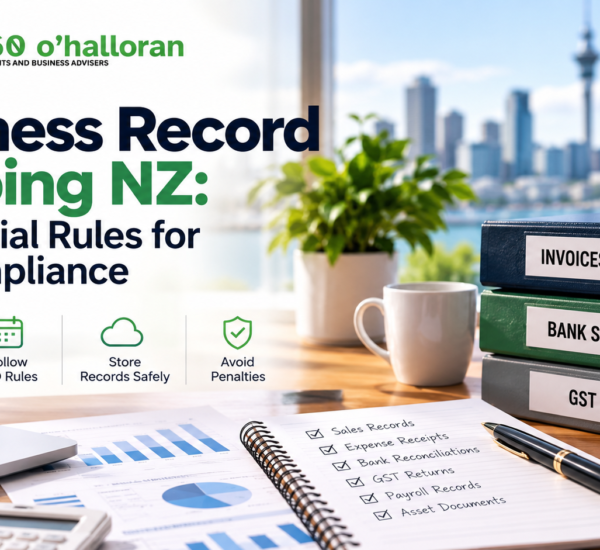
Business record keeping NZ: If you run a business in New Zealand, keeping accurate financial and tax records is an essential part of meeting your Inland Revenue obligations. Businesses generally need to retain relevant tax records for at least seven tax years, including invoices, receipts, banking information and accounting records. Good record keeping helps you prepare tax returns, calculate GST and respond to questions from IRD.
Inland Revenue generally requires businesses to keep tax records for at least seven tax years. Records may be paper-based or electronic, but they must be complete, readable and accessible. Some circumstances can involve additional requirements, so check the rules relevant to your business.
Whether you are a sole trader, contractor, company director or small business owner, an organised record-keeping system can save time and reduce avoidable compliance problems. This guide explains which records to keep, how to store them, common mistakes to avoid and when accounting support may help.
Are your business records ready for tax time?
Disorganised invoices, missing receipts and unreconciled accounts can make tax preparation more difficult. DFK Orb360 can discuss your business accounting and financial reporting requirements.
Submit an enquiry to discuss the right support for your business.
What is business record keeping in NZ?
Business record keeping means maintaining reliable information about your business income, expenses, assets, liabilities and financial transactions. These records support the figures reported in your income tax returns, GST returns and other required filings.
According to Inland Revenue’s record-keeping guidance, businesses should maintain records throughout the year rather than waiting until a return is due. IRD may check these records if it reviews or audits your tax affairs.
Good business record keeping NZ practices also help owners understand cash flow, track outstanding payments, monitor expenses and make better financial decisions.
How long do you need to keep business records in NZ?
Most businesses must keep their relevant tax records for at least seven tax years. The retention period generally runs from the end of the tax year or taxable period the records relate to, subject to the rules that apply to the particular records.
The requirement covers paper and electronic records. It can continue even if you stop operating your business, so closing a business does not automatically mean you can dispose of its tax records.
In some cases, Inland Revenue may require records to be kept for longer. Check the official guidance or seek advice if you are dealing with an audit, investigation or another special circumstance.
Read the official IRD guidance on income and expense records for further details.
7 types of business records you should keep
1. Sales and income records
Keep evidence of all business income, including cash sales, electronic payments and other business receipts. Depending on your business, this may include sales invoices, point-of-sale reports, till records, customer statements and records of income received through online platforms.
Accurate income records help you calculate taxable income and substantiate the figures reported to Inland Revenue.
2. Purchase invoices and expense receipts
Retain invoices and receipts supporting business purchases and expenses. Record what was purchased, the transaction date, the amount paid and other details needed to explain the transaction.
Do not assume that every purchase is deductible simply because you have a receipt. The expense must meet the applicable tax requirements. If you are unsure whether a cost is deductible or how to apportion mixed personal and business use, ask your accountant or tax adviser.
3. Bank and credit card statements
Keep business bank statements, credit card statements and other banking records. Reconcile transactions with your accounting system and identify money paid into or withdrawn from business accounts.
Separate personal and business transactions wherever possible. Clear records make it easier to investigate discrepancies and explain the source and purpose of payments.
4. GST records and supporting calculations
If your business is GST registered, retain the records needed to support your GST returns. These may include taxable supply information, supplier invoices, adjustment records, reconciliations and calculations used to prepare each return.
Check that the figures in your GST returns agree with your accounting records. If you discover an error, seek advice about the appropriate correction process rather than ignoring the difference.
5. Payroll and employee records
If you employ staff, you may need to retain wage records, PAYE information, deductions, KiwiSaver details and other employment-related records. The exact records depend on your employer obligations and the payments you make.
Keep payroll information organised by employee and pay period, and make sure the records can be retrieved if needed. Refer to the relevant Inland Revenue employer guidance for your circumstances.
6. Asset, loan and financing records
Keep purchase documents and supporting records for business assets, equipment, vehicles and other relevant property. Depending on the transaction, you may need the purchase date, cost, financing details and calculations supporting depreciation or other tax treatment.
Retain relevant loan agreements and supporting statements so that the business can explain its liabilities, interest payments and financial position.
7. Accounting reports and working papers
Keep records that explain how your accounts and tax returns were prepared. These may include general ledger reports, cashbooks, reconciliations, working papers, transaction listings and supporting calculations.
Maintaining a clear audit trail makes it easier to trace figures from the source documents through your accounting system to the tax returns submitted to IRD.
Need help organising your accounts and tax records?
DFK Orb360 can discuss your bookkeeping, GST reconciliations and financial reporting needs. A more consistent accounting process can make tax preparation and record retrieval easier.
Tell us about your business requirements using the enquiry form below.
Can you keep business records digitally?
Yes. Inland Revenue accepts paper and electronic records, or a combination of both, provided the applicable requirements are met.
Electronic records should be complete, readable and retrievable when needed. Businesses using accounting software should also maintain reliable backups and ensure they can access historical records if they change systems or providers.
IRD’s guidance states that records generally need to be in English or Māori unless permission has been granted to use another language. If records are stored offshore, including through cloud services, you should check whether the required approval applies to you or your provider.
For technical requirements, read IRD’s guidance on computer record keeping for audits.
What happens if your business records are incomplete?
Missing or inconsistent records can make it harder to calculate taxable income, support expense claims, reconcile GST and respond to questions from Inland Revenue.
If IRD reviews your business, you may be asked to provide documents supporting figures in your tax returns. If information is missing, identify the gap, try to recover the original records and seek professional advice on how to address the situation.
Never create misleading documents or alter records to conceal an error. If you discover that a return may be incorrect, get advice on the appropriate way to resolve it.
How to build a better business record-keeping system
Use a consistent filing structure
Organise records by financial year, tax period and category. Use clear file names so invoices, receipts, bank statements and GST documents can be located quickly.
Update records regularly
Record transactions throughout the year instead of trying to reconstruct months of activity before a filing deadline. Schedule time for bookkeeping and bank reconciliations.
Back up digital records
Use reliable backups and confirm that records can be restored. Make sure access to historical information will not disappear if you change accounting software, staff or service providers.
Review accounts before filing returns
Check that income, expenses, bank balances and GST figures are consistent. Investigate unexplained differences before submitting returns.
Assign clear responsibility
Make sure someone is responsible for collecting documents, monitoring deadlines and maintaining the records. If you use an external bookkeeper or accountant, understand which tasks they handle and which remain your responsibility.
How DFK Orb360 can support your business
Business record keeping NZ requirements can feel overwhelming when you are also managing sales, employees, suppliers and cash flow. DFK Orb360 O’Halloran Chartered Accountants provides accounting, tax and business advisory services for New Zealand businesses.
Depending on your requirements, the team can discuss support with:
- Organising financial information for accounting and tax purposes.
- Reviewing GST records and reconciliations.
- Improving bookkeeping and financial reporting processes.
- Understanding tax compliance and record-retention requirements.
- Preparing more consistent processes for deadlines and document storage.
For more information, explore DFK Orb360’s accounting services for New Zealand businesses or learn about its chartered accountant services.
Make business record keeping easier with the right accounting support
Want to improve your bookkeeping, prepare for tax deadlines or get more clarity around your financial records? Speak with DFK Orb360 about your business accounting needs.
Complete the enquiry form to start a conversation with our team.
Please do not include bank account details, tax identifiers or other sensitive financial information in this general enquiry form.
Frequently asked questions about business record keeping NZ
How long do businesses need to keep tax records in NZ?
Businesses generally need to keep relevant tax records for at least seven tax years. The period usually runs from the end of the tax year or taxable period the records relate to, subject to the applicable rules and any special circumstances.
Business Record Keeping NZ: Frequently Asked Questions
Business record keeping NZ requirements help businesses maintain accurate tax records, prepare returns and respond to Inland Revenue requests. Here are answers to common questions about tax record retention, invoices, GST documents and digital record keeping.
1. What is business record keeping in NZ?
Business record keeping NZ refers to maintaining accurate records of business income, expenses, purchases, sales, bank transactions and other financial activities. These records help businesses prepare tax returns, calculate GST where applicable and support the information reported to Inland Revenue.
2. How long do businesses need to keep tax records in NZ?
Businesses generally need to keep relevant tax records for at least seven tax years. The applicable retention period depends on the records and circumstances. Business record keeping NZ procedures should ensure records remain complete, readable and accessible throughout the required period.
3. What records should a small business keep in New Zealand?
Small businesses should generally retain sales invoices, purchase receipts, bank statements, income records, expense documents, GST returns where applicable and accounting reports supporting their tax filings. Good business record keeping NZ practices make it easier to find these documents when preparing returns or responding to IRD questions.
4. Can I keep my business tax records digitally?
Yes. Businesses can generally maintain paper records, electronic records or a combination of both, provided the applicable requirements are met. Digital business record keeping NZ systems should keep information readable, secure and accessible. Maintain backups and ensure historical records can still be retrieved if you change accounting software.
5. What happens if I do not keep proper business records?
Incomplete records can make it difficult to support income, expense claims and GST calculations. They may also complicate responses to Inland Revenue information requests. Effective business record keeping NZ processes help businesses explain transactions, identify discrepancies and support accurate tax reporting.
6. What records does IRD require for GST?
GST-registered businesses should retain the information needed to support their GST returns, including relevant sales and purchase records, taxable supply information, adjustment records and supporting calculations. Business record keeping NZ systems should make it possible to reconcile GST figures with accounting records and underlying transactions.
7. Do sole traders need to keep business records?
Yes. Sole traders need to maintain records that support their business income, expenses and tax obligations. Business record keeping NZ practices are important even for a small operation run by one person. Keeping business and personal transactions separate can make bookkeeping and tax preparation easier.
8. Can I throw away business records after seven years?
Not automatically. Seven tax years is the general retention period for many tax records, but specific circumstances or other legal requirements may mean certain records need to be kept longer. Before disposing of documents, confirm that the relevant retention period has ended and that no other obligation applies.
9. What should I do if I lose a business invoice or receipt?
Contact the supplier to request a copy, check your email and accounting software, and review relevant bank or payment records. Document your efforts to recover the missing record and seek accounting advice if you cannot obtain sufficient evidence. Never create a false invoice or receipt to replace a missing document.
10. Do digital records stored overseas meet IRD requirements?
Electronic records must meet Inland Revenue’s applicable requirements. If records are stored offshore, including through cloud accounting services, check whether approval is required for your circumstances or provider. Businesses should ensure their records remain accessible and usable when requested.
11. How does good business record keeping help during an IRD audit?
Organised business records can help you locate invoices, bank statements, GST calculations and accounting reports relevant to an IRD review. Good business record keeping NZ practices can make it easier to explain transactions and substantiate tax return figures. If Inland Revenue requests information, read the notice carefully and respond within the applicable timeframe.
12. Can an accountant help improve business record keeping in NZ?
An accountant can discuss bookkeeping systems, financial reporting, GST reconciliations and ways to organise supporting documents. The right approach to business record keeping NZ depends on the size, structure and needs of your business. Professional support may help you establish more consistent processes and prepare for tax deadlines.
13. How can I improve my business record keeping?
Record transactions regularly, keep business and personal spending separate, organise invoices and receipts by tax period, reconcile bank accounts, back up electronic records and review GST information before filing. Consistent business record keeping NZ practices can reduce last-minute work and make financial information easier to retrieve.
14. Where can I find official New Zealand record-keeping requirements?
Inland Revenue provides official guidance on tax records, income and expenses, and computer-based record keeping. Visit the IRD record-keeping guidance to review the requirements relevant to your business.
15. Where can New Zealand businesses get accounting support?
DFK Orb360 O’Halloran Chartered Accountants provides accounting, tax and business advisory services for New Zealand businesses. If you need help reviewing your accounting processes, organising financial records or improving GST reconciliations, contact DFK Orb360 to discuss your requirements.
Ready to improve your business record keeping?
Get clarity on your accounting records, GST reconciliations and financial reporting processes. Contact DFK Orb360 to discuss the accounting support your business may need.
This information is general guidance only and is not tax or legal advice. Check Inland Revenue’s official guidance for your circumstances.
What records should a small business keep?
Small businesses should generally keep records of income, sales, expenses, purchase invoices, receipts, bank transactions, GST returns where applicable and other documents supporting their tax returns.
Can I store business tax records electronically?
Yes. Paper and electronic records are generally accepted, provided they meet applicable requirements and remain complete, readable and accessible when needed.
Do I need to keep records if my business has stopped trading?
Stopping business operations does not automatically remove your record-keeping obligations. Retain the relevant records for the required period and check any additional obligations that apply to your circumstances.
What happens if I lose my business receipts or invoices?
Try to recover copies from suppliers, banks or your accounting software. Keep a record of your efforts and seek professional advice about how to handle missing supporting information. Do not fabricate receipts or invoices.
Do business records need to be in English?
IRD generally requires business records to be in English or Māori unless approval has been obtained to use another language. Check the official guidance if your records are maintained in another language.
Can I keep my business records in cloud accounting software?
Electronic record keeping is generally possible, but records must remain accessible and usable. If records are stored offshore, including through cloud services, check whether the relevant approval requirements apply to you or your provider.
Why is business record keeping important for GST?
Accurate records help a GST-registered business calculate its GST obligations, support the figures in returns and explain transactions if Inland Revenue asks questions.
Can an accountant help improve my record-keeping process?
An accountant can discuss your bookkeeping processes, accounting records, GST reconciliations and financial reporting requirements. The support appropriate for your business depends on its size, systems and circumstances.
Final thoughts
Effective business record keeping NZ practices help businesses prepare accurate returns, monitor financial performance and respond to requests for information. Keep records organised, retain them for the required period and make sure electronic information remains accessible.
If you need support with business accounting, GST reconciliations or financial reporting, contact DFK Orb360 to discuss your requirements.
This article provides general information only and is not tax or legal advice. Record-keeping obligations can vary according to the records involved and the circumstances of your business. Refer to Inland Revenue’s official guidance or seek professional advice for your situation.


 09 377 4238
 Level 2, 6 Kingdon Street, Newmarket, Auckland
 help@orb360.co.nz