

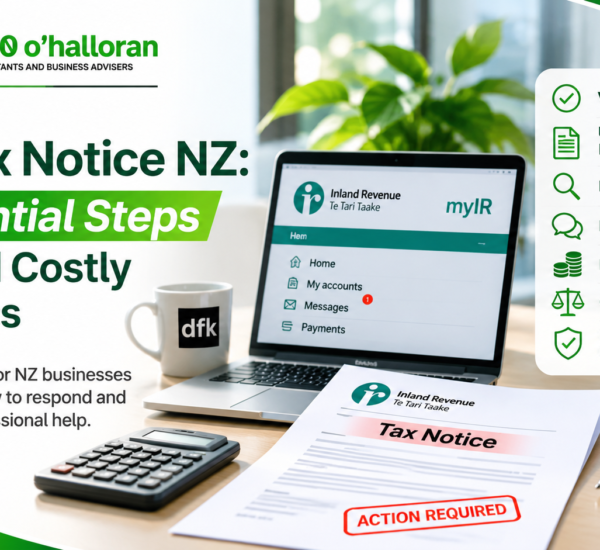
Receiving a letter or notification from Inland Revenue (IRD) can be stressful, especially when it relates to unpaid tax, an outstanding return, a tax assessment or a request for additional business information.
For New Zealand business owners, an IRD notice should never be ignored. Even if you believe the information is incorrect or you cannot afford to pay the amount requested, taking the right steps early can help you understand your obligations and avoid making the situation more difficult.
If you have received an IRD Tax Notice NZ, the first priority is to understand what Inland Revenue is asking you to do, identify the response deadline and determine whether professional accounting support is needed.
If your business receives an IRD tax notice in New Zealand, verify that it is genuine, read the notice carefully, check the tax period and amount, gather supporting financial records and respond within the stated deadline. If you cannot pay the amount owed, explore an instalment arrangement or other available relief. If you disagree with an assessment, seek professional advice promptly because formal dispute processes have strict time limits.
- Never ignore a letter or notification from Inland Revenue.
- Check the notice type, tax period, amount and response deadline.
- Review your GST, PAYE and income tax records for discrepancies.
- Keep supporting invoices, bank statements, payroll records and tax returns.
- Contact IRD if you cannot pay your tax debt in full.
- Seek professional advice if you disagree with an assessment or receive an audit-related request.
- Keep a record of all communication and actions taken.
What Is an IRD Tax Notice in New Zealand?
An IRD tax notice is an official communication from Inland Revenue about your tax affairs, payments, returns, assessments or compliance obligations.
It may be sent through your myIR account, by post or through another official communication channel. The notice explains what Inland Revenue needs you to know or do, which may include paying an outstanding balance, filing a missing return, providing information or reviewing an assessment.
Not every IRD notice means your business is being audited or accused of doing something wrong. Some notices are routine reminders, while others require a formal response.
Common types of IRD notices businesses may receive
- Outstanding tax notices: Notifications about unpaid income tax, GST or PAYE.
- Overdue return reminders: Requests to file outstanding tax returns.
- Tax assessment notices: Information about an assessment or adjustment to your tax position.
- Information requests: Requests for records or explanations relating to your business activities.
- Audit or review correspondence: Communication relating to an Inland Revenue compliance review or audit.
- Payment arrangement communications: Information about repayment arrangements or outstanding tax debt.
7 Essential Steps to Take After Receiving an IRD Tax Notice NZ
1. Verify That the IRD Notice Is Genuine
Before taking action, confirm that the communication genuinely comes from Inland Revenue.
Tax-related scams can use emails, text messages and phone calls that appear to come from government agencies. They may request personal information, bank details or immediate payment.
Rather than clicking unfamiliar links or using payment details supplied in a suspicious message, access your myIR account independently or contact Inland Revenue through its official website.
Check whether the communication relates to your business and whether the same notification or request appears in your official tax account.
What to check:
- Does the notice refer to your correct business or taxpayer details?
- Does the tax period match your records?
- Is the requested action clearly explained?
- Can you verify the communication through myIR or an official IRD contact channel?
2. Identify the Type of Notice and Its Deadline
One of the most important steps after receiving an IRD Tax Notice NZ is identifying exactly what Inland Revenue expects you to do.
Read the entire notice rather than focusing only on the amount due or the subject line. Look for the tax type, relevant period, requested documents, payment instructions and response deadline.
Different notices have different requirements. A reminder to file a GST return is not the same as a formal notice relating to a disputed tax assessment.
For example, if you receive a formal Notice of Proposed Adjustment (NOPA) or need to challenge an assessment, specific statutory time limits may apply.
3. Review Your Business Tax Records
Once you understand the notice, compare the information with your business accounting records.
Errors can occur when returns are incomplete, payments have not been allocated correctly, transactions are recorded in the wrong period or information supplied to Inland Revenue does not match your accounting records.
Review the following documents:
- GST returns and supporting calculations.
- PAYE and employer deductions records.
- Income tax returns and provisional tax payments.
- Sales invoices and purchase receipts.
- Bank statements and transaction records.
- Payroll records and employee information.
- Previous IRD correspondence and payment confirmations.
If you identify a difference, document it before responding. Avoid submitting explanations or amended figures without checking the supporting evidence.
Accurate bookkeeping and regular financial reporting can make it easier to identify discrepancies and respond to an IRD Tax Notice NZ with confidence.
4. Respond to Inland Revenue Within the Required Timeframe
Missing a response deadline can make a tax matter more complicated. If Inland Revenue requests additional information, documents or clarification, review the request and prepare a complete response.
Before submitting anything, make sure you:
- Understand every question or requirement in the notice.
- Collect the relevant supporting documents.
- Check that the figures match your accounting records.
- Respond through the communication channel specified by IRD.
- Keep copies of the response and all attachments.
If you need more time, contact Inland Revenue as early as possible and ask whether an extension or alternative arrangement is available. Do not assume an extension has been granted until it is confirmed.
Where the notice relates to a complex tax issue, an accountant or tax adviser can help you understand the request and prepare an appropriate response.
5. Explore Your Options If You Cannot Pay the Tax Amount
Receiving an IRD notice for unpaid tax can put pressure on your business cash flow. However, ignoring the debt is unlikely to improve your financial position.
If your business cannot pay the full amount by the due date, contact Inland Revenue to understand the available options.
Depending on your circumstances, you may be able to apply for an instalment arrangement through myIR. This can allow eligible tax debt to be repaid in agreed weekly, fortnightly or monthly amounts.
Inland Revenue may also consider financial relief in certain circumstances. Approval is not automatic, and interest or penalties may still apply.
Before applying, review:
- Your current business cash flow.
- Expected customer payments and outstanding invoices.
- Upcoming operating expenses and payroll commitments.
- The amount you can realistically afford to repay.
- Other outstanding tax obligations.
Read more about applying for an instalment arrangement through IRD.
For additional support with managing business finances, explore DFK Orb360’s 3-Week Cash Flow Planner.
6. Get Professional Advice If You Disagree With an Assessment
What happens if you believe an IRD assessment is incorrect?
You should not simply ignore the assessment or assume that explaining your position informally will protect your rights. Inland Revenue has a formal disputes process for certain tax assessments and decisions.
For example, a taxpayer-initiated dispute may involve submitting a Notice of Proposed Adjustment (NOPA). IRD generally requires this within four months of the relevant assessment or disputable decision, subject to applicable rules and exceptions.
If Inland Revenue issues a Notice of Proposed Adjustment and you disagree with it, a Notice of Response (NOR) may be required. The applicable response period is generally two months.
These procedures have specific legal requirements. The correct process depends on the nature of the decision and the circumstances of the taxpayer.
Before taking action:
- Identify which part of the assessment you disagree with.
- Compare the assessment with the original tax return.
- Gather invoices, bank records and other supporting evidence.
- Identify the relevant dispute deadline.
- Seek advice from a qualified tax professional.
Read the official IRD guide to starting the disputes process.
7. Review Your Tax Compliance Processes to Prevent Future Notices
Once the immediate issue has been addressed, take the opportunity to review your business’s accounting and tax compliance processes.
Repeated late filings, inaccurate records, missed payments and incomplete financial reporting can create avoidable administrative and financial pressure.
Consider introducing the following practices:
- Maintain accurate and up-to-date bookkeeping records.
- Reconcile bank accounts regularly.
- Review GST and PAYE obligations before filing deadlines.
- Monitor provisional tax and other upcoming payments.
- Keep invoices, receipts and supporting documents organised.
- Review business cash flow and tax liabilities regularly.
- Work with an accountant to identify potential compliance issues early.
Regular financial reviews can help business owners understand their tax position and make better-informed decisions throughout the year.
DFK Orb360 also provides business accounting and advisory support to help New Zealand businesses improve financial visibility and manage their accounting responsibilities.
What Happens If You Ignore an IRD Tax Notice?
Ignoring an IRD notice can lead to further communication and potentially more serious consequences, depending on the type of notice and the outstanding issue.
Possible consequences include:
- Continued reminders about overdue tax returns or payments.
- Interest and penalties on overdue tax amounts where applicable.
- Further requests for information or compliance action.
- Collection activity for unpaid tax debt.
- Formal dispute rights being affected if required deadlines are missed.
- Potential recovery action in more serious cases.
Inland Revenue has stated that it may pursue collection options for overdue debt, including instalment arrangements and other recovery measures where appropriate.
For businesses, significant unpaid tax can also create wider financial and operational risks. Addressing an IRD notice early is therefore an important part of responsible financial management.
IRD Tax Notice NZ: A Business Owner’s Action Checklist
Use this checklist when your business receives an Inland Revenue communication.
- Confirm that the communication is genuine.
- Identify the tax type and period involved.
- Record the response or payment deadline.
- Check the information against your accounting records.
- Collect relevant invoices, returns and payment confirmations.
- Contact IRD if you need clarification or cannot pay in full.
- Seek professional advice if you disagree with an assessment.
- Save all correspondence and proof of submission.
- Review your accounting and tax compliance processes.
How Can an Accountant Help With an IRD Tax Notice?
Dealing with Inland Revenue correspondence can become complicated when it involves multiple tax types, outstanding returns, disputed assessments or requests for detailed business records.
A qualified accountant or tax adviser can help your business understand the issue, review the relevant financial information and identify the appropriate next steps.
Depending on the engagement and the professional’s scope of services, support may include:
- Reviewing the IRD notice and identifying the required action.
- Checking GST, PAYE and income tax records.
- Reconciling accounting information with tax records.
- Identifying missing returns or payment discrepancies.
- Helping assess tax debt and cash flow implications.
- Advising on the appropriate next steps where an assessment is disputed.
- Helping improve ongoing accounting and compliance processes.
Professional advice can be particularly valuable when a notice involves substantial amounts, complex transactions or strict statutory deadlines.
Why Choose DFK Orb360 O’Halloran?
When your business receives an IRD notice, having a clear understanding of your financial position is essential.
DFK Orb360 O’Halloran works with New Zealand businesses, providing accounting and business advisory support to help business owners make informed financial decisions.
Whether you need assistance understanding your business accounts, reviewing your financial records or improving cash flow management, having the right accounting support can make it easier to manage your business responsibilities.
Explore our business accounting services in New Zealand to learn more about how DFK Orb360 can support your business.
People Also Ask: IRD Tax Notice NZ
1. What should I do if I receive a tax notice from IRD?
If you receive an IRD tax notice, verify that it is genuine, read the notice carefully, identify the tax period and response deadline, and compare the information with your business records. Contact Inland Revenue if you need clarification and seek professional advice if the notice involves a complex tax issue or disputed assessment.
2. Why would Inland Revenue send a tax notice to my business?
Inland Revenue may send a tax notice because of an outstanding tax payment, an overdue return, an assessment, a request for additional information or a compliance review. The reason should be explained in the communication. Check your myIR account and the details of the notice to understand what action is required.
3. Can I arrange a payment plan with IRD for outstanding business tax?
Yes. Eligible businesses that cannot pay their tax debt in full may apply for an instalment arrangement through myIR. Repayments can be arranged weekly, fortnightly or monthly, depending on the approved arrangement. Interest may still apply to overdue amounts, so review the terms before agreeing to a plan.
4. What happens if I disagree with an IRD tax assessment?
If you disagree with a disputable tax assessment or decision, you may be able to use Inland Revenue’s formal disputes process. A Notice of Proposed Adjustment may be required, and the general time limit is four months from the relevant assessment or decision date. The exact procedure depends on your circumstances, so obtain professional advice promptly.
5. How long do I have to respond to an IRD notice?
There is no single response deadline for every IRD notice. The timeframe depends on the type of communication and the action requested. Formal tax disputes have specific statutory deadlines, while information requests and payment notices may have their own dates. Always follow the deadline stated in your notice.
6. Can IRD take action if my business does not pay outstanding tax?
Yes. Inland Revenue may take collection action when tax debt remains unpaid. Depending on the circumstances, this may include further contact, payment arrangements, interest, penalties or other recovery measures. Businesses should contact IRD early if they are experiencing difficulty paying.
7. Does receiving an IRD notice mean my business is being audited?
No. An IRD notice does not automatically mean your business is being audited. It may simply be a payment reminder, an overdue return notification, an assessment or a request for additional information. Read the communication carefully to understand its purpose.
8. Can an accountant communicate with IRD on behalf of my business?
An accountant or tax agent may be able to communicate with Inland Revenue on your behalf once the appropriate authority has been established. The scope of assistance depends on the authority granted and the professional services agreed with your accountant.
Need Help Understanding an IRD Tax Notice?
Receiving an Inland Revenue notice can raise questions about tax payments, compliance requirements and your business’s financial position. Taking action early can help you understand your options and avoid unnecessary complications.
Get Professional Accounting Support for Your Business
Not sure what your IRD notice means or what to do next? Speak with the DFK Orb360 O’Halloran team about your business accounting and advisory requirements.
Book a Free Consultation to discuss how professional accounting support can help your business move forward with greater financial clarity.
Talk to DFK Orb360Send Us an Enquiry
Complete the form below and the DFK Orb360 team can get in touch about your enquiry.
Published: 2 November 2026
Content note: This article provides general information and is not personalised tax or legal advice. Tax procedures, deadlines and available relief depend on individual circumstances. Consult Inland Revenue or a qualified tax professional for advice about your specific situation.



 09 377 4238
 Level 2, 6 Kingdon Street, Newmarket, Auckland
 help@orb360.co.nz