

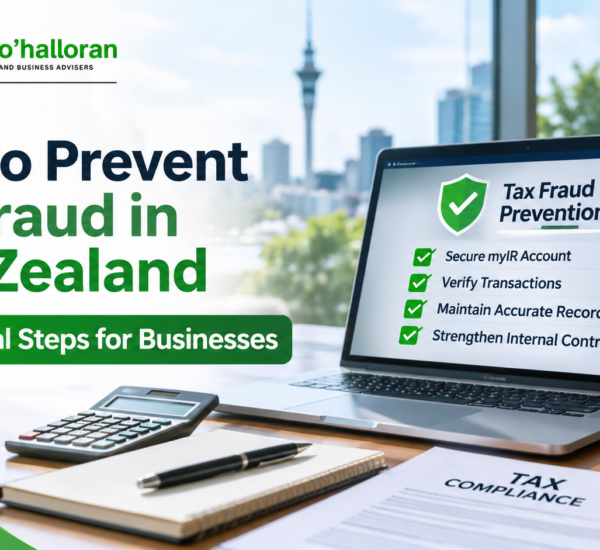
Prevent Tax Fraud in New Zealand is an important priority for business owners, directors and finance teams as cybercrime, identity theft and fraudulent tax activity continue to create risks for businesses. Protecting your business requires more than filing tax returns on time. It involves securing financial information, verifying transactions, maintaining accurate records and establishing effective internal controls.
Recent Inland Revenue (IRD) warnings have highlighted attempts to gain unauthorised access to myIR accounts, including incidents involving malicious links, account takeovers and unauthorised bank account changes used to redirect refunds. These developments demonstrate why businesses should regularly review their financial and digital security practices.
How Can Businesses Prevent Tax Fraud in New Zealand?
New Zealand businesses can reduce their exposure to tax fraud by securing myIR accounts with two-step verification, using unique passwords, checking bank account changes, reviewing GST and income tax returns, verifying financial documents and monitoring unusual transactions. Strong internal controls, employee awareness and professional accounting support can help businesses identify suspicious activity and maintain tax compliance.
Key Takeaways
- Secure myIR accounts using two-step verification and unique passwords.
- Verify requests involving supplier and bank account changes.
- Review GST returns, income tax returns and financial transactions.
- Maintain accurate accounting records and supporting documents.
- Train employees to recognise phishing emails and suspicious messages.
- Seek professional accounting advice when unusual activity is identified.
Taking proactive steps to prevent tax fraud in New Zealand can help businesses protect their financial information, reduce compliance risks and identify suspicious activity early. From securing myIR accounts to reviewing financial transactions, a structured approach to tax fraud prevention is essential for businesses of all sizes.
Why Is Tax Fraud Prevention Important for New Zealand Businesses?
Tax fraud can affect businesses through financial losses, compromised information, inaccurate tax reporting and potential compliance consequences. Criminals may attempt to access tax accounts, misuse personal information, manipulate documents or redirect refunds into unauthorised bank accounts.
In June 2026, Inland Revenue warned about attempts to gain unauthorised access to tax agent myIR accounts. Some incidents involved malicious links that installed malware and enabled attackers to access accounts and redirect refunds.
For business owners, this reinforces the importance of protecting digital access alongside maintaining sound accounting and tax practices.
Read our related article: Tax Fraud in New Zealand: Key Lessons from IRD’s $2 Million Fraud Case.
Best Practices to Prevent Tax Fraud in New Zealand
The best practices to prevent tax fraud in New Zealand include securing digital tax accounts, verifying financial transactions, maintaining accurate records and reviewing business tax obligations regularly. Combining these practices can help businesses build stronger financial controls.
10 Practical Ways to Prevent Tax Fraud in New Zealand
1. Secure Your myIR Account with Two-Step Verification
Protecting your myIR account is one of the most important steps in reducing the risk of tax-related fraud. Unauthorised access can expose sensitive taxpayer information and create opportunities for fraudulent account activity.
Businesses and authorised representatives should:
- Set up two-step verification (2SV) for myIR access.
- Use unique passwords that are not shared with other websites.
- Consider using a passkey where available.
- Keep login credentials private and restrict access to authorised users.
- Review unexpected login notifications immediately.
IRD has reported that two-step verification helped prevent access during a significant automated attack involving more than 500,000 attempted myIR logins in March 2026.
Official guidance: Set up two-step verification for myIR.
2. Verify Bank Account and Supplier Detail Changes
Fraudsters may impersonate suppliers, employees or business representatives to request changes to bank account information. If these requests are not verified, payments and tax refunds may be redirected to unauthorised accounts.
To strengthen payment security:
- Confirm bank account changes using a previously verified contact number.
- Do not rely solely on email instructions.
- Require approval from an authorised person before updating payment details.
- Keep a record of changes and the person who approved them.
- Review bank account details associated with tax accounts regularly.
IRD has specifically warned about unauthorised bank account changes being used to redirect refunds. Read IRD’s account protection guidance.
3. Review GST and Income Tax Returns Before Submission
Accurate tax reporting is essential for New Zealand business tax compliance. Errors, unsupported claims or incorrect information can create financial and compliance risks.
Before submitting GST or income tax returns, businesses should:
- Check reported income against accounting records.
- Review GST collected and GST claimed.
- Ensure expense claims are supported by appropriate documentation.
- Investigate unusual or unexpected adjustments.
- Confirm that returns reflect the business’s actual financial activity.
Where figures do not reconcile, investigate the differences before submitting the return. If the issue is complex, seek advice from a qualified tax professional.
4. Maintain Accurate Financial Records
Good recordkeeping helps businesses demonstrate that their tax returns and financial statements are supported by reliable information. It also makes it easier to identify unusual transactions and investigate discrepancies.
Maintain organised records of:
- Sales invoices and customer receipts.
- Supplier invoices and business expenses.
- Bank statements and payment records.
- GST calculations and tax returns.
- Payroll and employment records.
- Supporting documents for significant transactions.
Businesses should follow applicable New Zealand recordkeeping requirements and retain records for the required period.
5. Monitor Unusual Transactions and Refund Activity
Regular financial reviews can help identify unusual activity before it creates a larger problem. Unexpected refunds, unexplained bank transfers, unfamiliar transactions or changes to account details should be investigated promptly.
Consider establishing a regular review process that includes:
- Checking bank statements and accounting reports.
- Reviewing recent GST and income tax return activity.
- Investigating unfamiliar payments or refund requests.
- Checking changes to supplier and customer information.
- Escalating unexplained differences to the appropriate person.
6. Train Employees to Recognise Phishing and Tax Scams
Employees can unintentionally expose business systems by clicking malicious links, opening suspicious attachments or sharing confidential information.
Phishing messages may appear to come from Inland Revenue, banks, suppliers or senior management. They often use urgent language to encourage recipients to act without checking the request.
Help employees recognise warning signs such as:
- Unexpected requests for login details or financial information.
- Messages asking recipients to click unfamiliar links.
- Urgent payment or refund instructions.
- Unexpected attachments or unusual sender addresses.
- Requests to provide bank or card details through email or text.
IRD advises taxpayers to access myIR by going directly to the official Inland Revenue website rather than using links in unexpected messages.
7. Restrict Access to Financial and Tax Information
Not every employee needs access to all business financial information. Limiting access can reduce the risk of accidental disclosure, unauthorised changes and misuse of sensitive data.
Businesses should:
- Assign system access according to job responsibilities.
- Remove access when employees leave or change roles.
- Review authorised users regularly.
- Protect confidential customer and employee information.
- Keep appropriate records of access and changes.
8. Verify Documents and Financial Information
Digital tools and artificial intelligence can be misused to manipulate documents, invoices and identification information. Businesses should not rely only on the appearance of a document when making important financial decisions.
Where a document or request appears unusual, verify the information through an independent and trusted contact channel. This is particularly important for changes involving bank details, supplier records and payment instructions.
9. Establish Clear Internal Financial Controls
Internal financial controls help businesses reduce errors, identify unusual activity and ensure that important financial decisions are properly authorised.
Useful controls include:
- Separating payment preparation and payment approval responsibilities where practical.
- Requiring approval for significant transactions.
- Reconciling bank accounts regularly.
- Reviewing financial reports and tax submissions.
- Documenting adjustments and changes to financial records.
Smaller businesses with limited staff can introduce alternative checks, such as an independent review of payments or periodic oversight from an external accounting professional.
10. Seek Professional Accounting and Tax Advice
Professional accounting support can help businesses understand their tax responsibilities, maintain reliable records and improve financial reporting processes.
An experienced accountant can assist with:
- Reviewing GST and income tax reporting processes.
- Identifying inconsistencies in financial records.
- Improving accounting and reconciliation procedures.
- Supporting accurate tax reporting.
- Advising on financial controls and compliance practices.
Working with an accounting and business advisory team can also help business owners identify areas where their existing financial processes may need improvement.
What Are the Warning Signs of Potential Tax Fraud?
Recognising warning signs early can help businesses investigate suspicious activity and reduce potential losses.
Look out for:
- Unexpected notifications about changes to myIR account details.
- Unfamiliar bank account details associated with tax refunds.
- Unexplained changes to GST or income tax returns.
- Unexpected login notifications or account access attempts.
- Unusual supplier payment requests.
- Missing invoices or unexplained accounting adjustments.
- Suspicious emails claiming to be from Inland Revenue.
These signs do not automatically prove fraud, but they should be checked promptly and independently.
What Should You Do If You Suspect Tax Fraud in New Zealand?
If your business identifies suspicious tax activity, unauthorised account access or a potentially fraudulent transaction, take action promptly.
- Secure affected accounts: Change compromised passwords and review account access.
- Contact Inland Revenue: Report suspicious myIR activity or unauthorised changes through official IRD channels.
- Contact your bank: If payments or bank details may have been compromised, notify your bank immediately.
- Preserve evidence: Keep relevant emails, invoices, transaction records and account notifications.
- Review financial records: Identify potentially affected returns, payments and transactions.
- Seek professional advice: Speak with an appropriate accounting, tax or legal professional where necessary.
For official guidance, visit Inland Revenue’s information on tax crime.
How DFK Orb360 O’Halloran Supports New Zealand Businesses
Preventing tax fraud requires a combination of accurate financial reporting, secure processes and a clear understanding of business tax obligations.
DFK Orb360 O’Halloran provides accounting, taxation and business advisory services to help New Zealand businesses manage their financial responsibilities and make informed decisions.
Whether you need assistance with tax reporting, financial records or business advisory support, working with an experienced accounting team can help you strengthen your financial processes.
Explore DFK Orb360 O’Halloran’s accounting and business advisory services to learn more.
People Also Ask: Prevent Tax Fraud in New Zealand
1. How can I prevent tax fraud in New Zealand?
You can prevent tax fraud in New Zealand by securing your myIR account with two-step verification, using unique passwords, verifying bank account changes, reviewing tax returns, maintaining accurate financial records and monitoring unusual transactions.
2. What are the most common types of tax fraud in New Zealand?
Common types of tax fraud include fraudulent GST refund claims, false income tax returns, identity theft, misuse of myIR accounts, forged documents and attempts to redirect tax refunds into unauthorised bank accounts.
3. How do I protect my myIR account from fraud?
Use two-step verification or a passkey, create a unique password, avoid suspicious links and attachments, restrict access to authorised users and check unexpected login notifications. Access myIR directly through the official Inland Revenue website.
4. What should I do if someone accesses my myIR account without permission?
Contact Inland Revenue immediately, secure your account, review recent account activity and notify your bank if financial information or refunds may have been affected. Preserve relevant messages and transaction records.
5. Can a business be penalised for tax fraud in New Zealand?
Yes. Depending on the circumstances, businesses and individuals involved in tax fraud may face repayment obligations, penalties, investigations and criminal prosecution. The consequences depend on the nature and seriousness of the conduct.
6. How often should a business review its financial records?
Businesses should reconcile bank accounts and review financial transactions regularly. The appropriate frequency depends on the size and complexity of the business, but regular monthly reviews can help identify discrepancies and unusual activity.
7. Does Inland Revenue contact businesses through email or text?
Inland Revenue may send communications electronically, but taxpayers should be cautious with unexpected messages containing links or requests for sensitive information. IRD advises users to access myIR directly through its official website rather than clicking unfamiliar links.
8. Can an accountant help prevent tax fraud?
An accountant can help review financial records, improve tax reporting processes, identify unusual transactions and strengthen accounting controls. Professional advice can also help businesses understand their tax obligations and respond to potential compliance issues.
Strengthen Your Business Financial Controls with DFK Orb360 O’Halloran
Is your business confident in its accounting processes and tax compliance practices?
Speak with the DFK Orb360 O’Halloran team about your accounting, taxation and business advisory needs. Take a proactive approach to managing your financial responsibilities.
Visit DFK Orb360 O’Halloran or complete the form below to request a consultation.
Request a Consultation with DFK Orb360 O’Halloran
Complete the form below and our team can get in touch to discuss your business requirements.
Official Information and Further Reading
Disclaimer: This article provides general information for New Zealand businesses and is not a substitute for individual accounting, tax, cybersecurity or legal advice. Businesses should seek professional guidance based on their circumstances.


 09 377 4238
 Level 2, 6 Kingdon Street, Newmarket, Auckland
 help@orb360.co.nz