
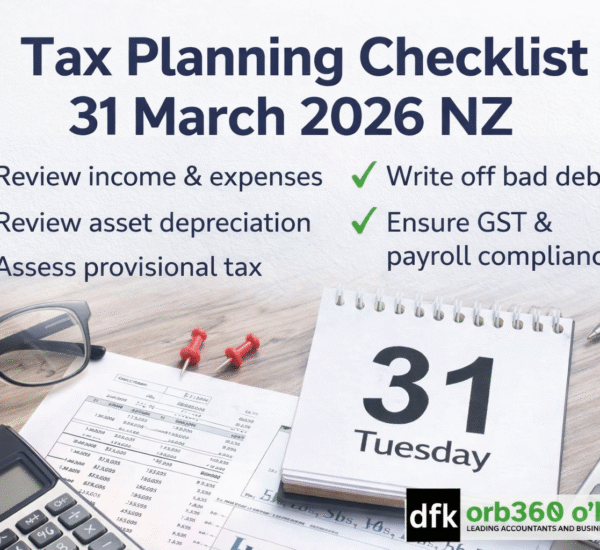
Tax Planning Checklist 31 March 2026 NZ: As the financial year-end approaches, businesses and individuals must act now to review their tax position, ensure compliance, and avoid IRD penalties.
As the 31 March 2026 tax year-end approaches in New Zealand, now is the time for businesses and individuals to review their financial position. This includes checking income and expenses, writing off bad debts, reviewing asset depreciation, and ensuring GST and payroll compliance.
Taking action before the deadline can help minimise tax liability, avoid IRD penalties, and improve cash flow. Seeking professional advice can further ensure accuracy, compliance, and better financial outcomes.
With the 31 March 2026 financial year-end fast approaching, now is the critical window to review your tax position. Leaving tax planning to the last minute can result in missed deductions, cash flow pressure, and potential IRD penalties.
This practical checklist will help New Zealand businesses and individuals prepare effectively, stay compliant, and identify opportunities to optimise their tax outcomes.
This tax planning checklist for 31 March 2026 in NZ helps ensure you meet IRD requirements while identifying opportunities to optimise your tax position.
Year-end tax planning is not just about compliance — it’s about making informed financial decisions before deadlines lock in your position.
For official IRD guidance, refer to: Inland Revenue New Zealand (IRD)
Ensure all income is correctly recorded in the appropriate financial year.
Key actions:
Before 31 March, ensure all eligible business expenses are recorded.
Common deductions include:
Important: Only claim expenses that meet IRD deductibility rules.
If customers are unlikely to pay outstanding invoices, writing them off before year-end may allow a tax deduction.
Action: Ensure debts are formally written off before 31 March.
Check your asset register and depreciation schedules.
Accurate stock valuation is essential for correct tax reporting.
Review all payroll-related compliance before year-end.
Ensure your GST filings are accurate and up to date.
Check whether your provisional tax payments reflect your actual income.
Ensure all filings and obligations are up to date.
Need help handling IRD notices? Read our guide: How to Respond to IRD Notices (DFK Orb360 Guide)
Review your income, expenses, GST, and compliance obligations. Ensure all records are accurate and seek professional advice to optimise your tax position.
Yes, through proper planning such as claiming eligible deductions, writing off bad debts, and reviewing asset depreciation.
You may face IRD penalties, interest charges, and increased audit risk.
With 31 March approaching quickly, delaying action can cost you money. Proactive tax planning ensures compliance while helping you take advantage of available opportunities.
This article provides general information only and does not constitute personalised tax advice. You should seek professional advice tailored to your situation.
A short conversation can help you understand your position, risks, and opportunities.
DFK Orb360
📞 09 442 5767
📧 dfkorb360@gmail.com

Ideally, tax planning should begin at least 1–2 months before 31 March. This allows enough time to review financial records, identify opportunities, and take corrective actions before deadlines.
Tax planning applies to both businesses and individuals. Salaried individuals, investors, and self-employed professionals can all benefit from reviewing their tax position before year-end.
Your records should be complete, accurate, and up to date, including invoices, expenses, payroll, and GST filings. Any discrepancies should be resolved before 31 March.
Yes, even last-minute actions such as reviewing expenses, writing off bad debts, or adjusting provisions can still impact your tax outcome if done before the deadline.
Proper documentation supports your claims and ensures compliance with IRD requirements. Poor record-keeping can increase the risk of audits and disallowed deductions.

Copyright © 2025 Marketing Transformers | All Rights Reserved.


 09 377 4238
 Level 2, 6 Kingdon Street, Newmarket, Auckland
 help@orb360.co.nz