

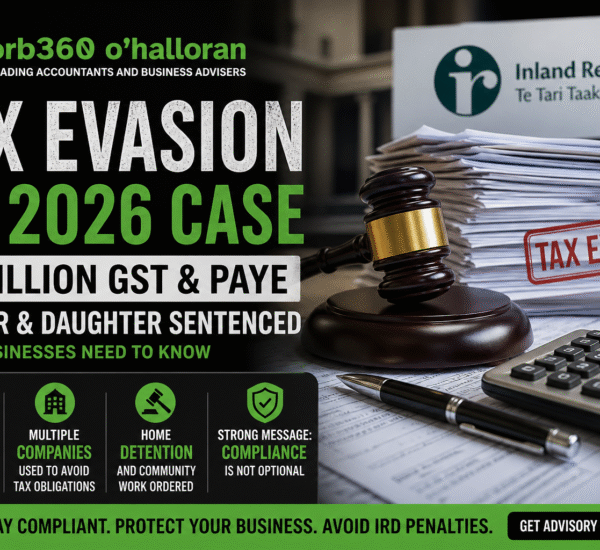
Essential Tax Evasion NZ 2026: $2M GST & PAYE Case Explained
Key Takeaways: Tax Evasion NZ 2026
- Nearly $2 million in GST and PAYE was not paid to Inland Revenue.
- Multiple companies were used to continue operations while avoiding tax liabilities.
- Both individuals received home detention and community work.
- GST and PAYE non-payment is treated as a serious offence.
- Early action and advisory support can reduce compliance risk.
Overview of the Tax Evasion NZ 2026 Case
The tax evasion NZ 2026 case involved a mother and daughter who failed to pay approximately $2 million in GST and PAYE across multiple business entities. The case was prosecuted by Inland Revenue and heard in the Waitakere District Court.
Official source: Inland Revenue media release
How the Tax Evasion Occurred
Use of Business Entities
A labour hire business was used to supply workers. GST collected and PAYE deducted were not remitted to Inland Revenue.
Company Restart Strategy
The original company was closed and replaced shortly after with a new entity, allowing operations to continue while existing tax liabilities remained unpaid.
Ongoing Non-Compliance
A second company continued the same pattern of non-payment, indicating repeated non-compliance across entities.
Financial Breakdown
- Mother: Approximately $997,000 (GST + PAYE)
- Daughter: Approximately $878,000
- Total: Nearly $2 million
Court Outcome
The court initially considered imprisonment but imposed:
- 12 months home detention
- Community work requirements
The reduction in sentencing was based on personal circumstances and guilty pleas.
Why GST and PAYE Non-Compliance Leads to Enforcement
GST and PAYE are trust-based taxes. Businesses collect or deduct these amounts on behalf of Inland Revenue and must remit them accordingly. Failure to do so is treated as tax evasion.
Need Help Resolving IRD Tax Issues?
If your business has GST, PAYE, or compliance issues, early action can help reduce penalties and avoid escalation.
Speak to an AdvisorImplications for Businesses
Tax Obligations Must Be Met
GST and PAYE must be filed and paid on time to avoid enforcement action.
Company Restructuring Does Not Remove Liability
Starting a new company does not eliminate existing tax obligations.
Repeated Non-Compliance Increases Risk
Ongoing failures can lead to audits, penalties, and prosecution.
How to Address IRD Tax Issues
- Review outstanding GST and PAYE obligations
- Correct past filings
- Set up structured payment arrangements
- Implement financial reporting systems
Advisory firms such as DFK Orb360 support businesses with compliance, reporting, and tax strategy.
Related Services
People Also Ask
What is tax evasion in New Zealand?
Tax evasion involves deliberate non-payment or underreporting of tax obligations.
Can GST non-payment lead to prosecution?
Yes, serious cases may result in criminal charges.
Does IRD monitor business activity?
Yes, Inland Revenue uses data systems to track compliance.
Can new companies avoid old tax debt?
No, liabilities remain enforceable.
Frequently Asked Questions
What triggers IRD action?
Late payments, incorrect filings, and repeated non-compliance.
How can businesses avoid penalties?
Maintain accurate records and resolve issues early.
Next Steps for IRD Compliance
If your business has outstanding tax obligations or compliance concerns, reviewing your position and taking corrective action early can reduce risk.
Request Advisory Support


 09 377 4238
 Level 2, 6 Kingdon Street, Newmarket, Auckland
 help@orb360.co.nz