

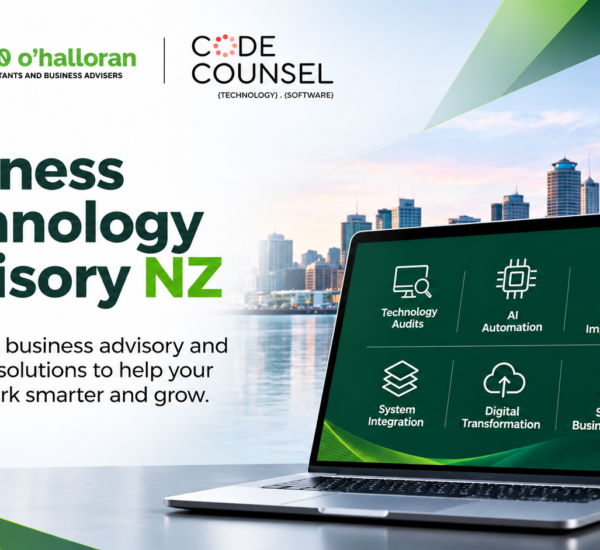
Looking for Business Technology Advisory NZ services to improve your business systems, explore AI and manage technology investments more effectively?
Business Technology Advisory NZ services help organisations assess their existing systems, identify operational inefficiencies and explore practical digital solutions. From technology audits and artificial intelligence (AI) to business automation and software integration, the right technology strategy can help businesses make more informed decisions.
As businesses grow, their technology requirements evolve. Disconnected software, repetitive manual processes, outdated systems and increasing technology costs can make everyday operations more complicated.
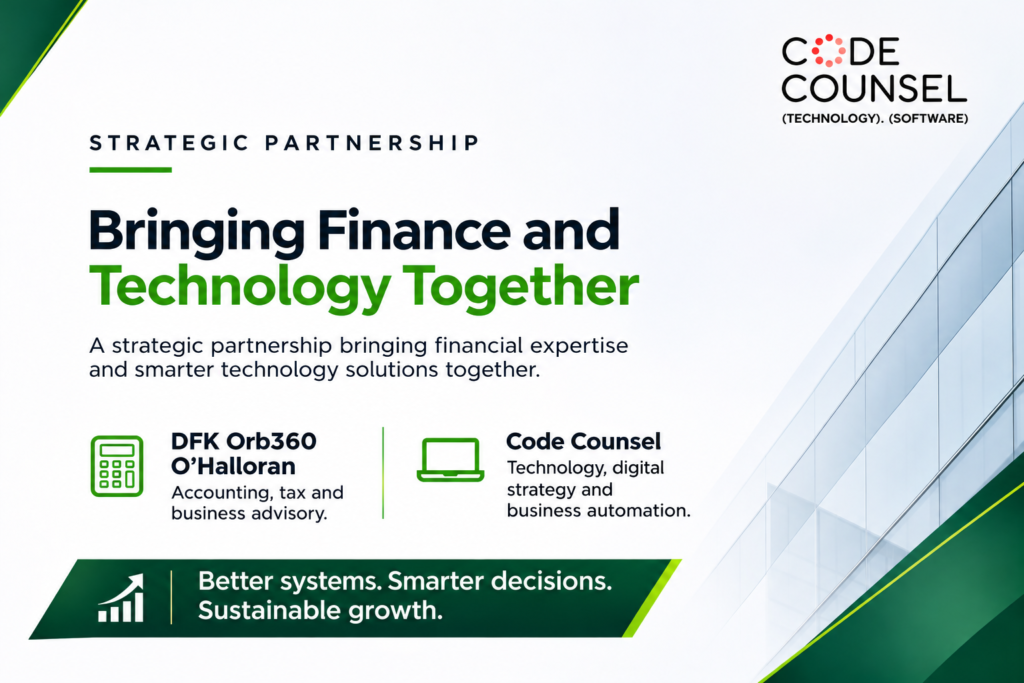
DFK Orb360 O’Halloran has partnered with Code Counsel to bring together accounting, business advisory and technology expertise for businesses throughout New Zealand.
Whether you want to review existing business systems, explore AI solutions, improve workflows or plan a technology investment, this partnership provides an opportunity to discuss practical solutions aligned with your business requirements.
Enquire About a Technology Audit Explore Code CounselWhat Is Business Technology Advisory NZ and How Can It Help Your Business?
Business technology advisory is the process of evaluating how an organisation uses technology and identifying opportunities to improve its systems, processes and digital capabilities.
For New Zealand businesses, this means connecting technology decisions with wider commercial objectives. Rather than investing in software simply because it is popular, businesses can assess whether a particular solution addresses a genuine operational requirement.
Business technology advisory may include:
- Reviewing existing software, applications and digital systems.
- Identifying disconnected platforms and workflow inefficiencies.
- Evaluating opportunities for business process automation.
- Exploring suitable artificial intelligence applications.
- Assessing system integration and cloud technology requirements.
- Reviewing technology expenditure and investment priorities.
- Developing a technology improvement roadmap.
The objective is to identify technology that supports business performance, operational requirements and future growth.
What Technology Challenges Can a Business Technology Audit Identify?
Businesses often accumulate software and digital tools over time. However, without regular reviews, those tools may not work together effectively or continue to meet changing business requirements.
1. Disconnected Business Systems
Separate accounting, customer management, sales and inventory platforms can create information gaps. Reviewing integration opportunities may help improve information flow and reduce duplicate data entry.
2. Repetitive Manual Processes
Manual reporting, document management, data transfers and routine administration can consume valuable working hours. Suitable automation may help streamline these activities.
3. Underused Software and Rising Costs
Businesses may pay for subscriptions, licences or applications without using their full capabilities. A review can help identify duplicated tools and areas for reconsideration.
4. Limited Use of Artificial Intelligence
Businesses may have opportunities to use AI for document processing, data analysis, customer enquiry management and workflow assistance.
5. Unclear Technology Investment Priorities
Software, infrastructure, implementation and maintenance costs should be considered alongside business requirements and available resources.
6. Systems That Cannot Scale Easily
Technology that suited a smaller organisation may not support increased transactions, employees, customers or operational complexity as the business grows.
A structured review can help business owners understand their current technology environment and consider which improvements deserve priority.
What Does a Technology Audit Include for New Zealand Businesses?
A technology audit is a structured review of the technology a business currently uses, how its systems operate and where potential improvements may exist.
The scope depends on the organisation, its existing technology environment and the objectives agreed with the service provider.
| Technology review area | What it may identify |
|---|---|
| Software and applications | Outdated, duplicated or underused software. |
| Business workflows | Repetitive manual tasks and process gaps. |
| System integration | Opportunities to connect separate business platforms. |
| AI and automation | Processes that may be suitable for automation or AI assistance. |
| Technology expenditure | Software costs and potential areas for review. |
| Digital infrastructure | Technology requirements and potential limitations. |
| Business requirements | Priorities for future technology investment. |
A technology audit should provide a clearer understanding of the existing technology environment. It is not simply a list of software recommendations.
Is Your Business Technology Working as It Should?
Identify possible system gaps, workflow inefficiencies and opportunities for improvement.
Enquire About a Technology AuditBusiness Technology Advisory and Solutions Through DFK Orb360 and Code Counsel
DFK Orb360 O’Halloran and Code Counsel bring complementary areas of expertise to help businesses consider technology, financial and operational decisions together.
DFK Orb360 O’Halloran: Accounting and Business Advisory
DFK Orb360 O’Halloran provides accounting, tax advisory and strategic business support to businesses across New Zealand.
Depending on business requirements, its services include:
- Accounting and financial reporting.
- Tax advisory and compliance.
- Strategic business advisory.
- Business performance reviews.
- Outsourced CFO services.
- Cloud accounting support.
- Bookkeeping and reporting.
These services can help business owners understand their financial position, evaluate business performance and consider the financial implications of important decisions.
Explore DFK strategic advisory services and accounting services.
Code Counsel: AI, Automation and Technology Solutions
Code Counsel provides technology and digital solutions for businesses looking to improve their systems and digital capabilities.
Its technology service areas include:
- AI and business automation.
- CRM and ERP development.
- System integration.
- Custom software development.
- Cloud infrastructure.
- Website and e-commerce development.
- Digital transformation.
- Lead generation and digital marketing.
The appropriate solution depends on the business’s requirements, technical environment and objectives.
Learn more about Code Counsel’s technology services.
Why Combine Accounting and Technology Advice?
Technology decisions can affect more than IT operations. They may influence operating costs, cash flow, productivity, reporting and capital investment.
For example, a business considering new software may need to evaluate:
- Initial implementation costs.
- Ongoing subscriptions and maintenance.
- Expected operational benefits.
- Budget and cash flow implications.
- Accounting treatment of relevant expenditure.
- Potential tax implications requiring professional review.
Bringing accounting and technology perspectives together can help business owners assess these decisions more comprehensively.
How Can AI Consulting and Business Automation Improve Business Efficiency?
AI consulting and business automation can help organisations identify repetitive processes, explore suitable digital tools and consider ways to improve everyday workflows.
However, not every process requires AI, and not every business needs a complex software solution. The first step is to identify an actual business challenge.
AI for Customer Enquiries and Communication
Businesses handling routine enquiries may explore tools that organise incoming requests, provide initial responses or direct enquiries to the appropriate team. Human oversight remains important for complex or sensitive matters.
Automated Document Processing
Businesses working with large volumes of documents may investigate automation for extracting, organising and processing information, subject to appropriate accuracy checks and privacy controls.
AI for Reporting and Data Analysis
Businesses may explore ways to reduce manual data handling and improve internal reporting by connecting appropriate systems and automating routine data processes.
Workflow Automation for Everyday Tasks
Tasks involving notifications, approvals, data transfers and task assignments may be suitable for workflow automation. Suitability depends on the complexity and reliability requirements of each process.
CRM Systems and Customer Relationship Management
Customer relationship management systems help businesses organise customer information, monitor sales opportunities and manage follow-ups.
The right AI or automation approach depends on existing systems, data quality, security requirements and expected business benefits.
How Does the Business Technology Advisory Process Work?
A structured Business Technology Advisory NZ process connects recommendations with actual business requirements. The exact scope and deliverables should be agreed with the relevant service provider.
Step 1: Understand Your Business Requirements
Understand the organisation, its current operations, business objectives and technology challenges. This includes identifying existing systems and areas where improvements may be needed.
Step 2: Review Existing Business Technology
Assess the relevant technology environment and workflows to identify potential gaps, duplicated tools, integration requirements and opportunities for improvement.
Step 3: Identify Technology and Automation Opportunities
Consider suitable solutions, which may include software improvements, system integration, AI applications, automation or custom technology development.
Step 4: Consider Financial and Operational Implications
Technology recommendations should be considered alongside implementation costs, ongoing expenditure, cash flow and wider business priorities. DFK Orb360 O’Halloran can provide accounting, tax and business advisory input where appropriate.
Step 5: Plan Your Technology Improvement Roadmap
Once priorities are established, the business can consider an implementation roadmap that reflects its requirements, resources and budget.
Technology Investment, R&D Tax Credits and Depreciation in New Zealand
Technology investment can have accounting and tax implications. Understanding these before committing to a project can help businesses plan more effectively.
Research and Development Tax Incentive in New Zealand
New Zealand’s Research and Development Tax Incentive (RDTI) provides tax credits for eligible research and development activities that meet the relevant legislative and programme requirements.
Not every software development or technology project qualifies. Eligibility depends on the nature of the activities, expenditure and applicable rules. Businesses should seek professional advice before relying on a potential R&D tax credit.
Read more from Inland Revenue New Zealand.
Depreciation on Technology Assets
Certain technology assets may be depreciable for tax purposes. The applicable treatment depends on the type of asset, its business use, cost and current tax rules.
Accounting Treatment of Technology Expenditure
Software subscriptions, implementation costs, development expenditure and other technology-related expenses may receive different accounting and tax treatments depending on their nature and circumstances.
Financial Planning Before Investing in Technology
Before committing to a technology project, businesses should consider the initial investment, ongoing costs, expected operational benefits and cash flow implications.
DFK Orb360 O’Halloran can help businesses assess relevant accounting and tax considerations. R&D tax credit eligibility and depreciation treatment must be reviewed against applicable rules and individual circumstances. No tax benefit is guaranteed.
Which Industries Can Benefit from Business Technology Advisory NZ?
Business Technology Advisory NZ services may be useful for organisations across different industries and stages of growth.
Small and Medium-Sized Businesses
Smaller businesses may want to review software, administrative processes, customer management and opportunities to automate repetitive work.
Construction and Contracting Businesses
Construction and contracting businesses may consider reviewing project processes, communication systems, job management and operational reporting.
Manufacturing Businesses
Manufacturers may investigate process management, information flow, reporting and system integration opportunities.
Professional Services Firms
Professional services firms may review client management, document workflows, internal collaboration and reporting processes.
Retail and E-commerce Businesses
Retail and e-commerce businesses may assess online systems, customer management, inventory processes and integration between sales platforms.
Growing and Established Organisations
Growing and established businesses may require broader technology planning, system modernisation, integration and scalable digital infrastructure.
DFK Orb360 O’Halloran and Code Counsel welcome enquiries from businesses across Auckland, Wellington, Christchurch, Hamilton, Tauranga, Dunedin and other parts of New Zealand. Service availability and delivery arrangements can be discussed with the team.
Introductory Technology Audit Offer for Eligible DFK Clients
To introduce businesses to the partnership, DFK Orb360 O’Halloran and Code Counsel are offering an introductory technology audit package.
$100 Technology Audit
A comprehensive introductory technology audit package, subject to confirmation of the agreed scope and terms.
15% First Engagement Discount
Eligible DFK clients can enquire about 15% off their first engagement, subject to applicable conditions.
The offer’s scope, eligibility, applicable services and terms should be confirmed with the team before booking. Implementation work and additional services are not automatically included in the audit package.
Enquire About the Introductory OfferTalk to DFK Orb360 About Your Business Technology Requirements
Tell us about your business and the technology challenges you are looking to address. Whether you are considering AI, reviewing existing software, exploring automation or planning a wider technology upgrade, our team can discuss an appropriate next step.
Request a Business Technology Consultation
Complete the enquiry form below to get in touch with DFK Orb360 O’Halloran.
Frequently Asked Questions About Business Technology Advisory NZ
What is Business Technology Advisory NZ?
Business Technology Advisory NZ refers to professional guidance that helps New Zealand organisations assess their technology, identify operational challenges and explore suitable digital solutions. It may cover software, AI, automation, system integration and technology planning.
What is included in a technology audit?
A technology audit may review software applications, business systems, technology expenditure, workflows, integrations and opportunities for automation. The exact scope depends on the organisation and the agreed audit requirements.
Why should a small business consider a technology audit?
A small business may benefit from reviewing its technology when it experiences increasing administrative work, disconnected systems, rising software costs or difficulty managing processes as it grows. A review can help identify potential improvements and priorities.
Can AI help improve business efficiency?
AI may support tasks such as document processing, data analysis, customer enquiry management and routine administrative workflows. Its suitability depends on the business process, available data, privacy requirements and need for human oversight.
What is the difference between a technology audit and digital transformation?
A technology audit is a review of existing technology and potential improvement areas. Digital transformation is a broader process of changing how a business operates through technology, systems and digital processes. An audit may help inform a digital transformation plan.
Does Code Counsel provide AI and automation solutions?
Code Counsel lists AI and business automation, system integration, CRM and ERP development, cloud infrastructure and custom software among its technology service areas. The most appropriate solution depends on the business’s requirements and technical environment.
Can technology expenditure qualify for R&D tax credits in New Zealand?
Not all technology expenditure qualifies. New Zealand’s Research and Development Tax Incentive applies to eligible R&D activities that meet the relevant requirements. A business should seek professional advice to assess eligibility before relying on a potential credit.
Can businesses claim depreciation on technology assets?
Some qualifying technology assets may be depreciable for tax purposes. The treatment depends on the asset, its use and applicable Inland Revenue rules. Businesses should obtain advice for their specific circumstances.
Do I need to be based in Auckland to use this service?
No specific Auckland location requirement is intended for this partnership campaign. Businesses across New Zealand are welcome to enquire and discuss their requirements. Availability and delivery arrangements for particular services should be confirmed with the team.
How much does the introductory technology audit cost?
The advertised introductory package is $100, subject to confirmation of its scope and terms. Eligible DFK clients may also enquire about the 15% discount on their first engagement. Contact the team for current offer details.
How do I get started with DFK Orb360 and Code Counsel?
Complete the enquiry form on this page and explain your business’s technology requirements. The team can review your enquiry and discuss an appropriate next step.


 09 377 4238
 Level 2, 6 Kingdon Street, Newmarket, Auckland
 help@orb360.co.nz