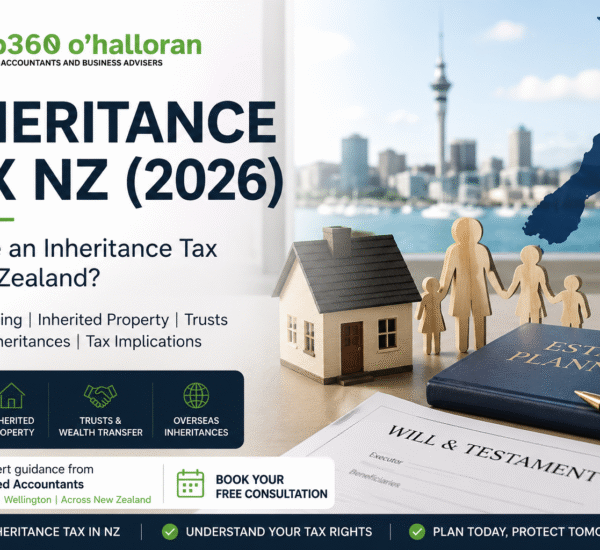
Inheritance Tax NZ (2026): Is There an Inheritance Tax in New Zealand?
Last Updated: July 2026
Key Takeaways
Many New Zealanders wonder whether they must pay Inheritance Tax NZ when receiving money, property, or assets from a deceased family member. The good news is that New Zealand currently does not have an inheritance tax. However, inherited assets may still have tax implications depending on how they are managed, invested, or sold. This guide explains inheritance tax, estate duty, gift duty, trusts, inherited property, overseas inheritances, and practical estate planning strategies for individuals and families across New Zealand.
Receiving an inheritance can be an emotional and financially significant event. Whether you inherit a family home, investment property, business shares, cash, or other valuable assets, understanding how Inheritance Tax NZ works is essential for making informed financial decisions.
Many people mistakenly believe they’ll need to pay tax immediately after receiving an inheritance. Others confuse inheritance tax with estate duty, gift duty, capital gains tax, or income tax.
Although New Zealand does not currently impose an inheritance tax, there are situations where inherited assets may create future tax obligations depending on how those assets are used or disposed of.
At DFK Orb360, our Chartered Accountants help individuals, families, investors, trustees, and business owners throughout Auckland, Wellington, and across New Zealand understand estate planning, taxation, trusts, and long-term wealth management.
Quick Answer
Does New Zealand have an Inheritance Tax?
No. New Zealand does not currently have an inheritance tax. Most beneficiaries do not pay tax simply because they receive an inheritance. However, future income generated from inherited assets, or tax consequences arising from the sale or investment of those assets, may still be subject to New Zealand tax rules.
What Is Inheritance Tax?
Inheritance Tax is a tax imposed on assets or money received by beneficiaries after someone passes away.
Different countries apply inheritance tax in different ways. In some jurisdictions, beneficiaries pay tax on what they receive, while in others the deceased person’s estate pays tax before assets are distributed.
Unlike several overseas tax systems, Inheritance Tax NZ does not currently exist under New Zealand law.
This means beneficiaries generally receive inherited assets without paying inheritance tax simply because they inherit them.
Does New Zealand Have an Inheritance Tax?
No.
One of the most common questions asked by families is whether they need to pay Inheritance Tax NZ after inheriting money or property.
The answer is straightforward:
There is currently no inheritance tax in New Zealand.
Beneficiaries usually do not pay tax when receiving inherited assets.
The transfer of an estate to beneficiaries is generally not treated as taxable income.
However, receiving an inheritance does not automatically eliminate all future tax responsibilities. The tax treatment depends on what happens after you inherit the asset.
A Brief History of Estate Duty in New Zealand
Although New Zealand no longer has an inheritance tax, the country previously imposed Estate Duty.
Estate Duty was a tax charged on the value of a deceased person’s estate before assets were distributed to beneficiaries.
Estate Duty was abolished in New Zealand for deaths occurring after 17 December 1992.
Since then, New Zealand has become one of the relatively small number of countries that do not impose a traditional inheritance tax.
Inheritance Tax vs Estate Duty vs Gift Duty
These terms are often confused, but they refer to different concepts.
Term
Meaning
Currently Applies in NZ?
Inheritance Tax
Tax paid by beneficiaries receiving inherited assets.
❌ No
Estate Duty
Tax paid by the deceased person’s estate.
❌ Abolished
Gift Duty
Tax on gifts made during a person’s lifetime.
❌ Abolished
Although these taxes have been abolished, estate planning remains important because other tax obligations may arise depending on the nature of inherited assets.
What Can You Inherit?
An inheritance may include many different types of assets, including:
Cash and savings
Family homes
Rental properties
Commercial property
Investment portfolios
Business ownership interests
Shares and managed funds
KiwiSaver benefits (subject to scheme rules)
Personal possessions and valuables
Trust distributions
Each type of inherited asset may have different financial, legal, or tax considerations after ownership transfers.
Who Should Understand Inheritance Tax NZ?
Understanding Inheritance Tax NZ is important for more than just beneficiaries.
Professional advice can also benefit:
Families preparing wills.
Executors managing estates.
Property investors.
Business owners planning succession.
Trustees administering family trusts.
Retirees planning wealth transfers.
Individuals receiving overseas inheritances.
Estate Planning Advice Across Auckland, Wellington & New Zealand
Whether you’re preparing a will, managing a deceased estate, receiving an inheritance, or planning future wealth transfers, DFK Orb360 provides trusted tax and accounting advice across New Zealand.
Our Chartered Accountants assist clients throughout Auckland, North Shore, Albany, Newmarket, Manukau, East Auckland, West Auckland, Wellington CBD, Petone, Lower Hutt, Upper Hutt, Porirua, Tawa, Johnsonville, Kapiti Coast, and businesses across New Zealand.
Whether you’re inheriting property, managing family trusts, transferring business ownership, or seeking estate planning advice, our experienced Chartered Accountants can help you understand your obligations and make informed financial decisions.
Need Professional Estate Planning or Tax Advice?
If you’re receiving an inheritance, administering an estate, or planning how to transfer wealth to future generations, DFK Orb360 can help you understand your tax position and develop an effective estate planning strategy.
While New Zealand does not currently impose an Inheritance Tax NZ, every estate is different. Factors such as overseas assets, trusts, investment properties, family businesses, and future income generated by inherited assets can all affect your financial position.
In the next section, we’ll explain inherited property, overseas inheritances, trusts, estate administration, common misconceptions, and situations where inherited assets may still create tax obligations in New Zealand.
Need Advice on Inheritance Tax or Estate Planning?
Whether you’ve inherited property, received an overseas inheritance, are administering a deceased estate, or planning how to pass on your wealth, our Chartered Accountants can provide tailored advice to help you understand your tax obligations and plan with confidence.
For most people, simply receiving an inheritance does not create an immediate tax liability.
Whether you inherit cash, a family home, shares, investments, or business assets, the inheritance itself is generally not considered taxable income under current New Zealand tax law.
However, once you become the owner of those assets, any future income they generate may be taxable depending on your individual circumstances.
Can You Pay Tax on Inherited Property?
Although there is currently no Inheritance Tax NZ, inherited property may create future tax obligations after ownership transfers.
For example:
Rental income from an inherited investment property may be taxable.
Business income generated from inherited commercial assets may be taxable.
Interest earned on inherited cash remains taxable income.
Dividend income from inherited shares may also be taxable.
Receiving the asset itself is generally not taxed, but the income generated after you inherit it may be.
What Happens If You Sell an Inherited Property?
Many beneficiaries choose to sell inherited property shortly after receiving it.
Whether tax applies depends on several factors, including:
The type of property inherited.
How long the property is held.
Your intended use of the property.
Whether the Bright-line Property Rule applies.
Your individual tax circumstances.
Property taxation can become complex, particularly where investment properties, trusts, or business assets are involved.
Professional advice before selling inherited property can help you understand your obligations and avoid unexpected tax consequences.
What About Overseas Inheritances?
New Zealand residents sometimes inherit money or assets from overseas family members.
In most situations, receiving an overseas inheritance does not automatically trigger Inheritance Tax NZ.
However, overseas assets may involve additional considerations such as:
Foreign tax rules.
Double Tax Agreements.
Foreign investment reporting.
Currency conversion.
Trust reporting obligations.
Cross-border estate planning is often more complex and should be reviewed by qualified tax professionals.
Can Trusts Affect Inheritance Tax?
Family trusts continue to play an important role in estate planning throughout New Zealand.
Although trusts do not create an Inheritance Tax NZ, they may affect:
How assets are transferred.
Who controls inherited assets.
Asset protection.
Business succession.
Future income distributions.
Estate administration.
Proper trust planning can simplify wealth transfers while ensuring legal and tax obligations are properly managed.
Why Estate Planning Is Still Important
Some people assume that because New Zealand has no inheritance tax, estate planning is unnecessary.
In reality, good estate planning helps families:
Protect family wealth.
Reduce disputes between beneficiaries.
Simplify estate administration.
Protect business continuity.
Ensure assets are distributed according to personal wishes.
Minimise future tax risks.
Estate planning is about much more than taxation—it provides clarity and financial security for future generations.
Common Misconceptions About Inheritance Tax NZ
Myth 1: Every inheritance is taxed.
False.
New Zealand does not currently impose an inheritance tax on beneficiaries.
Myth 2: Selling inherited property is always tax free.
Not necessarily.
Property taxation depends on several factors including ownership, use, and applicable tax rules.
Myth 3: Overseas inheritances are never reportable.
Incorrect.
While receiving an overseas inheritance may not itself be taxable, foreign assets and income can create additional reporting and tax obligations.
Myth 4: Trusts eliminate every tax obligation.
Trusts remain valuable estate planning tools, but they do not remove every legal or tax responsibility.
How DFK Orb360 Can Help
Estate planning often involves more than simply understanding Inheritance Tax NZ.
Our Chartered Accountants help clients with:
Estate planning strategies.
Family trust advice.
Business succession planning.
Property tax advice.
Cross-border tax matters.
Executor support.
IRD compliance.
Long-term wealth planning.
Estate Planning Services Across Auckland & Wellington
DFK Orb360 provides estate planning and taxation advice for individuals, families, investors, trustees, and business owners throughout Auckland, North Shore, Albany, Newmarket, Wellington CBD, Petone, Lower Hutt, Upper Hutt, Porirua, Tawa, Johnsonville, Kapiti Coast, and clients across New Zealand.
Whether you’re preparing your own estate plan, administering a deceased estate, or receiving inherited assets, our experienced Chartered Accountants can help you understand your tax obligations while protecting your family’s long-term financial interests.
People Also Ask About Inheritance Tax NZ
Is there an inheritance tax in New Zealand?
No. New Zealand currently does not impose an inheritance tax on beneficiaries.
Do I pay tax when I inherit money?
Generally, no. Receiving inherited money is not usually considered taxable income in New Zealand.
Do I pay tax when selling inherited property?
Possibly. The tax treatment depends on your circumstances, the type of property, and current property tax rules.
Can overseas inheritances be taxed?
Receiving an overseas inheritance is generally not taxable, but future income, foreign reporting obligations, and overseas tax rules may still apply.
Can DFK Orb360 help with estate planning?
Yes. DFK Orb360 assists individuals and families with estate planning, trusts, succession planning, taxation, and long-term wealth management.
Need Advice on Inheritance Tax or Estate Planning?
Whether you’ve inherited property, received an overseas inheritance, are administering a deceased estate, or planning how to transfer your wealth, our Chartered Accountants can help you understand your tax obligations and develop a practical estate planning strategy.
Frequently Asked Questions About Inheritance Tax NZ
Can beneficiaries inherit property tax free?
In most situations, yes. Receiving inherited property itself is generally not taxable, although future income or disposal of the property may have tax implications.
Does New Zealand still have Estate Duty?
No. Estate Duty was abolished for deaths occurring after 17 December 1992.
Should I seek professional advice before selling inherited assets?
Yes. Property, investments, trusts, and overseas assets can all create tax considerations that are best reviewed before making financial decisions.
Can DFK Orb360 help with family trusts and succession planning?
Absolutely. Our Chartered Accountants provide advice on trusts, business succession, estate planning, tax compliance, and wealth preservation for families and businesses throughout New Zealand.
Planning Ahead Protects Your Family’s Future
While there is currently no Inheritance Tax NZ, thoughtful estate planning remains one of the most effective ways to protect your wealth, reduce future complications, and provide certainty for your loved ones. Understanding how inherited assets, trusts, property, and future income are treated under New Zealand tax law allows families to make informed decisions with confidence.
At DFK Orb360, we’re here to help you navigate every stage of estate planning, inheritance, and long-term financial planning with practical, personalised advice.
Inheritance Tax NZ does not currently exist in New Zealand.
Receiving an inheritance is generally not taxable.
Income earned from inherited assets may still be taxable.
Inherited property can have tax implications depending on how it is used or sold.
Estate planning, trusts, and succession planning remain important for protecting family wealth.
Professional advice can help minimise risks and ensure compliance with Inland Revenue requirements.
Why Choose DFK Orb360?
Estate planning is about much more than understanding whether Inheritance Tax NZ exists. It involves protecting your assets, planning for future generations, managing family trusts, preparing business succession plans, and ensuring your affairs are structured efficiently.
DFK Orb360 provides strategic tax and accounting advice for individuals, families, investors, trustees, and business owners across Auckland, Wellington, and throughout New Zealand. Our Chartered Accountants combine practical experience with tailored advice to help you preserve wealth while remaining compliant with Inland Revenue requirements.
This article provides general information only and should not be considered accounting, taxation, financial, or legal advice. Every estate, inheritance, family trust, and succession plan is different. Before making decisions regarding inherited assets, trusts, estate administration, or taxation, seek advice from a qualified Chartered Accountant or legal professional.




 09 377 4238
 Level 2, 6 Kingdon Street, Newmarket, Auckland
 help@orb360.co.nz