

IRD News & Tax Updates
IRD Warns: Bogus Expense Claims Are Fraud – What NZ Taxpayers Need to Know
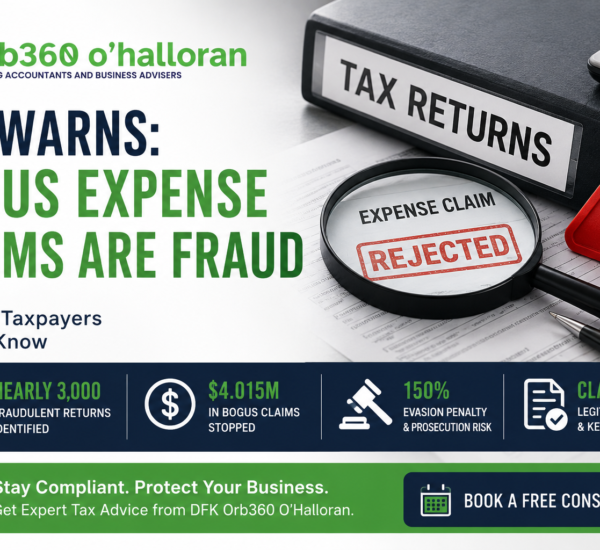
Inland Revenue (IRD) has issued a serious warning about a coordinated scheme involving bogus expense claims on New Zealand tax returns. Nearly 3,000 fraudulent amended returns have been identified and stopped, including 542 returns received in just one night.
IRD says people who deliberately claim expenses that are not legitimate could face significant consequences, including having to repay incorrectly received refunds, a 150% evasion shortfall penalty and potentially prosecution.
For taxpayers and businesses, the message is straightforward: tax deductions must be genuine, eligible and supported by appropriate records.
If you are concerned about a tax return, deduction or previous expense claim, professional tax advice can help you understand the appropriate next steps.
IRD Bogus Expense Claims Warning 2026
Inland Revenue (IRD) has warned New Zealand taxpayers that bogus expense claims are fraud and may result in serious penalties. IRD has identified nearly 3,000 fraudulent amended tax returns, including 542 submitted in a single night. A total of $4.015 million in bogus claims was stopped, while $151,787 had already been paid out.
The scheme involves taxpayers deliberately claiming false, inflated or ineligible expenses to increase their tax refunds. Depending on the circumstances, those involved may have to repay incorrectly received refunds, face a 150% evasion shortfall penalty and potentially face prosecution.
An honest tax mistake is different from deliberate tax fraud. However, taxpayers who are concerned about an incorrect deduction, amended tax return or IRD enquiry should seek professional advice promptly.
DFK Orb360 O’Halloran can help individuals and businesses review tax deductions, address potential tax-return errors, manage IRD compliance matters and obtain professional tax advice.
IRD Bogus Expense Claims Warning: Key Takeaways
- IRD has identified and stopped nearly 3,000 fraudulent amended tax returns.
- 542 fraudulent returns were received in a single night.
- $4.015 million in bogus claims was stopped.
- $151,787 in refunds had already been paid before additional controls were introduced.
- People deliberately claiming illegitimate expenses may face a 150% evasion shortfall penalty.
- IRD says prosecution may also be possible.
- Incorrectly received refunds may need to be repaid.
- The activity initially appeared concentrated in the transport industry but has broadened to other sectors.
- IRD is also working to identify people promoting or running the scheme.
What Is the Latest IRD Warning About Bogus Expense Claims?
Quick answer: Inland Revenue has warned New Zealand taxpayers that deliberately claiming expenses that are not legitimate can amount to fraud. IRD has identified nearly 3,000 fraudulent amended returns and says people involved may face repayment obligations, a 150% evasion shortfall penalty and potentially prosecution.
According to the official IRD announcement published on 26 August 2026, a specialist Inland Revenue team noticed unusual tax returns earlier this month and launched an investigation.
The investigation identified a coordinated scheme involving people making false or illegitimate expense claims to obtain additional money through amended tax returns.
Read the official Inland Revenue announcement about bogus expense claims for the source information.
How Big Is the IRD Tax Fraud Scheme?
The figures released by Inland Revenue demonstrate the scale of the activity. Nearly 3,000 fraudulent amended returns were identified and stopped.
| IRD figure | What it means |
|---|---|
| Nearly 3,000 | Fraudulent amended returns identified and stopped |
| 542 | Fraudulent returns received in one night |
| $4.015 million | Bogus claims stopped by Inland Revenue |
| $151,787 | Refunds paid before additional controls were introduced |
IRD says it is taking action to recover money that was incorrectly paid. The tax authority has also introduced a measure designed to prevent further fraudulent returns from being processed.
This demonstrates why taxpayers should not assume that an incorrect deduction will go unnoticed simply because a tax return has already been filed or a refund has been received.
Why IRD Is Taking Bogus Expense Claims Seriously
The latest investigation shows why bogus expense claims are a serious tax compliance issue in New Zealand. Inland Revenue has identified patterns in amended tax returns that indicated taxpayers were attempting to obtain additional refunds by claiming expenses that were not legitimate.
For taxpayers, the key lesson is that a tax deduction should be based on a genuine expense that meets the relevant tax rules. Bogus expense claims can create a tax liability even after a refund has already been paid.
Businesses should therefore review their expense processes regularly and make sure that tax deductions are supported by accurate records. If an expense is unclear, getting advice before filing a return can reduce the risk of incorrect or bogus expense claims.
How Can Taxpayers Avoid Bogus Expense Claims?
The simplest way to avoid bogus expense claims is to ensure that every deduction included in a tax return is genuine, eligible and supported by appropriate documentation.
- Keep receipts and invoices: Maintain records that show what was purchased, when it was purchased and how it relates to your taxable income.
- Separate private and business spending: Do not claim personal expenditure as a business deduction simply because the payment was made from a business account.
- Check unusual expenses: Review large or unusual deductions before submitting your tax return.
- Do not manufacture expenses: Never create, alter or exaggerate documentation to increase a tax refund.
- Get professional advice: If you are unsure whether an expense qualifies, speak with a tax adviser or Chartered Accountant.
What Should You Do If You Are Concerned About Bogus Expense Claims?
If you believe that bogus expense claims may have been included in a previous tax return, the appropriate response depends on the circumstances. An accidental error should not automatically be treated in the same way as deliberate tax evasion.
Before contacting Inland Revenue or making further amendments, consider having your tax position reviewed by a qualified professional. A review can help identify incorrect deductions, assess available records and determine whether a correction or amendment may be required.
Early advice can be particularly important where there are concerns about multiple tax returns, significant deductions, amended returns or communication already received from IRD.
Bogus Expense Claims vs Genuine Tax Deductions
A genuine tax deduction is based on an expense that meets the applicable requirements and can be supported with appropriate evidence. By contrast, bogus expense claims may involve expenses that never occurred, private expenses incorrectly treated as business costs or deliberately inflated amounts.
Taxpayers should therefore focus on the underlying purpose and eligibility of an expense rather than simply asking whether claiming it will increase their refund.
If you are uncertain about the tax treatment of an expense, DFK Orb360 O’Halloran can review your circumstances and provide professional tax advisory services before you submit or amend your return.
Could Bogus Expense Claims Trigger an IRD Investigation?
Potentially, yes. Inland Revenue uses information and compliance processes to identify unusual activity in tax returns. The current investigation demonstrates that patterns involving amended returns and unusual expense claims can attract attention.
This does not mean that a taxpayer should avoid claiming legitimate deductions. Instead, taxpayers should make sure their returns are accurate, their expenses are eligible and their records can support the claims made.
If you have received an IRD letter, review request or enquiry relating to your deductions, professional assistance may help you understand what information is required and how to respond.
Get Professional Help With Tax Expense Claims
The latest IRD warning is a reminder that tax deductions should always be based on genuine and supportable expenses. Whether you are reviewing historical returns or preparing your next tax return, getting professional advice can help reduce unnecessary compliance risks.
If you are concerned about bogus expense claims, an incorrect deduction or an IRD enquiry, DFK Orb360 O’Halloran can help review your tax position and explain your options.
What Counts as a Bogus Expense Claim in New Zealand?
A bogus expense claim generally involves deliberately including an expense in a tax return when the expense is not genuine, does not qualify as a deduction, or has been deliberately overstated.
Examples may include:
- Claiming an expense that was never actually incurred.
- Inflating the amount of a genuine expense.
- Claiming private expenditure as a business expense.
- Creating or using false supporting documentation.
- Adding expenses simply to increase a tax refund.
- Claiming deductions based on advice that the taxpayer knows is incorrect.
Whether a particular expense is deductible depends on the taxpayer’s circumstances and the relevant New Zealand tax rules.
This is why taxpayers should not rely on social media posts or informal promises that a particular expense will automatically generate an additional tax refund.
Is an Incorrect Tax Deduction the Same as Tax Fraud?
No. An honest tax mistake is not necessarily the same as deliberately submitting false information to Inland Revenue.
The taxpayer’s intention, the circumstances surrounding the error and the nature of the incorrect information can all be relevant when determining how a tax issue should be addressed.
| Honest tax mistake | Deliberate bogus claim |
|---|---|
| Unintentional error | Deliberate false information |
| May involve incorrect calculations | May involve fabricated or inflated expenses |
| Can potentially be corrected | Can result in serious penalties |
| Professional advice can help resolve the issue | May require specialist tax and compliance assistance |
If you discover that you have made an error in a tax return, do not assume that the situation is automatically tax fraud. Instead, have the circumstances reviewed and determine what corrective action may be appropriate.
What Penalties Can Apply to Bogus Expense Claims?
Quick answer: Depending on the circumstances, deliberately claiming illegitimate expenses can result in repayment of incorrectly received refunds, a 150% evasion shortfall penalty and potentially prosecution.
Repayment of an Incorrect Tax Refund
If a taxpayer receives money because of an incorrect or fraudulent deduction, Inland Revenue can take steps to recover the amount.
Receiving a refund does not make an invalid deduction legitimate.
150% Evasion Shortfall Penalty
IRD has specifically warned that people involved in deliberate tax evasion could face a 150% evasion shortfall penalty.
This means the financial consequences can be substantially greater than simply repaying the original tax shortfall.
Potential Prosecution
Inland Revenue has also stated that prosecution may be possible. This highlights why taxpayers should not treat deliberately false deductions as a low-risk way of increasing a tax refund.
Which Industries Are Affected by the IRD Expense Claim Investigation?
IRD says the activity initially appeared to be concentrated in the transport industry.
However, the investigation indicates that the scheme has broadened significantly to other areas across New Zealand.
IRD also reported that several customers went to its Auckland and Wellington front-of-house offices seeking to reset their myIR passwords so they could amend their returns.
According to IRD, some people had heard about individuals who knew how to obtain “extra money” through expense claims. IRD also received information about someone promoting assistance with expense claims on social media.
Inland Revenue says work is underway to identify people promoting or running the scheme.
How Do You Know If a Tax Expense Is Legitimate?
Not every expense incurred by an individual or business can automatically be claimed as a tax deduction.
The tax treatment of an expense can depend on factors including:
- The nature and purpose of the expense.
- Whether it relates to earning taxable income.
- Whether the expense is private or business-related.
- The taxpayer’s business structure.
- The applicable New Zealand tax rules.
- Whether appropriate records and supporting evidence have been retained.
A business bank account or business credit card does not automatically make every purchase a deductible business expense.
Similarly, a personal expense should not be converted into a business deduction simply because doing so may increase a tax refund.
If you are unsure whether an expense qualifies, it is safer to obtain professional advice before including it in your tax return.
What Should You Do If You Have Already Claimed an Incorrect Expense?
Quick answer: If you believe an expense was incorrectly included in a tax return, do not ignore the issue. Review the circumstances and obtain professional tax advice to determine whether the return should be corrected.
A tax adviser or Chartered Accountant can help you:
- Review the original tax return.
- Identify potentially incorrect deductions.
- Review receipts, invoices and other supporting records.
- Determine whether an amendment or correction may be required.
- Assess potential tax, interest or penalty implications.
- Prepare information requested by Inland Revenue.
- Communicate with IRD where appropriate.
Getting advice early can help you understand your position before a tax compliance issue becomes more complicated.
What Should Businesses Do After the Latest IRD Warning?
Businesses can use the latest IRD announcement as an opportunity to review their expense processes, record keeping and tax compliance controls.
Review Business Expense Claims
Check that expenses included in tax returns are genuinely connected to the business and meet the relevant tax requirements.
Maintain Supporting Records
Keep appropriate invoices, receipts, bank records and other documentation that supports tax deductions.
Separate Business and Private Expenses
Maintaining clear separation between business and personal expenditure can make tax reporting easier and reduce compliance risk.
Review Unusual or High-Value Expenses
Large, unusual or irregular transactions should receive appropriate review before they are included in a tax return.
Be Careful With Social Media Tax Advice
The latest investigation highlights the risk of relying on people offering quick tax refunds or guaranteed deductions through social media.
Tax treatment depends on the facts and circumstances of the taxpayer. What may be deductible for one business may not be deductible for another.
Can IRD Audit or Investigate Your Tax Return?
Yes. Inland Revenue can review tax information and investigate circumstances where it identifies potential compliance issues.
The latest announcement demonstrates that IRD is actively using its systems to identify unusual patterns and investigate potentially fraudulent returns.
This does not mean taxpayers claiming legitimate deductions should automatically be concerned.
The important distinction is whether the information submitted to IRD is accurate, legitimate and properly supported.
If you are facing an IRD enquiry or audit, professional assistance can help you understand the request, organise documentation and respond appropriately.
Concerned About a Tax Deduction or IRD Issue?
If you are worried about an expense claim, amended tax return, tax refund or communication from Inland Revenue, speaking with a Chartered Accountant early can give you clarity about your options.
DFK Orb360 O’Halloran provides tax return, tax advisory and IRD compliance support for individuals and businesses across New Zealand.
Explore DFK Orb360 Tax Return Services →
How DFK Orb360 Can Help With IRD Tax Compliance
DFK Orb360 O’Halloran is a New Zealand Chartered Accounting and business advisory firm providing accounting, taxation and compliance support.
Our team can assist with tax return preparation, tax advisory, compliance reviews and IRD-related matters.
DFK Orb360 provides professional tax return services for individuals, sole traders, contractors, property investors and businesses.
Our tax advisory services in New Zealand can also assist with tax planning, income tax, GST compliance, business tax matters, property tax and broader IRD compliance.
For businesses requiring stronger financial controls and accurate records, DFK Orb360 also provides bookkeeping and reporting services .
People Also Ask: IRD Bogus Expense Claims
What is the latest IRD warning about bogus expense claims?
IRD has warned that deliberately claiming expenses that are not legitimate can constitute fraud. Nearly 3,000 fraudulent amended tax returns have been identified and stopped, according to Inland Revenue.
What happens if I claim a fake expense on my tax return?
Depending on the circumstances, you may have to repay incorrectly received money and could face penalties. IRD has specifically warned that deliberate tax evasion can result in a 150% evasion shortfall penalty and potentially prosecution.
What is the 150% IRD penalty?
The 150% evasion shortfall penalty is a serious tax penalty that IRD may impose in cases involving deliberate tax evasion. The consequences depend on the facts and circumstances of the case.
Can I correct an incorrect tax deduction?
An incorrect tax deduction may be able to be corrected or amended. If you discover an error, consider speaking with a qualified tax professional to determine the appropriate corrective process.
What if I made an honest tax mistake?
An honest mistake is different from deliberately submitting false information. If you discover an error, seek advice promptly so the circumstances can be reviewed and the appropriate corrective action considered.
Can an accountant help with an IRD investigation?
Yes. Depending on the circumstances, a Chartered Accountant or tax adviser can help review your records, explain IRD correspondence, prepare relevant information and assist with communication with Inland Revenue.
Are legitimate business expenses still deductible?
Yes. The IRD warning concerns bogus or illegitimate claims. Legitimate expenses that meet the applicable tax requirements can still be claimed, provided appropriate records and evidence are maintained.
Can IRD recover a tax refund that was incorrectly paid?
Yes. Inland Revenue has stated that it is taking action to recover money that was incorrectly paid as part of the current investigation.
What Does the Latest IRD Warning Mean for NZ Taxpayers?
The latest IRD announcement sends a clear message: bogus expense claims are not a legitimate way to increase a tax refund.
With nearly 3,000 fraudulent amended returns identified and millions of dollars in bogus claims stopped, Inland Revenue is clearly taking the issue seriously.
For taxpayers, the safest approach is straightforward: claim only legitimate expenses, maintain appropriate records and obtain professional advice when you are unsure.
If you are concerned about a previous tax return, expense claim or IRD enquiry, do not wait until the issue becomes more serious.
DFK Orb360 Tax & Accounting Support Across New Zealand
DFK Orb360 supports clients across New Zealand with tax, accounting, compliance and business advisory services.
The firm has offices in Newmarket and Rosedale in Auckland and Petone in Lower Hutt, while also providing remote advisory support across New Zealand.
Important Tax Information
This article is based on information published by Inland Revenue on 26 August 2026 and is intended for general information only. It does not constitute personalised tax, accounting or legal advice. Tax treatment, penalties and compliance obligations depend on the specific circumstances of each taxpayer. Obtain professional advice before taking action regarding your tax affairs.


 09 377 4238
 Level 2, 6 Kingdon Street, Newmarket, Auckland
 help@orb360.co.nz