
Last Updated: July 2026
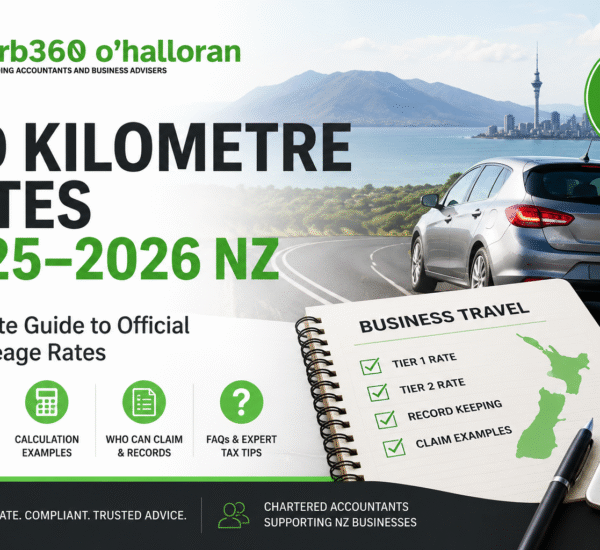
The IRD Kilometre Rates 2025–2026 have officially been released by Inland Revenue (IRD), providing updated mileage reimbursement rates for businesses, sole traders, self-employed professionals, and employees who use their private vehicles for business travel.
The IRD Kilometre Rates 2025–2026 NZ are updated annually to reflect changes in vehicle ownership and operating costs. Businesses that use these official rates can simplify expense calculations while ensuring they follow the latest Inland Revenue guidance.
Whether you’re claiming vehicle expenses, reimbursing employees, or preparing your annual tax return, understanding the latest kilometre rates ensures your claims remain compliant with New Zealand tax legislation.
The IRD Kilometre Rates 2025–2026 NZ are an important reference for New Zealand businesses, sole traders, contractors, and employers who need to calculate deductible business vehicle expenses accurately. Using the official rates published by Inland Revenue helps ensure your tax claims are compliant and based on the latest guidance.
In this comprehensive guide, the tax specialists at DFK Orb360 explain:
The IRD Kilometre Rates 2025–2026 NZ are based on the official guidance published by Inland Revenue New Zealand (IRD) .
Quick Summary
The IRD Kilometre Rates 2025–2026 are official reimbursement rates issued annually by Inland Revenue New Zealand. These rates allow taxpayers to calculate the deductible cost of using a private motor vehicle for business travel without needing to keep every fuel, servicing, insurance, depreciation, registration, and maintenance receipt.
Instead of calculating actual running costs, eligible taxpayers can simply multiply their business kilometres by the applicable IRD kilometre rate.
This simplified method saves time while providing a fair estimate of total vehicle operating costs.
The following rates apply for the 2025–2026 income year.
| Vehicle Type | Tier 1 Rate | Tier 2 Rate |
|---|---|---|
| Petrol Vehicle | $1.20 per km | $0.37 per km |
| Diesel Vehicle | $1.30 per km | $0.38 per km |
| Petrol Hybrid | $0.90 per km | $0.24 per km |
| Electric Vehicle (EV) | $1.22 per km | $0.23 per km |
Source: Inland Revenue New Zealand (IRD)
The IRD Kilometre Rates 2025–2026 are official mileage reimbursement rates published by Inland Revenue New Zealand to help businesses, sole traders and self-employed taxpayers calculate deductible vehicle expenses. Tier 1 applies to the first 14,000 kilometres travelled during the income year, while Tier 2 applies to eligible business kilometres after that threshold. The rates differ depending on whether the vehicle is petrol, diesel, hybrid or electric.
Vehicle operating costs change every year due to fluctuations in fuel prices, servicing costs, insurance premiums, registration fees, depreciation, tyres, repairs, financing costs and maintenance expenses.
To ensure taxpayers receive a fair reimbursement, Inland Revenue reviews these costs annually and updates the kilometre rates based on independent cost data.
Using the latest published rates helps businesses accurately calculate deductible vehicle expenses while remaining compliant with New Zealand tax rules.
The official kilometre rates may be suitable for:
If you regularly use your personal vehicle for business purposes, the IRD kilometre rate method can simplify tax calculations while reducing record-keeping requirements.
Choosing the correct vehicle expense method can significantly affect your tax position. While the IRD kilometre rate method is simple and widely used, it isn’t always the most tax-efficient option for every business.
At DFK Orb360, our experienced accountants help businesses determine whether using kilometre rates or actual vehicle expenses will maximise legitimate tax deductions while ensuring full IRD compliance.
One of the most common questions businesses ask is:
“What is the difference between Tier 1 and Tier 2 IRD kilometre rates?”
The answer lies in how Inland Revenue estimates the cost of owning and operating a vehicle throughout the income year.
The Tier 1 rate is designed to recover both:
The Tier 2 rate only covers the ongoing running costs of operating the vehicle because most ownership costs have already been recovered within the first 14,000 kilometres.
Use the Tier 1 rate for the first 14,000 kilometres travelled during the income year (business and private combined). After reaching 14,000 km, use the applicable Tier 2 rate for any additional business kilometres.
The Tier 1 kilometre rate represents the total estimated cost of owning and operating a vehicle.
It includes costs such as:
Because these ownership costs are significant, they are only intended to be recovered during the first 14,000 kilometres travelled each income year.
Once the vehicle has travelled more than 14,000 kilometres, the ownership costs are considered to have largely been recovered.
The Tier 2 rate therefore only compensates for the ongoing operating expenses of using the vehicle for business purposes.
These typically include:
This is why Tier 2 rates are considerably lower than Tier 1 rates.
Many taxpayers mistakenly believe the first 14,000 kilometres refers only to business travel.
This is incorrect.
The 14,000-kilometre threshold is based on the vehicle’s total annual distance travelled, including:
Once the vehicle exceeds a total of 14,000 kilometres during the income year, any further eligible business travel generally uses the Tier 2 rate.
Scenario
Since the vehicle has not exceeded 14,000 kilometres for the year, the full business travel can be claimed using the Tier 1 petrol rate.
Calculation
5,500 km × $1.20 = $6,600
Scenario
The first 14,000 kilometres are covered under Tier 1.
The remaining eligible business kilometres use the Tier 2 rate.
Illustrative calculation
Your exact calculation will depend on how much of the first 14,000 kilometres relates to business versus private travel. Maintaining a detailed mileage log is essential.
The kilometre rate method is commonly used by:
Employers may also use the published IRD kilometre rates when reimbursing employees who use their own vehicles for work-related travel.
Understanding the IRD Kilometre Rates 2025–2026 NZ can help businesses reimburse employees correctly, calculate business travel expenses, and avoid common tax reporting errors.
Generally, business kilometres may include travel for:
Travel between your home and your usual place of work is generally considered private travel unless a specific exception applies under New Zealand tax rules.
Although the kilometre rate method is simpler than claiming actual vehicle expenses, Inland Revenue still expects taxpayers to maintain appropriate records.
Good record-keeping should include:
Using a digital mileage tracking app or maintaining a contemporaneous logbook throughout the year can make tax time significantly easier and help support your claim if Inland Revenue requests evidence.
If you regularly use your own vehicle for work, the IRD Kilometre Rates 2025–2026 NZ provide a simple and IRD-approved method for calculating eligible business travel expenses.
Selecting the wrong claim method could result in an incorrect tax position or additional questions from Inland Revenue.
Every business is different. While the IRD kilometre rate method is convenient, businesses with high vehicle costs, commercial vehicles, or extensive business travel may achieve a better tax outcome using the actual cost method.
Our Chartered Accountants can assess your circumstances and recommend the most tax-efficient approach while ensuring full compliance with IRD requirements.
One of the most important decisions for business owners is choosing the correct method for claiming vehicle expenses.
Inland Revenue generally allows eligible taxpayers to either:
The right option depends on your business structure, vehicle usage, record-keeping, and the proportion of business versus private travel.
| Comparison | Kilometre Rate Method | Actual Cost Method |
|---|---|---|
| Ease of Use | Simple | More detailed |
| Record Keeping | Mileage log | All receipts and expenses |
| Suitable For | Most sole traders and small businesses | Businesses with higher vehicle costs |
| Administration | Low | Higher |
There is no single answer that suits every taxpayer.
The kilometre rate method is often ideal for businesses that:
However, businesses with expensive vehicles, high maintenance costs, or extensive business travel may find that the actual cost method produces a larger deductible expense.
Before choosing a claim method, speak with a qualified Chartered Accountant. The most convenient option is not always the most tax-efficient one.
The actual cost method may provide better tax outcomes if:
Every situation is different, so obtaining professional tax advice can help maximise legitimate deductions while remaining compliant with IRD requirements.
Understanding IRD vehicle expense rules can be complex, particularly when deciding between kilometre rates and actual vehicle expenses.
Our Chartered Accountants assist businesses across New Zealand with:
Whether you’re a sole trader, contractor, or growing business, our team can help ensure your vehicle expense claims are accurate, compliant, and tax-efficient.
The IRD has released updated kilometre rates for petrol, diesel, hybrid, and electric vehicles for the 2025–2026 income year. The applicable rate depends on your vehicle type and whether you are claiming under Tier 1 or Tier 2.
The kilometre rate method is commonly used by sole traders, self-employed professionals, contractors, partnerships, trusts, and businesses that use private vehicles for business travel. Employers may also reimburse employees using the published rates where appropriate.
Tier 1 includes both ownership and operating costs and generally applies to the first 14,000 kilometres travelled during the income year. Tier 2 reflects ongoing running costs after that threshold has been exceeded.
Yes. Inland Revenue expects taxpayers to maintain accurate records that support any business vehicle claims. A mileage log or logbook is one of the best ways to demonstrate business travel.
No. Only eligible business-related travel may generally be claimed. Personal trips, commuting in many situations, and private travel should not be included unless specific tax rules apply.
Depending on your circumstances, changing methods may be possible. However, there are tax implications, so professional advice should be obtained before making the change.
As Inland Revenue may update guidance over time, always refer to the official IRD website for the latest information.
At DFK Orb360, our experienced Chartered Accountants help New Zealand businesses stay compliant with Inland Revenue while maximising legitimate tax deductions.
If you’re unsure whether the kilometre rate method or the actual cost method is right for your business, contact our team for tailored tax advice and practical guidance.
Our services include:
At DFK Orb360, our team of Chartered Accountants and business advisors helps New Zealand businesses navigate complex Inland Revenue requirements with confidence. We work with sole traders, SMEs, property investors, contractors, trusts, and growing companies across New Zealand, providing practical tax advice based on current legislation and IRD guidance.
Our articles are researched using official Inland Revenue publications and reviewed from an accounting perspective to ensure they are accurate, practical, and relevant for New Zealand taxpayers.
You may also find these guides useful:
The IRD Kilometre Rates 2025–2026 provide a practical and IRD-approved method for calculating business vehicle expenses. Whether you’re a sole trader, contractor, consultant, or business owner, understanding how Tier 1 and Tier 2 rates work can help you prepare accurate tax returns and maximise legitimate deductions.
While the kilometre rate method is suitable for many taxpayers, it is not always the most beneficial option. Businesses with higher vehicle expenses or more complex circumstances may achieve better tax outcomes using the actual cost method.
If you’re unsure which approach is right for your business, seek professional advice before filing your return.
DFK Orb360 helps businesses throughout New Zealand with:
Book a consultation with our Chartered Accountants to ensure your business remains compliant while maximising available tax deductions.
Speak with a DFK Orb360 Tax ExpertThe IRD Kilometre Rates 2025–2026 NZ are more than reimbursement figures—they are an essential part of tax compliance for businesses that use private vehicles for work. Applying the correct rates helps ensure accurate deductions, simplifies record-keeping, and reduces the risk of errors during an Inland Revenue review.
Many taxpayers have questions about the IRD Kilometre Rates 2025–2026 NZ, especially when deciding between the kilometre rate method and the actual cost method.
The IRD Kilometre Rates 2025–2026 NZ provide an easy and reliable way for eligible taxpayers to calculate business vehicle expenses. By understanding how Tier 1 and Tier 2 rates work and maintaining accurate mileage records, businesses can remain compliant with Inland Revenue while maximising legitimate tax deductions.
If you’re unsure how the IRD Kilometre Rates 2025–2026 NZ apply to your business, contact DFK Orb360 for personalised advice from our Chartered Accountants.
The IRD Kilometre Rates for 2025–2026 are official reimbursement rates published by Inland Revenue New Zealand for calculating business vehicle expenses using the kilometre rate method.
Eligible taxpayers include sole traders, self-employed individuals, contractors, partnerships, trusts, and businesses that use private vehicles for business purposes.
Tier 1 applies to the first 14,000 kilometres travelled during the income year and includes both ownership and operating costs.
Tier 2 applies after the first 14,000 kilometres and generally covers only the ongoing running costs of operating the vehicle.
Yes. Keeping a mileage log with trip dates, destinations, purpose, and odometer readings helps support your claim if requested by Inland Revenue.

Need help applying the IRD Kilometre Rates 2025–2026 NZ? The Chartered Accountants at DFK Orb360 can help you determine the most suitable method for claiming vehicle expenses and meeting your tax obligations.

Copyright © 2025 Marketing Transformers | All Rights Reserved.


 09 377 4238
 Level 2, 6 Kingdon Street, Newmarket, Auckland
 help@orb360.co.nz