

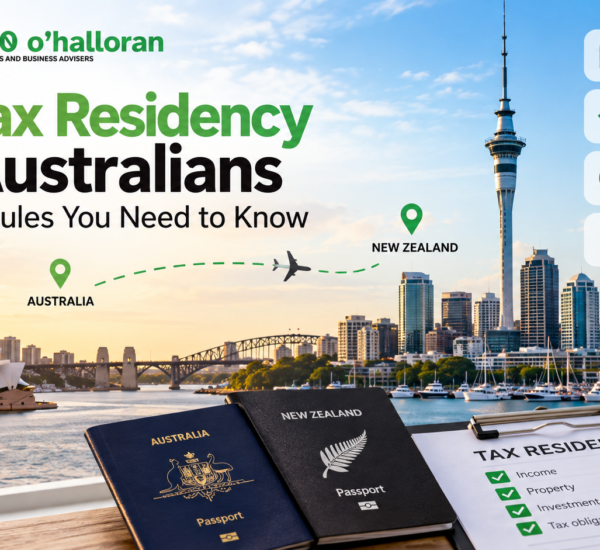
NZ Tax Residency for Australians: When Do You Become a New Zealand Tax Resident?
Quick Answer: When Does an Australian Become a NZ Tax Resident?
NZ tax residency for Australians depends on your circumstances rather than simply your Australian citizenship, visa or immigration status. You can generally become a New Zealand tax resident if you have been in New Zealand for more than 183 days in any 12-month period, or if you have a permanent place of abode in New Zealand.
The 183 days do not have to be consecutive, and New Zealand tax residency under the 183-day rule is backdated to the first of those 183 days. Your tax residency can affect whether New Zealand taxes your worldwide income, including income from Australia.
If you are an Australian moving to New Zealand, working between both countries, retaining Australian investments or owning Australian or New Zealand property, determining your tax residency correctly is an important first step.
NZ Tax Residency for Australians
- New Zealand tax residency is different from immigration or visa status.
- You can generally become a NZ tax resident after being in New Zealand for more than 183 days in any 12-month period.
- The 183 days do not need to be consecutive.
- NZ tax residency under the 183-day test is backdated to the first of the 183 days.
- You may also become a NZ tax resident if you have a permanent place of abode in New Zealand.
- NZ tax residents generally have New Zealand tax obligations on worldwide income.
- Australian income, investments and property may therefore become relevant to your New Zealand tax position.
- Some new NZ tax residents may qualify for a temporary exemption on most foreign income for around four years.
- The Australia-New Zealand double tax agreement can affect how certain income is taxed where both countries have an interest.
What Is NZ Tax Residency?
NZ tax residency determines how New Zealand’s tax rules apply to an individual. It is important to understand that tax residency is not the same as immigration residency, citizenship or the type of visa you hold.
For Australians, this distinction can become particularly important when moving to New Zealand, spending significant periods of time in New Zealand, working across the Tasman, buying property or retaining investments and income in Australia.
Once you become a New Zealand tax resident, New Zealand will generally tax your worldwide income, although foreign tax credits, double tax agreements and specific exemptions can affect the final outcome.
This means an Australian moving to Auckland, Wellington, Christchurch or another part of New Zealand should consider their tax residency position alongside their immigration and financial planning.
7 Essential NZ Tax Residency Rules for Australians
1. NZ Tax Residency Is Different From Your Immigration Status
Your immigration status determines whether you can enter or remain in New Zealand and what you are permitted to do under immigration law. Your tax residency determines how New Zealand’s tax rules apply to you.
An Australian citizen can therefore have a New Zealand tax residency position that is different from their immigration status. The two concepts should not be treated as interchangeable.
If you are unsure whether you have become a NZ tax resident, it is important to assess the tax residency rules separately rather than relying on your visa or citizenship.
2. The 183-Day Rule Can Make You a NZ Tax Resident
One of the most important rules for Australians moving between Australia and New Zealand is the 183-day rule.
You generally become a New Zealand tax resident when you have been present in New Zealand for more than 183 days in any 12-month period, unless a specific exception applies.
The days do not have to be consecutive. This means that several shorter trips to New Zealand can collectively contribute to the 183-day threshold.
Important
Parts of days count as whole days for the 183-day test. Your New Zealand tax residency is backdated to the first of the 183 days.
3. The 183 Days Do Not Need to Be Consecutive
Australians who regularly travel between Sydney, Melbourne, Brisbane, Auckland, Wellington or other locations should pay particular attention to their travel dates.
You do not necessarily need to spend six continuous months in New Zealand to trigger the 183-day rule. Separate periods of presence can be counted together when determining whether you have been in New Zealand for more than 183 days during a 12-month period.
For example, someone who spends several weeks in Auckland, returns to Australia and then repeatedly comes back to New Zealand may need to total their New Zealand days rather than assessing each trip independently.
4. A Permanent Place of Abode Can Also Affect Your Tax Residency
The 183-day test is not the only way someone can become a NZ tax resident. A person may also become a New Zealand tax resident if they have a permanent place of abode in New Zealand.
This does not simply mean that you own a house in New Zealand. The overall circumstances and the nature and quality of your connection with the place are relevant.
Factors that can be relevant include:
- How often you return to New Zealand.
- How long you spend in New Zealand.
- Your family and social connections.
- Your employment and business connections.
- Your economic interests and investments.
- Your connection with a home or dwelling in New Zealand.
- Whether you intend to return to New Zealand to live.
This means an Australian who spends substantial time in New Zealand should not assume that staying below 183 days automatically means they are a non-resident for NZ tax purposes.
5. NZ Tax Residents Generally Have Worldwide Income Obligations
Once you are a New Zealand tax resident, you will generally be subject to New Zealand tax on your worldwide income.
This can include income such as:
- Australian salary or employment income.
- Australian bank interest.
- Australian investment income.
- Rental income from property in Australia.
- Foreign dividends.
- Foreign investment income.
- Other overseas income that is taxable under NZ rules.
Importantly, overseas income does not necessarily escape NZ tax simply because the money remains in Australia or another country.
However, specific rules can apply, including foreign tax credits, double tax agreements and the temporary tax exemption available to certain new or returning NZ tax residents.
6. Non-Residents Can Still Have NZ Tax Obligations
Not being a New Zealand tax resident does not necessarily mean you have no New Zealand tax obligations.
Non-residents can generally still have NZ tax obligations on New Zealand-source income.
For example, an Australian who remains a non-resident for NZ tax purposes but owns a rental property in Auckland may still have New Zealand tax obligations relating to that NZ rental income.
This is particularly relevant to Australians who own New Zealand investment property but continue to live in Australia.
Read our related guide: Investment Property Tax NZ
7. The Australia-New Zealand Tax Treaty Can Affect the Outcome
Australia and New Zealand have a double tax agreement designed to address situations where both countries may have taxing rights over particular income.
The agreement can help determine taxing rights and provide mechanisms for relieving double taxation. Depending on the circumstances, this may involve tax credits or allocation of taxing rights between the two countries.
The existence of a tax treaty does not mean that every Australian with NZ income automatically avoids NZ tax. The specific type of income, residency position and treaty provisions need to be considered.
The current Australia-New Zealand agreement was signed in 2009 and entered into force in 2010.
Does an Australian Become a NZ Tax Resident After 183 Days?
The 183-day rule is one of the main tests for New Zealand individual tax residency. If you have been present in New Zealand for more than 183 days in any 12-month period, you can generally become a NZ tax resident unless an applicable exception applies.
The important point is that the test looks at a rolling 12-month period rather than simply asking whether you spent 183 days in a particular calendar year.
The days also do not have to be consecutive.
Example: An Australian Spending Time Between Sydney and Auckland
Imagine an Australian who travels regularly between Sydney and Auckland. They spend 90 days in New Zealand early in the year, return to Australia, and later spend another 100 days in New Zealand.
The individual has accumulated more than 183 days of presence in New Zealand within a 12-month period. Their NZ tax residency position therefore needs to be assessed under the 183-day rule, including the backdating provisions.
The exact tax outcome will depend on the person’s complete circumstances and whether any specific exception or other residency rule applies.
What Is a Permanent Place of Abode in New Zealand?
A permanent place of abode is another important part of the NZ tax residency rules.
In practical terms, it can involve having a place in New Zealand where you usually live or habitually reside, together with the broader connections you maintain with New Zealand.
Factors that may be considered include:
| Factor | What It Can Indicate |
|---|---|
| Time spent in NZ | How frequently and for how long you are present in New Zealand. |
| Family connections | Whether close family or household connections are based in New Zealand. |
| Social connections | Clubs, community activities and other ongoing NZ connections. |
| Economic interests | Investments, assets, business interests or other financial connections. |
| Employment or business | Whether your work or business activities are connected with New Zealand. |
| Home in NZ | Whether you have a place in New Zealand that functions as a home. |
| Future intentions | Whether you intend to return to New Zealand to live. |
There is no single factor that should automatically be treated as determining your residency status. Your overall circumstances need to be considered.
Can You Be a Tax Resident of Both Australia and New Zealand?
It is possible for an individual to have tax residency connections with both Australia and New Zealand under each country’s domestic rules.
When this occurs, the Australia-New Zealand double tax agreement may become relevant. Tax treaties can contain provisions that help determine how particular income is treated when both countries have an interest in taxing it.
This is one reason why cross-border tax planning should not rely on the 183-day rule alone. Your Australian tax position, NZ tax position, income sources and treaty position may all need to be reviewed together.
Important
Being considered resident under one country’s domestic tax rules does not automatically mean the same outcome applies under the other country’s rules or under the tax treaty.
What Happens to Your Australian Income After You Become a NZ Tax Resident?
If you become a New Zealand tax resident, your Australian income may become relevant to your New Zealand tax return.
Depending on the circumstances, this could include Australian:
- Employment income.
- Bank interest.
- Dividends.
- Rental income.
- Investment income.
- Other foreign-source income.
New Zealand generally taxes residents on worldwide income, even where the income remains offshore. If Australian tax has already been paid on the same income, a foreign tax credit may potentially be available, subject to the relevant rules.
The Australia-New Zealand DTA may also affect how specific income is treated.
What Happens to Australian Property If You Move to NZ?
Moving from Australia to New Zealand does not automatically remove Australian property from your tax considerations.
If you retain an Australian investment property after becoming a NZ tax resident, you may need to consider both Australian and New Zealand tax rules.
Areas that may need review include:
- Australian rental income.
- Australian tax paid on rental income.
- Foreign tax credits in New Zealand.
- The Australia-New Zealand tax treaty.
- Property-related expenses.
- Changes in your tax residency status.
- Any eventual sale or disposal of the property.
Cross-border property taxation can be particularly important where someone moves to Auckland or Wellington but continues to own an investment property in Sydney, Melbourne or another Australian city.
If your situation involves property in New Zealand, see: Investment Property Tax NZ: What Property Owners Need to Know
Is There a Temporary Tax Exemption for New NZ Tax Residents?
Yes. Certain people who become New Zealand tax residents for the first time, or return to New Zealand after being away for at least 10 years, may qualify for a temporary tax exemption on most types of foreign income.
This is commonly referred to as the temporary tax exemption or transitional residence exemption.
The exemption generally lasts for about four years, but eligibility and the exact start and end dates matter.
IRD states that qualifying individuals generally need to have become NZ tax residents on or after 1 April 2006 and not have been NZ tax residents at any time during the previous 10 years.
Most types of foreign-source income can be covered, including certain foreign interest, dividends, foreign investment fund income and overseas rent.
However, foreign employment or personal-services income is not covered by the exemption.
Important for Australians
Do not assume that all Australian income is automatically exempt during your first few years in New Zealand. The temporary exemption has specific eligibility requirements and exclusions.
What Happens to Australian Shares and Investments After Moving to NZ?
Australians moving to New Zealand should review their investment portfolio as part of their NZ tax residency planning.
Once you become a NZ tax resident, foreign investments may become relevant to New Zealand tax rules. Depending on the investment, this can include consideration of the Foreign Investment Fund (FIF) rules.
The treatment can depend on the type of investment, your circumstances, applicable exemptions and the relevant tax rules at the time.
This is particularly important for Australians retaining shares, managed funds or other overseas investments after moving to New Zealand.
Read our related guide: FIF Changes NZ: What the Proposed 2026 Rules Mean for Investors
Australia to NZ Tax Residency Example: Sydney to Auckland
Consider an Australian who lives in Sydney but decides to move to Auckland.
Before moving, they have:
- An Australian salary.
- An Australian investment property.
- Australian bank accounts.
- Australian shares.
- A new home and employment arrangements in Auckland.
Their NZ tax analysis may need to consider:
- When their NZ tax residency begins.
- Whether they meet the 183-day test.
- Whether they have established a permanent place of abode in NZ.
- Whether they qualify for the temporary foreign-income exemption.
- How Australian income is treated after NZ residency begins.
- Whether foreign tax credits are available.
- How the Australia-New Zealand DTA applies to relevant income.
- Whether Australian investments trigger additional NZ tax considerations.
This example illustrates why simply asking “Am I living in Australia or NZ?” may not be enough to determine your tax position.
Not Sure If You Are a NZ Tax Resident?
Your number of days in New Zealand is only one part of the analysis. Your home, family, work, investments, income and cross-border connections can also matter.
What If You Remain a Non-Resident of New Zealand?
If you remain a non-resident for NZ tax purposes, you may still have New Zealand tax obligations if you earn NZ-source income.
For example, an Australian living in Sydney who owns an Auckland rental property may still need to account for New Zealand tax on their NZ rental income.
Non-residents may also need to consider filing requirements and other obligations depending on their income and circumstances.
If you later become a NZ tax resident during the tax year, your return may need to distinguish between income earned while you were a non-resident and income earned after becoming a NZ tax resident.
What Should Australians Do Before Moving to New Zealand?
If you are planning to move from Australia to New Zealand, reviewing your tax position before the move can help identify issues early.
1. Review Your Expected NZ Tax Residency Date
Track your expected arrival date, previous visits and planned travel between Australia and New Zealand.
2. List Your Australian Income
Make a list of salary, rental income, investment income, dividends, interest and other overseas income.
3. Review Your Property
If you own Australian or New Zealand property, review how the change in residency may affect your tax position.
4. Review Your Investments
Australian shares, funds and other overseas investments may require consideration under NZ tax rules once you become a NZ tax resident.
5. Check the Temporary Tax Exemption
Determine whether you may qualify for the temporary exemption on most foreign income and understand exactly what is and is not covered.
6. Keep Australian Tax Records
Keep evidence of Australian income and tax paid because this information may be relevant when preparing your NZ tax return and determining foreign tax credits.
7. Consider Cross-Border Advice
If you have significant income, investments, property or business interests in both countries, professional advice can help you understand the interaction between the two tax systems.
Common NZ Tax Residency Mistakes Australians Make
- Assuming citizenship determines tax residency. Tax residency is assessed under tax rules rather than nationality alone.
- Counting only continuous days. The 183 days do not have to be consecutive.
- Assuming fewer than 183 days always means non-residency. A permanent place of abode can also be relevant.
- Ignoring Australian income after moving. NZ tax residents generally have worldwide-income obligations.
- Assuming offshore money is automatically outside NZ tax. Foreign income can still be taxable in NZ even if it remains overseas.
- Assuming the temporary exemption covers every type of foreign income. There are important exclusions and eligibility requirements.
- Ignoring investments. Australian shares and other overseas investments may need to be reviewed under NZ tax rules.
- Assuming the tax treaty means no tax is payable. The Australia-New Zealand DTA determines or influences the treatment of certain income but does not automatically eliminate tax.
NZ Tax Residency Checklist for Australians
Use this checklist if you are moving between Australia and New Zealand:
- ☐ Calculate your days present in New Zealand.
- ☐ Check the 183-day rule over the relevant 12-month period.
- ☐ Consider whether you have a permanent place of abode in New Zealand.
- ☐ Review your family and social connections.
- ☐ Review your employment and business connections.
- ☐ List your Australian and other overseas income.
- ☐ Review Australian and New Zealand property.
- ☐ Review overseas shares and investments.
- ☐ Check whether you qualify for the temporary tax exemption.
- ☐ Keep records of foreign tax paid.
- ☐ Review whether the Australia-New Zealand DTA affects your income.
- ☐ Consider professional advice if your situation involves significant cross-border income or assets.
People Also Ask About NZ Tax Residency for Australians
How many days can an Australian stay in New Zealand without becoming a tax resident?
There is no simple answer based only on a calendar-year day count. The NZ 183-day test looks at more than 183 days in any 12-month period, and a permanent place of abode can also affect residency.
Do Australians pay tax in New Zealand?
Australians can have New Zealand tax obligations if they become NZ tax residents or earn income from New Zealand sources. The exact treatment depends on their circumstances and the relevant NZ and Australian tax rules.
What is the 183-day rule in New Zealand?
The 183-day rule generally provides that a person becomes a NZ tax resident when they have been in New Zealand for more than 183 days in any 12-month period, unless an applicable exception applies.
Can I live in Australia and be a NZ tax resident?
Potentially. Tax residency depends on the relevant residency tests and your circumstances. Spending time in Australia does not automatically determine whether you remain a NZ tax resident.
Does owning a house in New Zealand make me a tax resident?
Property ownership alone should not be treated as an automatic tax residency test. However, a permanent place of abode and the broader connections you maintain with New Zealand can be relevant.
Does New Zealand tax Australian income?
NZ tax residents generally have worldwide-income obligations, which can include Australian income. Foreign tax credits and the Australia-New Zealand DTA may affect the final tax treatment.
Do new NZ residents get a four-year tax exemption?
Some new or returning NZ tax residents may qualify for a temporary exemption on most types of foreign income for approximately four years. Specific eligibility requirements and exclusions apply.
Key Takeaway: NZ Tax Residency for Australians
NZ tax residency for Australians is about more than counting days.
The 183-day rule is important, but so is the concept of a permanent place of abode. Once you become a NZ tax resident, worldwide income generally becomes relevant to your NZ tax position.
For Australians with property, investments, employment or business interests across both countries, the temporary foreign-income exemption and Australia-New Zealand double tax agreement may also be important.
Getting the residency date and cross-border tax treatment right can help you understand what needs to be reported in New Zealand and what records you should maintain.
Need NZ Tax Advice as an Australian?
If you’re based in Sydney, Melbourne, Brisbane or elsewhere in Australia and are moving to New Zealand, working across both countries, or holding New Zealand property or investments, DFK Orb360 O’Halloran can help you understand your New Zealand tax position.
Our team supports clients across Auckland, Wellington and New Zealand, including Australian-based clients dealing with NZ tax matters.
Need Help With Your NZ Tax Residency?
Moving between Australia and New Zealand, owning property across both countries or earning income in both jurisdictions can make tax compliance more complicated.
Talk to DFK Orb360 O’Halloran about your New Zealand tax requirements.
Book a Free Initial Consultation
Tell us a little about your circumstances and our team will get in touch.
Official NZ Tax Resources
About This NZ Tax Residency Guide
This guide has been prepared by DFK Orb360 O’Halloran to help Australians understand the key New Zealand tax residency concepts that may apply when moving, working, investing or owning property in New Zealand.
The guide is based on publicly available New Zealand tax guidance and is intended for general information. Individual tax outcomes can vary depending on residency, income, property, investments, business activities and cross-border circumstances.
For complex Australia-New Zealand tax matters, professional advice should be obtained based on your specific circumstances.
Disclaimer
This article provides general information about NZ tax residency for Australians and should not be treated as personalised tax, legal or financial advice. Tax legislation, administrative guidance and individual circumstances can change. You should obtain professional advice before making decisions based on the information in this article.
Frequently Asked Questions About NZ Tax Residency for Australians
What makes an Australian a NZ tax resident?
An Australian can generally become a NZ tax resident by being present in New Zealand for more than 183 days in any 12-month period or by having a permanent place of abode in New Zealand, subject to the applicable rules and exceptions.
Are the 183 days consecutive?
No. The 183 days do not need to be consecutive. Separate periods of presence can count towards the test.
When does NZ tax residency start under the 183-day rule?
NZ tax residency under the 183-day rule is backdated to the first of the 183 days present in New Zealand.
Do NZ tax residents have to declare Australian income?
NZ tax residents generally have worldwide-income obligations, which can include Australian income. Foreign tax credits and the Australia-New Zealand DTA may affect the tax treatment.
Can an Australian living in Australia still have NZ tax obligations?
Yes. A person who remains a non-resident for NZ tax purposes can still have NZ tax obligations on New Zealand-source income, such as rental income from New Zealand property.
How long is the temporary tax exemption for new NZ residents?
Eligible transitional tax residents can generally receive the temporary exemption for about four years, subject to the applicable rules, eligibility requirements and exclusions.
Moving From Australia to New Zealand?
Understanding your NZ tax residency before or after moving can help you identify what income, property and investments need to be considered under New Zealand tax rules.



 09 377 4238
 Level 2, 6 Kingdon Street, Newmarket, Auckland
 help@orb360.co.nz