

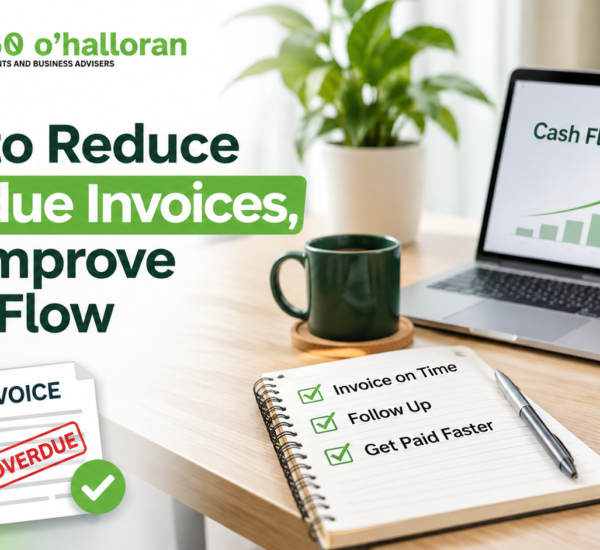
Late customer payments can create serious cash flow challenges for New Zealand businesses. Even when sales are strong and your business is profitable, unpaid invoices can leave you without enough cash to cover wages, supplier payments, operating expenses and upcoming tax obligations.
For many small and medium-sized businesses, managing overdue accounts is just as important as generating new sales. A consistent invoicing process, clear payment terms and regular debtor follow-ups can help reduce payment delays and improve financial visibility.
Understanding how to reduce overdue invoices is an important part of effective business financial management. By strengthening your accounts receivable process and monitoring incoming payments, you can improve cash flow and make better-informed business decisions.
How Can Businesses Reduce Overdue Invoices and Improve Cash Flow?
Quick answer: New Zealand businesses can reduce overdue invoices by sending invoices promptly, setting clear payment terms, checking customer details, offering convenient payment methods and following up unpaid accounts before and after their due dates.
Businesses should regularly review accounts receivable, monitor debtor ageing reports, establish a consistent credit-control process and prepare cash flow forecasts. These practices can help businesses identify delayed payments early, manage working capital and maintain enough cash to meet operating expenses and tax obligations.
Key takeaway: Getting paid on time requires more than sending an invoice. It requires a structured process for managing customer payments from the beginning of the business relationship.
How can businesses reduce overdue invoices and improve cash flow in New Zealand? Businesses can reduce overdue invoices by setting clear payment terms, issuing accurate invoices promptly, following up before payment deadlines and maintaining a consistent debtor management process. Effective business accounting in NZ also involves monitoring accounts receivable, reviewing outstanding balances and preparing regular cash flow forecasts. Whether your business operates in Auckland or Wellington, DFK Orb360 O’Halloran provides accounting and business advisory support through its Newmarket, Albany and Wellington offices, helping businesses strengthen financial visibility and manage their day-to-day finances more effectively.
Why Do Overdue Invoices Create Cash Flow Problems for NZ Businesses?
An overdue invoice represents money your business has earned but has not yet received. Until the customer pays, that amount cannot be used to meet your immediate financial commitments.
This can create a gap between recorded sales and the cash actually available in your business bank account.
For example, a business may complete a project worth $15,000 and issue an invoice with 20-day payment terms. If the customer pays 30 days late, the business may need to cover wages, supplier costs and other expenses before receiving the money.
When several customers delay payments at the same time, the pressure can increase significantly.
How Can Late Payments Affect Business Operations?
- Difficulty paying suppliers: Delayed customer payments can make it harder to meet supplier invoices on time.
- Payroll pressure: Businesses still need sufficient cash to meet employee wage and salary commitments.
- Tax payment challenges: GST, PAYE and provisional tax obligations need to be planned for regardless of whether customers have paid.
- Increased borrowing: Businesses may need short-term funding to cover gaps caused by delayed collections.
- Reduced investment capacity: Cash tied up in unpaid invoices cannot easily be used for equipment, stock or expansion.
- Uncertain financial planning: Unpredictable payment dates make it harder to prepare reliable cash flow forecasts.
Business.govt.nz identifies late invoicing and failing to follow up debtors as practices that can negatively affect business cash flow.
Read more: Business.govt.nz – Getting Paid on Time.
What Are the Most Effective Ways to Reduce Overdue Invoices?
Businesses do not need to wait until an invoice becomes overdue to manage payment delays. The most effective approach is to establish clear expectations before providing goods or services and maintain regular communication throughout the payment process.
1. Set Clear Payment Terms Before Starting Work
Payment expectations should be communicated before a customer purchases your products or engages your services.
Your payment terms should clearly explain:
- When payment is due.
- Accepted payment methods.
- Whether a deposit or upfront payment is required.
- Any agreed instalment or milestone arrangements.
- How overdue payments will be followed up.
- Any applicable late payment interest or collection costs, where legally enforceable and agreed.
For example, if your business offers seven-day, 14-day or 30-day payment terms, make sure the customer understands the arrangement before work begins.
Clear written terms help reduce misunderstandings and give your business a consistent basis for following up outstanding payments.
2. Send Invoices Immediately After Completing Work
One of the simplest ways to improve payment collection is to invoice customers promptly.
Delaying invoices until the end of the week or month adds unnecessary time between completing the work and receiving payment.
Consider these practices:
- Issue invoices as soon as goods are delivered or services are completed.
- Use accounting software to generate invoices efficiently.
- Include an accurate invoice number and issue date.
- Clearly display the payment due date and bank details.
- Include a description of the goods or services supplied.
- Send invoices to the correct accounts payable contact.
For longer projects, consider milestone invoicing or staged payments where appropriate. This can help avoid waiting until an entire project is completed before requesting payment.
3. Make It Easier for Customers to Pay
Customers are more likely to complete payments efficiently when the payment process is straightforward.
Review the payment methods available to your customers and consider whether you can offer additional options.
Depending on your business and payment provider, these may include:
- Direct bank transfer.
- Online payment links.
- Credit or debit card payments.
- Direct debit arrangements.
- Scheduled instalment payments.
Also check that payment instructions are visible and accurate on every invoice. Incorrect bank details, missing references or unclear payment instructions can create avoidable delays.
4. Send Payment Reminders Before the Due Date
Not every late payment is intentional. Some invoices are missed because customers have busy accounts departments, internal approval processes or administrative delays.
A polite reminder before the due date can help prevent an invoice from being overlooked.
Consider a simple reminder schedule:
- Three to five days before the due date: Send a friendly reminder with the invoice attached.
- On the due date: Send a short payment reminder if payment has not been received.
- Two business days after the due date: Follow up to confirm whether payment has been processed.
- Seven days overdue: Contact the customer directly and request an expected payment date.
- Fourteen days overdue: Escalate the follow-up and review whether further credit should be provided.
This is a suggested internal workflow, not a statutory payment timetable. Adjust the process to suit your agreed payment terms and customer relationships.
5. Follow Up Overdue Accounts Consistently
When an invoice becomes overdue, avoid leaving it unattended. The longer an outstanding balance remains unresolved, the greater the uncertainty around when the business will receive payment.
A consistent debtor follow-up process should include:
- Checking the outstanding invoice and its due date.
- Confirming that the invoice was received by the customer.
- Checking whether the customer has raised a dispute or query.
- Sending a written reminder.
- Contacting the customer by phone when necessary.
- Recording all communication and any agreed payment dates.
If the customer is experiencing financial difficulty, discuss whether a realistic payment arrangement is appropriate. Document any agreed changes and assess the effect on your own cash flow.
6. Review Customer Credit Limits and Payment History
Not every customer presents the same payment risk. Some consistently pay on time, while others regularly exceed their agreed payment terms.
Reviewing customer payment history can help businesses make more informed decisions about extending credit.
Consider:
- Reviewing payment behaviour before offering credit to new customers.
- Setting appropriate credit limits.
- Monitoring customers with repeated overdue balances.
- Reviewing credit terms when a customer’s payment behaviour changes.
- Considering deposits or staged payments for larger projects.
- Applying a consistent credit-control policy.
Where a customer has a significant overdue balance, consider whether additional credit or further work should be paused in accordance with your contract and applicable obligations.
How Can an Accounts Receivable Ageing Report Help Reduce Overdue Invoices?
An accounts receivable ageing report shows how much money customers owe your business and how long each invoice has remained unpaid.
It helps business owners identify which accounts require immediate attention and whether payment delays are becoming a recurring problem.
Understanding an Invoice Ageing Report
| Ageing category | What it means | Recommended action |
|---|---|---|
| Current | Invoice is not yet overdue | Monitor due date and send reminders where appropriate |
| 1–30 days overdue | Payment has passed its due date | Send a reminder and confirm payment status |
| 31–60 days overdue | Payment has been delayed for a longer period | Contact the customer and agree on a clear next step |
| 61–90 days overdue | Outstanding balance requires closer attention | Escalate follow-up and review credit exposure |
| Over 90 days overdue | Potentially higher collection and bad-debt risk | Review recovery options and obtain appropriate advice |
These categories are common management reporting intervals, not legal definitions of debt status.
Reviewing the report weekly or monthly can help your business identify payment patterns, prioritise follow-ups and monitor the effectiveness of its collection process.
How Can Businesses Improve Cash Flow Beyond Collecting Overdue Invoices?
Reducing overdue invoices is only one part of improving cash flow. Businesses should also review their outgoing payments, operating costs and future financial commitments.
Consider the following strategies.
1. Prepare a Rolling Cash Flow Forecast
A cash flow forecast estimates when money is expected to enter and leave your business. It helps identify potential shortfalls before they affect day-to-day operations.
Include:
- Expected customer payments.
- Outstanding invoices and their expected collection dates.
- Supplier and contractor payments.
- Payroll and employee-related expenses.
- GST, PAYE and provisional tax commitments.
- Loan repayments and finance costs.
- Regular operating expenses.
A 13-week rolling cash flow forecast can be a useful management tool. Update it regularly using actual payment information rather than relying entirely on expected invoice dates.
2. Review Your Business Expenses
Review recurring costs and identify opportunities to improve spending efficiency without affecting essential business operations.
Check:
- Software and subscription costs.
- Supplier pricing and purchasing arrangements.
- Office and premises expenses.
- Inventory and stock management.
- Marketing and advertising expenditure.
- Unused services and unnecessary operating costs.
Even small improvements in expense management can support working capital when combined with more reliable customer collections.
3. Align Supplier Payments With Customer Receipts
Review the timing of money entering and leaving your business.
Where possible, negotiate supplier payment terms that are realistic for your operating cycle. Avoid committing to payment arrangements that create a cash shortfall before customer invoices are expected to be paid.
Always meet agreed supplier obligations and communicate early if a payment issue is likely to arise.
4. Monitor Your Debtor Days
Debtor days, also known as days sales outstanding, can help businesses understand how long it takes to collect money from customers.
A commonly used calculation is:
Debtor Days = Average Trade Receivables ÷ Credit Sales × Number of Days
For example, if average trade receivables are $50,000, annual credit sales are $365,000 and the period is 365 days:
$50,000 ÷ $365,000 × 365 = 50 days
This indicates that the business takes approximately 50 days on average to collect its credit sales. Compare the result over time and against your agreed payment terms to identify whether collections are improving or deteriorating.
What Should Your Business Do When a Customer Still Refuses to Pay?
If an invoice remains unpaid despite repeated reminders, your business may need to move beyond routine follow-ups.
Start by checking whether the customer disputes the invoice, questions the work supplied or has raised an issue that needs to be resolved.
If there is no genuine dispute and payment remains outstanding, consider the following steps:
- Send a clear written demand for payment.
- Refer to the agreed contract and payment terms.
- Keep copies of invoices, delivery records and communication.
- Consider a documented repayment arrangement where appropriate.
- Seek professional advice about suitable debt recovery options.
Any late payment interest, collection charges or other recovery costs should be based on enforceable contractual terms and applicable law. Do not assume that a business can automatically add fees that were never agreed.
For complex disputes or formal debt recovery, obtain appropriate legal advice.
How Can Accounting Software Help Manage Overdue Invoices?
Accounting software can make it easier to track customer payments and identify overdue balances. It can also reduce manual administration by automating parts of the invoicing and reminder process.
Depending on the software and configuration, useful features include:
- Automated invoice generation.
- Payment due-date tracking.
- Automatic customer reminders.
- Accounts receivable ageing reports.
- Bank reconciliation.
- Online payment options.
- Cash flow reporting and forecasting.
However, software alone will not resolve persistent payment problems. Businesses still need to review overdue accounts, communicate with customers and follow a consistent credit-control process.
Overdue Invoice Management Checklist for NZ Businesses
Use this checklist to review how your business manages customer payments and protects its cash flow.
- Set clear payment terms before supplying goods or services.
- Check customer contact and billing details.
- Send invoices promptly after completing work.
- Include accurate invoice numbers and payment due dates.
- Offer convenient payment methods.
- Send reminders before invoices become overdue.
- Follow up overdue accounts consistently.
- Maintain an up-to-date accounts receivable ageing report.
- Monitor customer credit limits and payment history.
- Review debtor days regularly.
- Prepare and update a rolling cash flow forecast.
- Review operating costs and upcoming tax commitments.
- Seek professional support when overdue balances affect business operations.
How Can DFK Orb360 O’Halloran Help Improve Your Business Cash Flow?
Managing overdue invoices requires more than chasing customers for payment. Businesses need a clear understanding of their accounts receivable, cash flow position, operating expenses and upcoming financial commitments.
At DFK Orb360 O’Halloran, we support New Zealand businesses with accounting, financial reporting, tax advisory and business advisory requirements.
Depending on your business needs, our team can discuss support with:
- Accounting and financial reporting: Reviewing financial information to help you understand your business position.
- Cash flow management: Improving visibility over expected receipts, outgoing payments and working capital requirements.
- Business advisory: Identifying financial management areas that may need attention.
- Tax advisory: Understanding upcoming tax obligations and incorporating them into financial planning.
- Outsourced CFO support: Supporting budgeting, forecasting and financial decision-making where appropriate.
Our approach starts with understanding your business, its financial processes and the challenges affecting your cash flow.
Take Control of Overdue Invoices and Improve Your Cash Flow
Unpaid invoices can place unnecessary pressure on even a profitable business. By invoicing promptly, setting clear payment terms, following up customers and monitoring outstanding balances, you can strengthen your payment collection process.
However, if overdue invoices are affecting your ability to pay suppliers, manage payroll or plan for upcoming tax obligations, it may be time to review your wider financial position.
Is your business collecting payments efficiently and maintaining healthy cash flow?
Speak with the team at DFK Orb360 O’Halloran to discuss your accounting and business advisory requirements.
Contact DFK Orb360 O’Halloran Today – Discuss Your Business Cash Flow
Frequently Asked Questions About Overdue Invoices and Cash Flow in NZ
1. How can I reduce overdue invoices in my business?
Set clear payment terms, invoice promptly, confirm customer details, offer convenient payment methods and follow up unpaid invoices consistently. Regular accounts receivable reviews can help identify delayed payments early.
2. How do overdue invoices affect business cash flow?
Overdue invoices delay the arrival of money your business has earned. This can make it harder to pay suppliers, meet payroll, cover operating expenses and prepare for tax payments.
3. When should I follow up an unpaid invoice in New Zealand?
Follow up as soon as an invoice becomes overdue, according to your agreed payment terms. A reminder before the due date can also help prevent accidental delays.
4. What should a business include on an invoice?
An invoice should clearly identify the supplier and customer, invoice number, date, due date, description of the goods or services supplied, amount payable and payment details. Include relevant purchase order references and applicable GST information where required.
5. What is an accounts receivable ageing report?
An accounts receivable ageing report categorises unpaid customer invoices according to how long they have been outstanding. It helps businesses prioritise collections and monitor payment delays.
6. How can small businesses improve cash flow?
Small businesses can improve cash flow by invoicing promptly, following up overdue accounts, monitoring expenses, reviewing supplier terms, maintaining cash reserves where possible and preparing regular cash flow forecasts.
7. Should I charge late payment fees on overdue invoices?
A business should check its agreed contractual terms and applicable legal requirements before charging late payment interest or fees. Customers should be informed of applicable charges in advance, and charges should not be assumed to apply automatically.
8. What are debtor days in accounting?
Debtor days measure the average time a business takes to collect payment from credit customers. Monitoring this measure can help identify changes in payment behaviour and collection efficiency.
9. Can accounting software help reduce overdue payments?
Yes. Accounting software can automate invoice creation, payment reminders and accounts receivable reports. It can help businesses monitor overdue accounts, although customer follow-up and credit management remain important.
10. When should I seek help with business cash flow management?
Consider professional support when overdue invoices are affecting supplier payments, payroll, tax commitments or business growth. An accountant or business adviser can help review your financial information and identify areas that need attention.
Important Information
This article provides general business and financial management information for New Zealand businesses. It does not constitute personalised accounting, tax, legal or debt recovery advice. Payment terms, debt recovery options and tax treatment depend on individual circumstances and applicable laws. Seek professional advice before making decisions about specific customer debts or contractual arrangements.



 09 377 4238
 Level 2, 6 Kingdon Street, Newmarket, Auckland
 help@orb360.co.nz