

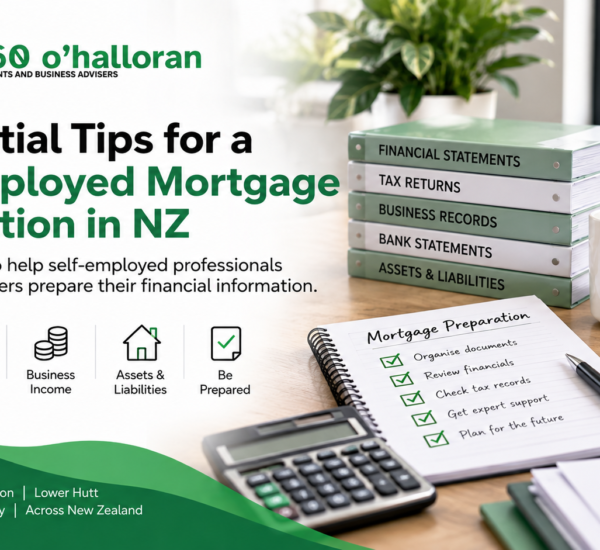
7 Essential Tips for a Self Employed Mortgage Application in NZ
Applying for a mortgage when you are self-employed can involve more financial documentation than a standard salaried application. Your income may come through a company, partnership, sole trader business, contracting work or several different sources.
This means preparing for a self employed mortgage application NZ applicants may need to provide a clear picture of their income, business performance, expenses, tax position and overall financial circumstances.
The exact documents required will depend on your circumstances and the lender. However, getting your accounting and financial records organised before you apply can make the process easier when supporting information is requested.
In this guide, we explain seven practical steps self-employed professionals and business owners can take when preparing their financial information.
Quick Answer: How Can You Prepare for a Self Employed Mortgage Application NZ?
Preparing for a self employed mortgage application NZ generally involves getting your income records, financial statements, tax information, bank records and business documentation organised.
Depending on your circumstances, you may also need information about existing debts, assets, business structures and other sources of income.
Your lender or mortgage adviser should confirm the exact documentation required for your application.
Why Is a Self Employed Mortgage Application Different?
For an employee, income can often be demonstrated through salary or wage information. For a business owner or self-employed person, income may be more complex.
For example, you may operate through a company and receive a combination of salary, shareholder salary or drawings. You may also have business expenses, fluctuating revenue or income from several activities.
Because of this, a lender may require additional financial information to understand your circumstances.
Preparing your accounting records before beginning your application can help ensure that the information you provide is current, consistent and supported by appropriate documentation.
You can also read our related guide: mortgage application financial documents NZ .
7 Essential Tips for a Self Employed Mortgage Application NZ
1. Make Sure Your Financial Statements Are Up to Date
One of the first things to review before a self employed mortgage application NZ is the current state of your business financial statements.
Depending on your business structure and circumstances, this may include a profit and loss statement and balance sheet.
Up-to-date financial statements can provide a clearer picture of business revenue, expenses, profitability, assets and liabilities.
If your accounts have not been updated recently, speak with your accountant about bringing your records up to date before you start gathering your application documents.
2. Organise Your Tax Records
Tax records can form an important part of the financial documentation for self-employed applicants.
Depending on your circumstances, relevant information could include income tax records, GST information, business tax records and other accounting documentation.
Having your tax information organised can make it easier to respond when your lender or mortgage adviser requests supporting documents.
It is also worth checking whether there are any outstanding accounting or tax matters that need to be addressed before you begin the application process.
3. Keep Business and Personal Financial Information Organised
Business owners often have transactions across business and personal accounts. Keeping financial information clearly organised can make it easier to identify income, expenses and other financial commitments.
If you operate a company, partnership or sole trader business, make sure your accounting records accurately reflect your business activity.
Your accountant can help review your records and explain how different transactions have been recorded.
4. Prepare Evidence of Your Business Income
Business income may not always look the same from one month or financial year to another.
Revenue can fluctuate depending on contracts, clients, projects, seasonal activity or changes in the business.
For a self employed mortgage application NZ applicants should be prepared to provide appropriate evidence of income where requested.
This could involve financial statements, accounting records, tax information, bank records or other supporting documents, depending on the lender’s requirements.
5. Review Your Existing Debts and Liabilities
Before submitting your application, make a list of your current financial commitments.
These could include:
- Existing home loans
- Personal loans
- Business loans
- Vehicle finance
- Credit facilities
- Other financial commitments
Having this information organised can help you provide accurate details when completing your mortgage application.
Your lender will determine how existing commitments are treated as part of its own lending assessment.
6. Make Sure Your Accounting Records Are Consistent
Before a self employed mortgage application NZ, review your accounting information for obvious inconsistencies or outdated records.
For example, check that your financial statements, tax records and accounting system reflect the same underlying business activity.
If figures need clarification, it is better to understand the accounting position before you begin providing documentation to your lender.
An accountant can help review your records and explain financial information where required.
7. Prepare Your Documents Before You Apply
One of the simplest ways to prepare for a self employed mortgage application NZ is to create a document checklist before starting the process.
Depending on your circumstances, you may need:
- Current financial statements
- Profit and loss information
- Balance sheet information
- Tax records
- GST records where relevant
- Bank statements
- Evidence of business income
- Details of existing debts and liabilities
- Information about assets
- Other documents requested by the lender
Having these documents ready can help reduce delays when additional information is requested.
Self Employed Mortgage Application NZ Checklist
Use this as a general preparation checklist. Your lender or mortgage adviser may require additional information.
- ☐ Current business financial statements
- ☐ Profit and loss statement
- ☐ Balance sheet
- ☐ Relevant tax records
- ☐ GST records where applicable
- ☐ Business bank statements
- ☐ Personal bank statements where required
- ☐ Evidence of income
- ☐ Existing loan and liability information
- ☐ Asset information
- ☐ Company or business structure information
- ☐ Other supporting documents requested by the lender
Does Your Business Structure Affect a Mortgage Application?
Your business structure can affect the type of financial information you need to organise.
For example, a sole trader, company director, partnership or contractor may have different accounting records and methods of demonstrating income.
Sole Traders
Sole traders generally report business income and expenses as part of their individual tax position. Relevant financial and tax records may be required to demonstrate income.
Company Directors
Company directors may receive income through salary, shareholder salary, drawings or other arrangements. Business financial statements and company records may therefore be relevant.
Contractors
Contractors may have income that varies between projects or contracts. Keeping clear records of invoices, business income, expenses and tax information can be useful when preparing financial documentation.
The exact documentation required will depend on the lender and your individual circumstances.
How Can an Accountant Help With a Self Employed Mortgage Application?
An accountant can help you prepare the accounting and financial information that may be required as part of your mortgage application.
Prepare Financial Statements
Your accountant can prepare or update financial statements based on your accounting records and business information.
Review Income and Expenses
Your accountant can help ensure that business income and expenses are properly recorded in your accounting system.
Organise Tax Information
Relevant tax records can be gathered and organised so that you can provide the information requested by your lender or mortgage adviser.
Explain Your Financial Information
If you are unsure what your financial statements or accounting records show, your accountant can help you understand the figures and explain the underlying accounting information.
Accountant vs Mortgage Adviser: What Is the Difference?
An accountant and mortgage adviser perform different roles. Understanding the distinction is important when preparing for your application.
| Accountant | Mortgage Adviser |
|---|---|
| Helps prepare and organise accounting and financial information | Provides mortgage and lending advice within their authorised scope |
| Prepares financial statements and accounting records | Can discuss available lending options and mortgage products |
| Helps with tax and business financial information | Can assist with the mortgage application and lender process |
The Financial Markets Authority provides information about mortgage advice and the role of mortgage advisers.
DFK Orb360 does not provide mortgage advice, recommend lenders or recommend mortgage products.
Our role is to help clients prepare and understand accounting and financial information that may be required during a mortgage application.
Can an Accountant Improve Your Chances of Mortgage Approval?
An accountant cannot guarantee mortgage approval and does not make the lender’s lending decision.
However, an accountant can help you prepare accurate and organised accounting information that may be requested as part of your application.
This can include financial statements, tax information, business income records and other relevant accounting documents.
The lender ultimately decides whether an application meets its own lending criteria.
When Should You Speak to Your Accountant?
Ideally, start preparing your financial information before you formally begin the mortgage application process.
Consider speaking with your accountant if:
- Your financial statements are out of date
- You are self-employed or run a business
- Your business income has changed significantly
- You have multiple income sources
- You need updated tax or accounting records
- You are unsure what your financial statements show
- Your lender has requested additional business information
Self Employed Mortgage Accounting Support Across New Zealand
DFK Orb360 O’Halloran provides accounting, tax and business advisory services to clients across New Zealand.
Our team works with businesses and self-employed professionals in Auckland, Newmarket, Albany, Wellington and Lower Hutt, as well as clients in other parts of New Zealand.
If you are preparing a mortgage application and need help organising your accounting information, our team can help you prepare relevant financial records.
Visit DFK Orb360 accounting and business advisory services to learn more about our services.
Related Mortgage Application Guide
If you are looking for a broader list of documents that may be required during a mortgage application, read:
What Financial Documents Do You Need for a Mortgage Application in NZ?
You can also read: How an Accountant Can Help Prepare Your Finances for a Mortgage Application in NZ .
People Also Ask: Self Employed Mortgage Application NZ
Can a self-employed person get a mortgage in NZ?
Self-employed people can apply for mortgages in New Zealand. However, the documentation required can differ depending on the applicant’s circumstances and the lender’s requirements.
How long do I need to be self-employed before applying for a mortgage?
There is no single timeframe that applies to every applicant. Requirements can vary depending on the lender, business history, income and individual circumstances. Check the specific requirements with your lender or mortgage adviser.
What financial statements do self-employed people need for a mortgage?
Depending on the lender, self-employed applicants may be asked for financial statements such as a profit and loss statement and balance sheet, together with other financial and tax information.
How many years of financial records are needed for a self-employed mortgage?
The period of financial information required can vary between lenders and applications. Your lender or mortgage adviser can confirm the specific timeframe required.
Do contractors need financial statements for a mortgage?
Contractors may be asked for financial information supporting their income. Depending on the circumstances, this could include accounting records, tax information, bank statements or financial statements.
Can an accountant help with a self-employed mortgage application?
Yes. An accountant can help organise financial statements, accounting records, income information and relevant tax documentation that may be requested during the application.
Can an accountant guarantee mortgage approval?
No. An accountant cannot guarantee mortgage approval. The lender makes the final lending decision according to its own criteria and assessment process.
Does DFK Orb360 provide mortgage advice?
No. DFK Orb360 provides accounting, tax and business advisory services and can help clients prepare financial information for mortgage applications. DFK Orb360 does not provide mortgage advice or recommend mortgage products or lenders.
Need Help Preparing Your Self Employed Mortgage Documents?
If you are self-employed or run a business, having your accounting and financial information organised can make it easier to respond to document requests during a mortgage application.
DFK Orb360 can help with financial statements, accounting records, tax information and other relevant financial documentation.
We work with clients across Auckland, Newmarket, Albany, Wellington and Lower Hutt, as well as businesses throughout New Zealand.
Get your financial information organised before you begin your mortgage application.
About This Article
Written by: DFK Orb360 O’Halloran Content Team
Reviewed by: DFK Orb360 O’Halloran Chartered Accounting Team
Published: 22 September 2026
Last reviewed: 22 September 2026
Expertise: New Zealand accounting, taxation, financial reporting, property investment and business advisory.
Editorial approach: This article focuses on accounting and financial information preparation and clearly distinguishes these services from mortgage advice.
Disclaimer: This article provides general information only and does not constitute mortgage, lending or financial product advice. Mortgage advisers and lenders determine their own requirements, lending criteria and decisions. For regulated mortgage advice, speak with an appropriately authorised financial adviser.



 09 377 4238
 Level 2, 6 Kingdon Street, Newmarket, Auckland
 help@orb360.co.nz