

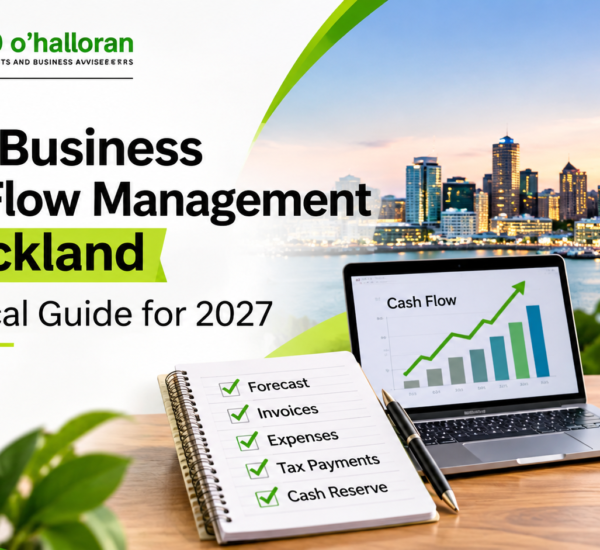
Managing a small business in Auckland involves more than generating sales and making a profit. Business owners also need to ensure that enough money is available to pay suppliers, employees, rent, operating expenses and tax obligations when they fall due. Effective Small Business Cash Flow Auckland planning can help businesses manage these financial commitments, prepare for seasonal changes and make informed decisions about growth.
Small Business Cash Flow Management in Auckland
Small business cash flow management in Auckland involves monitoring when money enters and leaves a business, forecasting future balances and ensuring funds are available for operating expenses and tax payments. Auckland business owners can strengthen cash flow by preparing a rolling 13-week forecast, invoicing promptly, following up overdue payments, reviewing expenses, setting aside money for GST and provisional tax, and monitoring cash flow regularly. An accountant can help review financial information, identify potential shortfalls and support better business planning.
Key Takeaways
- Profit and cash flow are different. A profitable business can still experience cash shortages.
- A rolling cash flow forecast helps identify potential funding gaps before they become urgent.
- Late customer payments, seasonal sales and rising operating expenses can affect available cash.
- GST, PAYE and provisional tax commitments should be included in cash flow planning.
- Regular financial reviews help business owners make informed spending and growth decisions.
What Is Cash Flow Management for a Small Business?
Cash flow management is the process of monitoring, planning and controlling the money moving into and out of a business. It helps business owners understand whether they will have enough available cash to meet upcoming financial commitments.
Cash inflows may include:
- Customer payments and sales revenue.
- Payments received against outstanding invoices.
- Business loans and approved finance.
- Capital contributions or other business funding.
- Income from the sale of business assets.
Cash outflows may include:
- Employee wages, salaries and related payroll costs.
- Rent, utilities and premises expenses.
- Supplier payments and inventory purchases.
- Marketing, insurance and professional fees.
- Loan repayments and interest.
- GST, PAYE, provisional tax and other tax payments.
A business may issue invoices and record revenue but still have insufficient cash in its bank account if customers have not paid. This is why cash flow management needs to consider the timing of payments, not simply the value of sales.
Why Is Cash Flow Management Important for Auckland Small Businesses?
Auckland businesses operate across a wide range of industries, including professional services, construction, retail, hospitality, transport and trades. Each industry has different payment cycles, operating costs and seasonal patterns.
For example, a construction business may need to pay subcontractors and suppliers before receiving progress payments from a customer. A retail business may purchase stock ahead of a busy trading period, while a professional services firm may wait several weeks for clients to settle invoices.
Without a clear view of expected cash movements, these timing differences can put pressure on day-to-day operations.
1. Meeting regular business expenses
Rent, wages, utilities, supplier invoices and insurance premiums generally need to be paid on schedule. Cash flow planning helps business owners anticipate these expenses and avoid relying on last-minute funding.
2. Preparing for tax obligations
Businesses need to plan for tax payments rather than treating available bank balances as money that can all be spent. Setting aside funds for GST, PAYE and provisional tax can help reduce pressure when payment dates approach.
3. Managing seasonal changes
Sales may increase or decrease at different times of the year. Retailers may experience stronger Christmas trading, while some professional services businesses may see slower customer activity during holiday periods. Forecasting these changes helps businesses plan purchases, staffing and cash reserves.
4. Making informed growth decisions
Hiring employees, purchasing equipment, expanding premises or increasing inventory can all affect available cash. A forecast helps business owners assess the timing and affordability of these decisions before committing to additional costs.
How Can Auckland Small Businesses Improve Cash Flow?
Improving cash flow usually involves several connected actions rather than one major change. The following practices can help Auckland business owners improve visibility over their finances and manage working capital more effectively.
1. Prepare a rolling 13-week cash flow forecast
A 13-week cash flow forecast gives business owners a forward-looking view of expected income, expenses and closing bank balances over approximately three months.
A useful forecast should include:
- Opening cash balance.
- Expected customer receipts.
- Other expected cash inflows.
- Supplier and operating payments.
- Payroll and employee-related costs.
- GST, PAYE and provisional tax payments.
- Loan repayments and planned purchases.
- Projected closing cash balance.
Update the forecast regularly using actual bank balances, invoices, bills and revised payment expectations. A rolling forecast should be adjusted as new information becomes available.
Illustrative example: A 13-week cash flow forecast
Consider an Auckland service business with an opening cash balance of NZ$35,000. It expects customer receipts of NZ$25,000 and cash outflows of NZ$22,000 during a particular week.
| Cash flow item | Amount |
|---|---|
| Opening cash balance | NZ$35,000 |
| Expected customer receipts | NZ$25,000 |
| Expected cash outflows | NZ$22,000 |
| Projected closing balance | NZ$38,000 |
This is a simplified illustration, not a business benchmark or financial projection. Actual forecasts should use the business’s expected payment dates, tax commitments and other cash movements.
2. Invoice customers promptly and follow up overdue payments
Delayed invoicing and overdue accounts can restrict the money available to operate a business. Establish a consistent invoicing process so that customers receive accurate invoices as soon as the agreed work or delivery milestone is completed.
Practical steps include:
- Clearly state payment terms and due dates.
- Confirm purchase orders and billing details before starting work.
- Send invoices promptly after completing agreed work.
- Use payment reminders before and after due dates.
- Review outstanding invoices and follow up overdue accounts.
- Consider deposits or staged payments for larger projects where commercially appropriate.
3. Review business expenses regularly
Small recurring costs can add up over time. Review supplier contracts, software subscriptions, insurance, utilities, marketing expenditure and other operating expenses to understand where money is being spent.
Compare actual spending against your budget and investigate unexpected increases. Before cutting an expense, consider whether it supports essential operations, customer service, compliance or revenue generation.
4. Separate money for tax commitments
Tax collected or reserved for future payments should be considered when assessing how much cash is genuinely available to spend. Businesses should account for GST, PAYE and income tax obligations in their financial planning.
Consider maintaining a separate savings account or clearly identified cash reserve for upcoming tax payments. The amount to set aside depends on the business structure, income, GST position and tax circumstances.
5. Monitor stock and inventory levels
For Auckland retailers, wholesalers and product-based businesses, excess inventory can tie up cash that could otherwise be used for wages, rent or supplier payments.
Review stock turnover, slow-moving products, purchasing schedules and seasonal demand. Align inventory purchases with realistic sales expectations rather than relying only on optimistic forecasts.
6. Plan for large purchases and loan repayments
Equipment, vehicles, technology and premises improvements can create significant cash outflows. Before making a major purchase, consider the full cost, payment timing, financing arrangements and effect on your projected cash balance.
A cash flow forecast can help compare different purchase dates or financing options. Discuss significant commitments with your accountant or financial adviser where appropriate.
7. Review cash flow every week
Cash flow management should be an ongoing business process. A weekly review helps identify changes in expected receipts, overdue invoices, upcoming supplier payments and possible funding gaps.
Compare actual cash movements with your forecast and update future weeks accordingly. If a shortfall is emerging, investigate the cause early and consider appropriate steps such as following up debtors, rescheduling discretionary expenditure or discussing payment arrangements with relevant parties.
What Should Auckland Business Owners Include in a Cash Flow Forecast?
A practical cash flow forecast should reflect the way money moves through the business. It should include expected amounts and, importantly, the dates on which payments are likely to be received or made.
| Forecast category | What to include |
|---|---|
| Opening balance | Available cash at the start of the forecast period. |
| Sales receipts | Expected customer payments based on realistic collection dates. |
| Other income | Loans, capital contributions or other expected receipts. |
| Operating costs | Rent, utilities, software, insurance and other regular costs. |
| Payroll | Wages, salaries and related employment costs. |
| Supplier payments | Inventory, materials and subcontractor payments. |
| Tax commitments | Expected GST, PAYE and income tax payments. |
| Financing | Loan repayments, interest and planned borrowing. |
| Closing balance | Projected cash remaining after all expected movements. |
Business.govt.nz explains that a cash flow forecast should estimate starting balances, expected income, outgoings and projected ending balances. It also recommends considering historical sales patterns and seasonal variations when estimating future income.
Read the official guidance: Business.govt.nz – Cash Flow Forecasting.
How Do GST, PAYE and Provisional Tax Affect Small Business Cash Flow in Auckland?
Tax obligations can have a significant effect on a business’s available cash. Business owners should include expected tax payments in their cash flow forecasts rather than waiting until a return or payment deadline approaches.
GST payments
If your business is registered for GST, you need to account for GST collected on taxable supplies and eligible GST credits on business purchases. The amount payable depends on your transactions and GST accounting position.
Avoid treating all GST-inclusive customer receipts as business income available for spending. Reconcile GST regularly and check your actual filing and payment dates with Inland Revenue.
PAYE obligations
Employers need to plan for payroll-related payments, including PAYE deductions and other applicable employment obligations. Include payroll payment dates and associated cash requirements in your forecast.
Provisional tax planning
Provisional tax is generally paid during the income year by businesses and individuals who meet the relevant criteria. For taxpayers using the standard or estimation method with a standard 31 March balance date, the general instalment dates are 28 August, 15 January and 7 May.
The payment dates and number of instalments can differ depending on the provisional tax method, balance date and individual circumstances. For example, the ratio option and Accounting Income Method (AIM) have different payment arrangements.
As 15 January 2027 approaches, eligible businesses using the standard or estimation method should check whether a provisional tax instalment is due and ensure that the payment is included in their forecast. Always confirm your own dates through myIR or with your tax adviser.
Official reference: Inland Revenue – Payment Dates for Provisional Tax.
What Are the Most Common Cash Flow Mistakes Auckland Small Businesses Should Avoid?
Cash flow difficulties often develop gradually. Recognising common warning signs can help business owners respond before financial pressure affects everyday operations.
- Confusing profit with available cash: Revenue recorded in the accounts does not mean the customer has paid.
- Not preparing a forecast: Relying on the current bank balance provides limited visibility of future commitments.
- Ignoring overdue invoices: Unpaid customer balances can delay cash receipts.
- Underestimating tax payments: Tax commitments should be planned for throughout the year.
- Overstocking: Excess inventory can tie up working capital.
- Making large purchases without planning: Major spending can create short-term cash shortages.
- Failing to update financial information: An outdated forecast may not reflect actual trading conditions.
How Can You Tell If Your Business Has a Cash Flow Problem?
A business may be experiencing cash flow pressure if it regularly struggles to meet payments on time, relies on customer receipts that have not yet arrived or uses additional borrowing to cover ordinary operating costs.
Warning signs include:
- Regularly delaying supplier payments.
- Using GST or tax reserves to pay everyday expenses.
- Relying on overdrafts to cover recurring operating costs.
- Increasing overdue customer balances.
- Having little cash available after payroll and fixed expenses.
- Being unable to confidently plan upcoming purchases or recruitment.
These signs do not automatically mean a business is insolvent. However, they indicate that the business should review its financial position and seek appropriate professional advice where needed.
Cash Flow Management Checklist for Auckland Small Businesses
Use this checklist as part of your regular financial review:
- Prepare and update a rolling 13-week cash flow forecast.
- Reconcile bank transactions and accounting records regularly.
- Review outstanding invoices and overdue customer accounts.
- Confirm upcoming supplier, rent and payroll payments.
- Check GST, PAYE and provisional tax obligations.
- Review inventory and upcoming purchasing commitments.
- Assess planned equipment purchases and other major expenses.
- Compare actual cash movements with forecast figures.
- Identify potential cash shortages early.
- Discuss significant financial decisions with your accountant.
How Can an Accountant Help Improve Your Business Cash Flow?
An accountant can help business owners understand their financial position, review accounting information and develop a more structured approach to cash flow planning.
Depending on the business’s requirements, support may include:
- Reviewing financial statements and management reports.
- Preparing or reviewing cash flow forecasts.
- Identifying patterns in income, expenditure and working capital.
- Reviewing debtor balances and payment trends.
- Planning for GST, PAYE and provisional tax commitments.
- Assessing the financial implications of business expansion.
- Supporting budgeting and financial decision-making.
The appropriate level of support will depend on the size, structure and financial circumstances of the business.
Is Your Auckland Business Cash Flow Ready for 2027?
Don’t wait until a cash shortage affects your business operations. Get a clearer picture of your upcoming income, expenses and tax commitments with support from DFK Orb360 O’Halloran.
Request a complimentary initial Business Cash Flow Health Check. Our team can discuss your current concerns, understand your business requirements and explain how our accounting and business advisory services may help.
Request Your Complimentary Initial ConsultationFrequently Asked Questions About Small Business Cash Flow in Auckland
1. What is the best way to manage cash flow in a small business?
Start by preparing a rolling cash flow forecast, monitoring expected customer payments, reviewing expenses and planning for tax obligations. Update the forecast regularly so that you can identify potential shortages early.
2. How often should a small business review its cash flow?
Many small businesses benefit from reviewing cash flow weekly, particularly when payment timing is unpredictable. A monthly review can also help assess trends, budgets and longer-term financial performance.
3. What is a 13-week cash flow forecast?
A 13-week cash flow forecast estimates the money expected to enter and leave a business over the next 13 weeks. It tracks opening balances, receipts, payments and projected closing balances to help identify possible cash shortages.
4. Why can a profitable business still have cash flow problems?
A business can record revenue and make a profit while waiting for customers to pay their invoices. It may also have significant stock purchases, loan repayments, tax commitments or other expenses that fall due before customer payments arrive.
5. Should GST be included in a business cash flow forecast?
Yes. Businesses registered for GST should account for expected GST collections, eligible credits and payment obligations in their cash flow planning. The forecast should reflect the business’s actual GST accounting position and payment dates.
6. When is provisional tax generally due in New Zealand?
For taxpayers using the standard or estimation method with a standard 31 March balance date, the general instalment dates are 28 August, 15 January and 7 May. Other methods and balance dates can have different payment dates, so businesses should confirm their own obligations with Inland Revenue.
7. How can an Auckland accountant help with cash flow management?
An accountant can help review financial reports, prepare or assess cash flow forecasts, monitor tax commitments and identify areas where working capital may be under pressure. The support required depends on the business’s circumstances.
8. What should a small business do if it cannot pay its bills on time?
Review the immediate cash position, identify expected receipts and urgent commitments, follow up overdue invoices and communicate with creditors early. Seek professional advice if the business is experiencing ongoing financial difficulty.
9. Can accounting software help manage small business cash flow?
Accounting software can help record transactions, monitor invoices and bills, reconcile bank accounts and provide information for cash flow reporting. Forecasting still requires realistic assumptions and regular review.
10. Where can Auckland business owners get help with cash flow planning?
Auckland business owners can speak with an accountant or business adviser about cash flow forecasting, financial reporting, tax planning and working capital. DFK Orb360 O’Halloran offers accounting and business advisory support for businesses.
Take the Next Step Towards Better Cash Flow Management
Every business has different cash flow requirements. Whether you need help understanding your current financial position or planning for the year ahead, DFK Orb360 O’Halloran can discuss the support that may be appropriate for your business.
Start with a complimentary initial consultation.
Contact DFK Orb360 O’HalloranAbout the Author and Review
Author: DFK Team
This article has been prepared for Auckland small business owners by DFK Orb360 O’Halloran, Chartered Accountants and Business Advisers.
Disclaimer
This article provides general information for New Zealand business owners and should not be treated as personalised accounting, tax, financial or legal advice. Tax obligations and payment dates may vary depending on business structure, accounting balance date, GST filing frequency and tax payment method. Readers should confirm their circumstances with Inland Revenue or a qualified professional adviser before making financial or tax decisions.
In Summary: Small Business Cash Flow Auckland
Effective small business cash flow management in Auckland requires business owners to understand when customer payments are expected, plan for operating costs, manage overdue invoices and prepare for tax obligations. A rolling 13-week cash flow forecast, supported by regular financial reviews, can help identify potential cash shortages and support better business decisions. For assistance with cash flow planning and accounting support, Auckland businesses can contact DFK Orb360 O’Halloran to discuss a complimentary initial consultation.
Speak to DFK Orb360 O’Halloran
If you would like to discuss cash flow management, accounting or business advisory support, submit an enquiry below and our team can get in touch.


 09 377 4238
 Level 2, 6 Kingdon Street, Newmarket, Auckland
 help@orb360.co.nz