

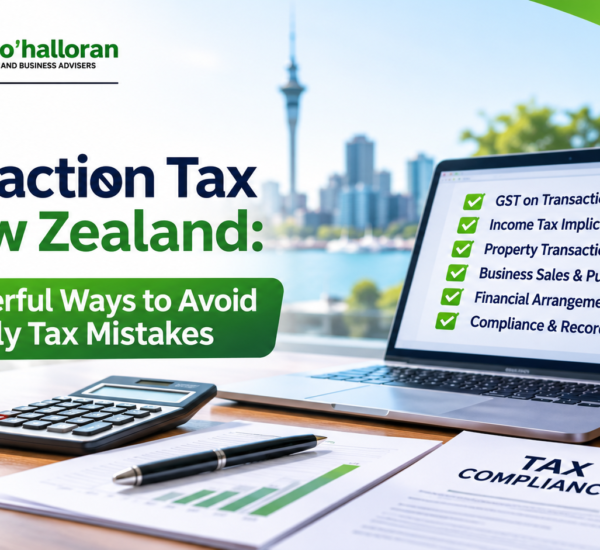
Transaction Tax in New Zealand is a commonly searched term by business owners, investors and individuals who want to understand the taxes that may apply when money, goods, services, property or financial assets change hands. However, New Zealand does not have one single general tax officially called transaction tax. Instead, the tax treatment depends on the nature of the transaction, the parties involved and the purpose of the activity.
For businesses, a transaction may have GST implications, create taxable income, involve deductible expenses or fall under specific financial arrangement rules. Property purchases, business acquisitions and asset sales can also have different tax consequences.
Understanding these obligations before completing a transaction can help businesses manage cash flow, maintain accurate records and avoid unexpected tax liabilities.
What Is Transaction Tax in New Zealand?
Transaction tax is a general term used to describe taxes that may apply when goods, services, property or financial assets are bought, sold or transferred. New Zealand does not have one universal tax called transaction tax. Depending on the circumstances, transactions may be subject to GST, income tax, property-related tax rules or financial arrangements rules. Businesses should assess the tax treatment of significant transactions before completing them and seek professional tax advice where necessary.
Key Takeaways
- New Zealand does not have one general tax officially called transaction tax.
- GST generally applies at 15% to most taxable goods and services supplied by GST-registered businesses.
- Business asset sales may create income tax and GST obligations depending on the transaction.
- Property sales may be subject to income tax under specific property rules.
- Financial arrangements can have specific income and expense recognition requirements.
- Understanding tax obligations before a transaction can help prevent costly mistakes.
What Does Transaction Tax Mean?
Transaction tax is a broad term that can refer to taxes imposed on particular economic activities, purchases, sales or transfers. In some countries, the term may describe a specific tax on financial transactions or the transfer of certain assets.
In New Zealand, the term is not the name of one general tax. Instead, Inland Revenue (IRD) applies different tax rules depending on what is being bought, sold, transferred or received.
For example:
- A business selling goods or services may need to account for GST.
- A business selling an asset may need to consider the income tax treatment of the sale.
- A property sale may be taxable depending on the circumstances and applicable property rules.
- A loan or other financial arrangement may be subject to specific rules for calculating income and expenses.
Therefore, when people search for transaction tax in New Zealand, they may actually be looking for information about GST, tax on property sales, business asset sales or other transaction-related tax obligations.
What Types of Tax Can Apply to Transactions in New Zealand?
1. Goods and Services Tax (GST)
Goods and Services Tax (GST) is one of the most common taxes associated with everyday business transactions in New Zealand.
GST is generally charged at 15% on most taxable goods and services supplied by GST-registered businesses. The business collects GST from customers and accounts for it through GST returns filed with Inland Revenue.
For example, if a GST-registered business sells a taxable service for $1,000 excluding GST, it would generally charge:
Example: GST on a Business Transaction
Service price: NZ$1,000
GST at 15%: NZ$150
Total customer payment: NZ$1,150
The business must account for the GST collected in its GST return. Eligible GST on business purchases may also be claimed, subject to the applicable rules.
Businesses generally need to register for GST when their taxable activity turnover exceeds NZ$60,000 in a 12-month period, or when they expect it to exceed that amount. Voluntary registration may also be possible.
Learn more from Inland Revenue: What GST is in New Zealand.
2. Income Tax on Business Transactions
Income tax may apply when a business earns taxable income from selling goods, providing services or disposing of certain business assets.
Not every amount received from a transaction is automatically taxable income. The treatment depends on the nature of the payment, the asset involved and the applicable tax rules.
For example, when a business sells equipment, vehicles or other assets, the difference between the sale proceeds and the asset’s tax value may need to be considered when calculating taxable income or deductible expenditure.
Businesses should keep records of:
- The original purchase price of the asset.
- Depreciation claimed over the period of ownership.
- The final sale price.
- Expenses directly related to the sale.
- Supporting invoices and transaction documents.
Read more: IRD guidance on tax for business asset sales.
3. Tax on Property Transactions
Property transactions can involve different tax obligations depending on the property type, the buyer and seller’s circumstances, the intended use of the property and the nature of the transaction.
In New Zealand, income tax may apply to profits from property sales in certain circumstances. For example, the bright-line property rules may apply to residential property sold within the relevant period, subject to applicable exclusions and exemptions.
GST may also apply to some property transactions, particularly where the property is part of a GST-registered person’s taxable activity.
Businesses and property investors should consider:
- Whether the property is residential or commercial.
- Whether the seller is GST-registered.
- Whether the property forms part of a taxable activity.
- Whether income tax or bright-line rules apply.
- Whether the transaction qualifies for a specific GST treatment.
Property tax treatment can be complex. Buyers and sellers should seek tax advice before signing an agreement where GST or income tax implications are uncertain.
Official guidance: GST when buying or selling property.
4. Tax on Business Sales and Acquisitions
Buying or selling a business can involve several different tax considerations. The tax treatment may depend on whether the transaction involves shares, business assets, inventory, goodwill, property or other financial arrangements.
When a business is sold, the parties may need to consider:
- GST treatment of the sale.
- Income tax implications of asset disposals.
- Depreciation recovery or loss considerations.
- Allocation of the purchase price between different assets.
- Tax treatment of employee-related payments.
- Financing costs and financial arrangements.
Buyers and sellers should review the sale and purchase agreement carefully and understand the tax consequences before finalising the transaction.
5. Financial Arrangements and Tax Rules
Some financial transactions, including loans and certain investment arrangements, may be subject to New Zealand’s financial arrangements rules.
These rules can affect how income and expenditure are recognised over the term of a financial arrangement. In certain circumstances, businesses may need to spread income and expenses over time and complete a calculation when the arrangement ends.
Examples of financial arrangements can include:
- Loans used to purchase investment property.
- Foreign currency borrowing.
- Debt instruments.
- Other arrangements involving deferred payments.
The rules can be complex, particularly when foreign currency movements or large financing arrangements are involved.
Official guidance: IRD financial arrangements rules.
Does New Zealand Have a General Transaction Tax?
No. New Zealand does not have one general tax officially named transaction tax that applies to every purchase, sale or transfer.
Instead, the country uses different tax rules for different activities. GST applies to most taxable goods and services, income tax applies to taxable income, and specific rules can apply to property transactions and financial arrangements.
This distinction is important because the tax treatment of one transaction may be very different from another. A standard sale of business services, for example, is not treated in the same way as the sale of a business asset or a property transaction.
Businesses should identify the nature of each transaction before deciding which tax rules apply.
How Can Businesses Manage Tax Obligations on Transactions?
Managing tax obligations requires accurate records, consistent financial reporting and an understanding of the rules relevant to each transaction.
1. Maintain Accurate Transaction Records
Keep invoices, receipts, agreements, bank statements and supporting documents for business transactions. Good recordkeeping helps support GST returns, income tax calculations and financial reporting.
2. Review GST Treatment Before Invoicing
Confirm whether a supply is standard-rated, zero-rated, exempt or subject to special GST rules. Applying the wrong GST treatment can result in reporting errors and additional tax liabilities.
3. Assess Tax Implications Before Selling Assets
Review the original purchase cost, depreciation history, sale price and relevant tax rules before disposing of business assets.
4. Consider Property Tax Rules Before Buying or Selling
Property transactions can have significant GST and income tax implications. Review the circumstances and seek professional advice before entering into an agreement.
5. Review Financial Arrangements
Businesses with loans, foreign currency arrangements or deferred payments should understand how the financial arrangements rules may affect their taxable income and expenses.
6. Seek Professional Tax Advice
Where a transaction involves significant financial value or complex tax treatment, consult an experienced tax advisor before completing the transaction.
Common Transaction Tax Mistakes Businesses Should Avoid
Businesses may face unnecessary tax costs when they do not understand the tax implications of their transactions. Common mistakes include:
- Assuming GST applies to every transaction at 15%.
- Failing to check whether a business needs to register for GST.
- Incorrectly claiming GST on purchases.
- Ignoring income tax implications when selling business assets.
- Overlooking property-related tax obligations.
- Failing to maintain supporting transaction records.
- Not reviewing tax consequences before signing business agreements.
Understanding the tax treatment before a transaction takes place can help businesses avoid reporting errors and unexpected liabilities.
How DFK Orb360 O’Halloran Can Help
Understanding transaction-related tax obligations is an important part of managing business finances. Whether your business is purchasing assets, selling property, acquiring another business or managing regular GST obligations, professional accounting and tax advice can help you make informed decisions.
DFK Orb360 O’Halloran provides accounting, taxation and business advisory services to help New Zealand businesses manage their financial responsibilities.
Our team can assist businesses with understanding tax obligations, maintaining financial records and reviewing business transactions as part of their broader accounting and advisory requirements.
Explore DFK Orb360 O’Halloran’s accounting and business advisory services to learn more.
People Also Ask: Transaction Tax in New Zealand
1. What is transaction tax in New Zealand?
Transaction tax is a broad term used to describe taxes that may apply when goods, services, property or financial assets are bought, sold or transferred. New Zealand does not have one general tax officially called transaction tax. Different rules, including GST and income tax, may apply depending on the transaction.
2. Does New Zealand have a transaction tax?
New Zealand does not have one universal tax called transaction tax that applies to all transactions. Instead, GST, income tax, property-related rules and financial arrangements rules may apply depending on the nature of the activity.
3. Is GST a transaction tax in New Zealand?
GST is a consumption tax charged on most taxable goods and services supplied by GST-registered businesses. The standard GST rate in New Zealand is 15%. It applies to many everyday business transactions but not every transaction is subject to GST.
4. Do businesses pay tax when selling assets in New Zealand?
Business asset sales can have income tax and GST implications depending on the asset, the original purchase cost, depreciation claimed and the nature of the transaction. Businesses should review the tax treatment before completing an asset sale.
5. Is there tax on property transactions in New Zealand?
Property transactions may have income tax and GST implications depending on the circumstances. The bright-line property rules may apply to certain residential property sales, while GST may apply to property sold as part of a GST-registered taxable activity.
6. What is the GST rate in New Zealand?
The standard GST rate in New Zealand is 15%. GST generally applies to most taxable goods and services supplied by GST-registered businesses. Some supplies are zero-rated, exempt or subject to special rules.
7. How are financial transactions taxed in New Zealand?
The tax treatment of financial transactions depends on the type of arrangement. Certain loans, foreign currency arrangements and other financial arrangements may be subject to specific rules for calculating and recognising income and expenses.
8. Should I consult a tax advisor before a major business transaction?
Yes. Seeking professional tax advice before a major business transaction can help identify potential GST and income tax obligations, understand financial implications and avoid unexpected tax costs.
Need Help Understanding Your Business Tax Obligations?
Every business transaction can have different tax implications. Understanding these obligations before making financial decisions can help protect your business and support better financial management.
Speak with DFK Orb360 O’Halloran about your accounting, taxation and business advisory requirements.
Visit DFK Orb360 O’Halloran or complete the enquiry form below to request a consultation.
Talk to the DFK Orb360 O’Halloran Team
Complete the form below and our team can get in touch to discuss your business requirements.
Official Information and Further Reading
Disclaimer: This article provides general information about New Zealand tax rules and is not a substitute for personalised tax, accounting or legal advice. Tax treatment depends on the specific facts and circumstances of each transaction. Seek professional advice before making significant financial or business decisions.



 09 377 4238
 Level 2, 6 Kingdon Street, Newmarket, Auckland
 help@orb360.co.nz