
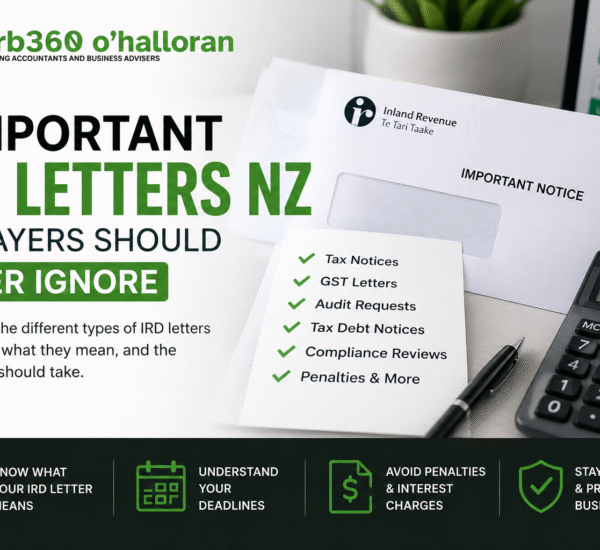
The Inland Revenue Department (IRD) sends various letters and notices to individuals and businesses in New Zealand. These notices may relate to tax returns, GST obligations, PAYE, provisional tax, audits, tax debt, refunds, compliance reviews, or requests for information.
Some notices are purely informational, while others require immediate action. Understanding what an IRD letter means can help you avoid penalties, interest charges, compliance issues, and debt collection action.
Understanding the different Types of IRD Letters NZ businesses and individuals may receive is important for maintaining tax compliance. These notices can range from simple reminders to audit requests and tax debt notices that require immediate action.
In This Guide You’ll Learn:Common IRD letters include tax return reminders, GST notices, income tax assessments, PAYE notices, provisional tax notices, tax debt notifications, audit notices, information requests, penalty notices, and refund confirmations. Each notice serves a different purpose and may require different actions from taxpayers.
The Inland Revenue Department communicates with taxpayers through letters, emails, and messages within myIR.
These notices are designed to inform taxpayers about their obligations, confirm tax positions, request information, communicate compliance matters, and provide updates regarding refunds or outstanding balances.
Not every IRD notice indicates a problem. However, every notice should be reviewed carefully to ensure appropriate action is taken.
The Inland Revenue Department communicates with taxpayers through letters, emails, and messages within myIR.
For more information about Inland Revenue services, visit: Inland Revenue New Zealand .
Many taxpayers search for information about IRD Letters NZ after receiving unexpected correspondence from Inland Revenue. Understanding the purpose of IRD Letters NZ can help reduce confusion and ensure important deadlines are not missed.
While some IRD Letters NZ are purely informational, others may require immediate action. Reviewing the contents carefully can help taxpayers avoid penalties and compliance issues.
One of the most common types of correspondence issued by Inland Revenue is a Statement of Account.
This notice provides a summary of your tax position and may include:
Taxpayers should review Statements of Account regularly to ensure all transactions have been processed correctly.
IRD may send reminders when tax returns have not been filed by the required deadline.
These notices commonly relate to:
Ignoring filing reminders may result in penalties and increased compliance scrutiny.
Businesses that receive IRD Letters NZ relating to GST, PAYE, audits, or tax debt should respond promptly and maintain accurate records to support their position. GST Notices
Businesses registered for GST frequently receive GST-related notices from Inland Revenue.
These reminders help businesses meet upcoming filing deadlines.
If a GST return has not been filed, Inland Revenue may issue a follow-up notice requesting immediate action.
IRD may adjust a GST return and issue an assessment notice outlining the changes and resulting tax position.
GST notices should be reviewed carefully to ensure all reported information is accurate.
An Income Tax Assessment Notice confirms Inland Revenue’s calculation of your tax position for a particular tax year.
These notices may include:
Taxpayers should compare the assessment against their submitted tax return to ensure all information has been processed correctly.
If discrepancies are identified, they should be addressed as soon as possible.
Businesses employing staff may receive PAYE-related correspondence from Inland Revenue.
IRD may issue reminders or notifications regarding payroll filing obligations.
Employers may receive notices outlining upcoming payment requirements and due dates.
Inland Revenue may contact businesses where payroll information appears incomplete, inaccurate, or inconsistent.
Maintaining accurate payroll records helps reduce compliance risks and ensures reporting obligations are met.
Many business owners, contractors, and self-employed taxpayers receive provisional tax notices throughout the year.
These notices typically outline:
Missing provisional tax deadlines can result in penalties and use-of-money interest charges.
Businesses should review these notices carefully and ensure payments are made on time.
One of the most important types of IRD correspondence is a tax debt notice.
These notices indicate that tax remains unpaid and may require immediate attention.
A debt notice may include:
Ignoring tax debt notices can result in escalating costs and further collection activity.
Related article:
What Happens If You Ignore an IRD Letter or Notice in New Zealand?
Receiving an audit notice does not necessarily mean a taxpayer has done something wrong.
Inland Revenue may conduct reviews and audits for a variety of reasons, including routine compliance checks and verification activities.
These reviews often focus on specific transactions, deductions, GST claims, or reporting obligations.
An audit notice generally indicates that Inland Revenue requires additional information to verify a taxpayer’s position.
The notice may request supporting documentation, explanations, or financial records.
IRD may also conduct targeted reviews where information received from third parties does not align with reported tax information.
Responding promptly and accurately can help the review process proceed efficiently.
Inland Revenue has the authority to request additional information from taxpayers where clarification is required.
Information requests may relate to:
Providing complete and accurate information helps avoid unnecessary delays and disputes.
Where complex issues are involved, professional tax advice may be beneficial before responding.
Taxpayers who miss filing or payment obligations may receive notices outlining penalties and interest charges.
These notices are issued when required tax returns are not submitted by the due date.
These penalties apply when tax liabilities remain unpaid after the required deadline.
IRD may charge interest on outstanding tax balances where payments are overdue.
The longer a balance remains unpaid, the more significant the total cost may become.
Businesses and individuals should act quickly to address penalty notices and minimise additional charges.
Not all IRD correspondence relates to money owed.
Many taxpayers receive notices confirming refunds, credits, and successful adjustments to their tax accounts.
These notices may include:
Refund notices provide confirmation that Inland Revenue has processed a payment or adjustment in your favour.
While every IRD notice should be reviewed, some notices require more urgent action than others.
Priority notices generally include:
Ignoring these notices may result in additional penalties, interest charges, assessments, or debt collection action.
Understand exactly what Inland Revenue is requesting and identify any deadlines.
Additional information and supporting correspondence may be available through your myIR account.
Collect invoices, receipts, tax records, payroll reports, and other relevant documents before responding.
Timely communication can often prevent penalties, disputes, and escalation.
If the notice relates to an audit, tax debt, dispute, review, or compliance issue, professional advice can help ensure the matter is handled appropriately.
Many taxpayers ignore IRD correspondence because they are unsure what it means. Understanding Types of IRD Letters NZ can help you identify potential tax issues early and avoid penalties, interest charges, audits, and debt collection action.
Professional advice may be beneficial when IRD Letters NZ involve complex tax matters, disputes, audits, or significant outstanding balances.
IRD Letters NZ are issued for many reasons including tax return reminders, GST obligations, tax assessments, audits, refunds, and compliance reviews.
Some notices are purely informational, while others require immediate action. Every IRD letter should be reviewed carefully.
Ignoring IRD correspondence may result in penalties, interest charges, tax assessments, compliance reviews, or debt collection action.
Yes. Inland Revenue may communicate through myIR messages, email notifications, and traditional letters.
The outcome depends on the type of notice but may include penalties, audits, collection action, or revised tax assessments.
For more information:
What Happens If You Ignore an IRD Letter or Notice?
You can verify notices by checking your myIR account or contacting Inland Revenue directly if you have concerns about authenticity.
Whether you are an individual taxpayer, sole trader, or business owner, understanding the different Types of IRD Letters NZ can help you stay compliant and respond appropriately when Inland Revenue contacts you.
Understanding IRD Letters NZ is an important part of managing your tax obligations and maintaining compliance with Inland Revenue requirements.
If you’ve received an IRD notice and are unsure what it means, DFK Orb360 can help.
Our tax specialists assist individuals and businesses with IRD correspondence, tax disputes, audits, debt management, compliance reviews, and tax planning matters.
Understanding the issue early can help prevent unnecessary penalties and reduce stress.
DFK Orb360 is a New Zealand accounting, tax advisory, and business consulting firm helping businesses and individuals navigate tax obligations, compliance requirements, and growth opportunities.
“` “`

Copyright © 2025 Marketing Transformers | All Rights Reserved.


 09 377 4238
 Level 2, 6 Kingdon Street, Newmarket, Auckland
 help@orb360.co.nz