

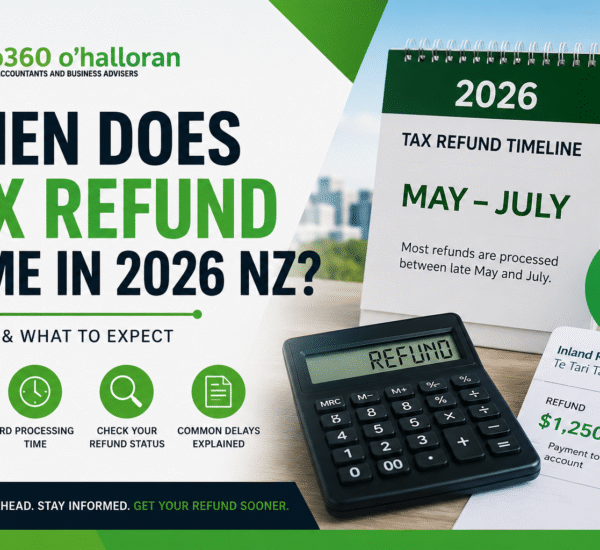
When Does Tax Refund Come in 2026 NZ? Timeline & What to Expect
Published by DFK Orb360 • Updated May 2026
When Does Tax Refund Come in 2026 NZ? Key Takeaways
Most Inland Revenue assessments and eligible tax refunds in New Zealand are expected between late May and July 2026 after annual income information is processed. Refund timing depends on filing status, employer reporting, bank details, and whether additional review is required. This guide explains expected refund timelines, common delays, and how to track your tax refund status.
Wondering when your NZ tax refund will arrive in 2026? Most Inland Revenue assessments and eligible refunds are expected between late May and July after annual income information is processed. Refund timing depends on filing status, employer reporting, bank details, and whether additional review is required. This guide explains expected timelines, common delays, and how to track your refund.
If you are searching for “When does tax refund come in 2026 NZ?”, you are not alone. Every year, thousands of New Zealand taxpayers check Inland Revenue updates after the financial year ends to understand when they may receive a refund. Whether you are employed, self-employed, operating as a sole trader, or managing multiple income sources, understanding refund timelines can help with financial planning.
Quick Answer: When Will NZ Tax Refunds Be Paid in 2026?
For most individuals in New Zealand:
- Tax year closes — 31 March 2026
- Income reporting continues during April and May
- Assessments generally begin from late May
- Refund notifications often occur through June and July
- Refund payment occurs after approval and verification
Read official guidance: IRD End-of-Year Tax Timeline
Who Is Most Likely to Receive a Tax Refund in New Zealand?
Not every taxpayer receives a refund each year, but refunds are relatively common when the amount of tax paid during the year is higher than the final amount calculated by Inland Revenue. Several situations may increase the likelihood of receiving a refund.
- Employees who changed jobs during the tax year
- People who worked part of the year only
- Individuals with multiple income sources
- Taxpayers using an incorrect tax code
- People with deductible expenses where applicable
- Individuals whose income changed significantly during the year
Your final result depends on the information reported and your individual tax circumstances. If Inland Revenue determines additional tax was collected during the year, the amount may be refunded after assessment.
Tips to Prepare for the Next Tax Year
Even if you are waiting for your 2026 refund, preparing early can reduce future delays. Consider reviewing:
- Your current tax code
- myIR account information
- Bank account details
- Income records and statements
- Business and investment reporting
Keeping records updated throughout the year can make the end-of-year assessment process faster and reduce the likelihood of corrections later.
How the NZ Tax Refund Process Works
Step 1 — Income Information Collection
After the financial year ends, Inland Revenue receives income information from employers, banks, investment providers, and reporting entities. Income sources may include:
- Salary and wages
- Interest income
- PIE income
- Additional declared earnings
Official source: Inland Revenue New Zealand
Step 2 — Assessment and Tax Calculation
Once information is complete, Inland Revenue determines whether:
- You receive a refund
- You owe additional tax
- Your account balances automatically
Learn more: Refunds and Tax Bills
Step 3 — Refund Release
Refunds are generally transferred to the bank account connected to your myIR profile.
Understanding When Does Tax Refund Come in 2026 NZ can help taxpayers plan cash flow and avoid uncertainty during refund season.
Expected NZ Tax Refund Timeline for 2026
| Stage | Expected Timeline |
|---|---|
| Tax Year Ends | 31 March 2026 |
| Income Collection | April–May 2026 |
| Assessment Starts | Late May 2026 |
| Refund Notifications | June–July 2026 |
| Refund Transfer | After Assessment |
How Long Does IRD Take After Filing?
Refund timing varies depending on complexity. Factors include:
- Whether you filed IR3
- Multiple income sources
- Bank verification
- Additional review requirements
Processing information: Current IRD Processing Times
Why Your Tax Refund May Be Delayed
- Employer information not finalised
- Incorrect bank details
- Additional verification checks
- Outstanding obligations
- Return filing errors
How to Check Your Tax Refund Status in NZ
- Log into myIR
- Select Income Tax
- Review assessment details
- Confirm bank information
- Track refund progress
Need Professional Tax Support?
Need help reviewing your tax position or preparing returns? Explore:
Many taxpayers search for When Does Tax Refund Come in 2026 NZ because refund dates vary depending on assessment completion and filing status.
To summarise, if you are wondering When Does Tax Refund Come in 2026 NZ, most refunds are expected after Inland Revenue completes end-of-year assessments and validates taxpayer information.
Final Thoughts
For most New Zealand taxpayers, refunds are expected to begin processing between late May and July 2026. Keeping records updated and monitoring myIR can reduce delays and improve refund turnaround.



 09 377 4238
 Level 2, 6 Kingdon Street, Newmarket, Auckland
 help@orb360.co.nz