

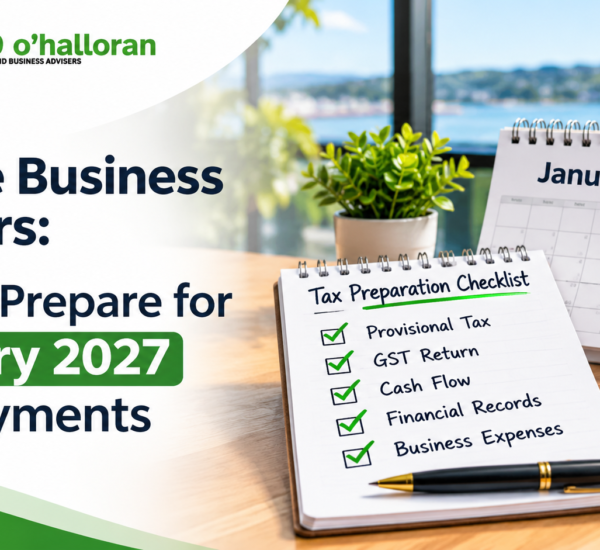
Choosing the right Business Accountant Petone can help your business prepare for important tax deadlines, manage financial records and plan for upcoming payments. With January 2027 approaching, Petone and Lower Hutt business owners should review their provisional tax obligations, GST payments, cash flow and accounting records before the Christmas break. Preparing early can help reduce last-minute pressure and give your business a clearer financial position for the New Year.
15 January 2027 is an important tax date for many New Zealand businesses. Businesses using the standard or estimation provisional tax method with a standard 31 March balance date generally have their second provisional tax instalment due on this date. GST returns and payments for taxable periods ending 30 November 2026 are also generally due on 15 January. Businesses should confirm their individual deadlines in myIR, reconcile financial records, review tax calculations and prepare a cash flow forecast before the holiday period. A Business Accountant Petone can help with accounting, tax compliance and financial planning.
- 15 January 2027 is an important provisional tax date for many businesses with a standard 31 March balance date.
- GST returns and payments for taxable periods ending 30 November 2026 are generally due on 15 January 2027.
- Provisional tax deadlines depend on the payment method and balance date.
- Businesses should reconcile GST records and review income and expenses before filing.
- A cash flow forecast can help businesses prepare for tax payments after the holiday period.
- Checking myIR early can help identify outstanding balances and upcoming obligations.
What Tax Payments Are Due in January 2027?
January 2027 includes important Inland Revenue (IRD) deadlines for businesses. However, the exact obligations depend on your balance date, GST filing frequency and provisional tax method.
For businesses with a standard 31 March balance date, the following dates are particularly important.
| Tax obligation | Relevant date | Who should check? |
|---|---|---|
| Provisional tax – standard or estimation method | 15 January 2027 | Businesses following the standard three-instalment schedule with a 31 March balance date |
| Provisional tax – ratio option | 15 January 2027 | Eligible businesses following the six-instalment ratio schedule |
| GST return and payment | 15 January 2027 | Businesses with a taxable period ending 30 November 2026 |
| Provisional tax – AIM | Depends on filing frequency | Businesses using the Accounting Income Method |
These dates are not universal. Businesses with non-standard balance dates, different GST filing frequencies or specific payment arrangements may have different obligations. Confirm your own deadlines through Inland Revenue and your myIR account.
1. Understand Your January 2027 Provisional Tax Obligations
Provisional tax is a way of paying income tax in instalments during the year. It generally applies when your residual income tax from the previous year is more than $5,000, subject to the applicable rules.
If your business has a standard 31 March balance date and uses the standard or estimation method, the usual provisional tax instalments for the 2027 income year are:
- 28 August 2026 – first instalment
- 15 January 2027 – second instalment
- 7 May 2027 – third instalment
Businesses using the ratio option generally pay provisional tax in six instalments. Those using the Accounting Income Method (AIM) follow payment dates linked to their GST arrangements.
How Should You Review Your Provisional Tax?
Before making your January payment, review:
- Your previous residual income tax and provisional tax calculations.
- Your current provisional tax payment method.
- Your latest business income and expense figures.
- Any significant changes in business profitability.
- Your outstanding tax balance and payment history.
- The provisional tax amount and deadline shown in myIR.
Do not automatically assume your next instalment will be the same as your previous payment. Your calculation and instalment amount depend on the method that applies to your business.
Read the official IRD provisional tax payment dates for more information.
2. Prepare Your November GST Return Before 15 January
If your GST taxable period ended on 30 November 2026, your GST return and payment are generally due on 15 January 2027. This is an exception to the usual GST deadline of the 28th day of the month following the end of a taxable period.
Before filing, review the following:
- Sales and income recorded during the taxable period.
- Purchase invoices and eligible business expenses.
- GST collected from customers.
- GST paid on eligible business purchases.
- Credit notes, refunds and adjustments.
- Transactions that may have been recorded incorrectly.
Even if your GST return is nil, you generally still need to file it for the taxable period.
How Can You Avoid GST Filing Errors?
Reconcile your accounting software with bank transactions and supporting invoices before submitting your return. Check that transactions are allocated to the correct GST period and that expenses meet the requirements for claiming GST.
For official guidance, visit IRD’s GST filing guidance.
3. Review Your Cash Flow Before Making Tax Payments
Having enough cash available to meet tax deadlines is one of the key financial challenges for business owners. A business may have strong sales but still experience a cash shortage if customers have not paid their invoices or funds are tied up in stock, operating expenses or outstanding receivables.
Before January, prepare a cash flow forecast that includes:
- Expected customer payments and sales receipts.
- Supplier invoices and outstanding bills.
- Employee wages and payroll commitments.
- Rent, utilities and recurring operating expenses.
- GST and provisional tax payments.
- Loan repayments and other financial commitments.
A forecast covering the weeks before and after the holiday period can help identify potential funding gaps early.
For further guidance, read our article on small business cash flow management.
Why Is a Cash Flow Forecast Important?
A cash flow forecast helps you estimate when money will enter and leave your business. It can highlight periods when tax payments, supplier invoices and payroll commitments may overlap with slower customer receipts.
Review your forecast regularly and update it when expected sales, expenses or payment dates change.
4. Reconcile Your Financial Records Before the Holiday Break
Incomplete financial records can make it difficult to calculate tax obligations accurately. Before the Christmas and New Year period, review your accounting records and ensure your income and expenses are up to date.
Records Your Business Should Check
- Sales invoices and customer receipts.
- Supplier invoices and expense receipts.
- Bank and credit card transactions.
- Payroll records and employee deductions.
- GST transactions and adjustments.
- Asset purchases and supporting documents.
- Loan repayments and finance costs.
Keeping accurate records can make GST filing, tax calculations and financial reporting more straightforward. It also helps your accountant identify missing information before important deadlines.
5. Check Payroll and Other Business Tax Commitments
Businesses that employ staff should review payroll and employer deduction obligations around the Christmas and New Year period.
Check that payroll records are complete, payday filing is up to date and applicable PAYE, student loan and other employer deductions are accounted for.
Also consider whether your business has other tax obligations, such as fringe benefit tax (FBT), withholding tax or industry-specific reporting requirements. Their due dates depend on your business circumstances and filing arrangements.
Do not assume every employer has the same payment schedule. Check your myIR account and the official IRD employer guidance.
6. Review Your Tax Payment Method and myIR Account
Before January arrives, log in to myIR and review your business tax accounts. This can help confirm upcoming deadlines, identify outstanding amounts and check whether previous payments have been allocated correctly.
Businesses should:
- Check provisional tax and GST account balances.
- Confirm upcoming payment dates and amounts.
- Review outstanding returns or notices.
- Check that payments have been allocated to the correct tax type and period.
- Confirm their preferred payment arrangements.
- Keep payment confirmations and supporting records.
IRD provides several payment options, including myIR and internet banking. Make sure you use the correct account type, tax period and payment reference information.
7. Plan for Business Expenses After the New Year
January tax payments are only one part of the financial commitments businesses may face after the holiday period. Businesses may also need to manage rent, supplier invoices, stock purchases, wages, insurance and other operating costs.
Petone businesses should consider how seasonal trading patterns may affect their January cash position. Retailers, hospitality businesses, trades and professional service providers may all experience different payment and revenue cycles.
Prepare a short-term financial plan that considers:
- Expected January revenue and customer payment dates.
- Supplier and inventory commitments.
- Regular operating costs.
- Tax payment reserves.
- Planned equipment or business purchases.
- Potential delays in customer payments during the holiday period.
Separating money for upcoming tax obligations can help reduce the risk of spending funds that will be needed for Inland Revenue payments.
January 2027 Tax Preparation Checklist for Petone Businesses
Use this checklist to prepare your business before the Christmas and New Year break.
- Confirm your provisional tax payment method and due date.
- Check whether your business has a provisional tax instalment due on 15 January 2027.
- Confirm whether your GST taxable period ended on 30 November 2026.
- Prepare and reconcile your GST records.
- Review sales, purchases and business expenses.
- Update your accounting software and bank reconciliations.
- Review payroll and employer deduction obligations.
- Check myIR for outstanding balances and notices.
- Prepare a cash flow forecast covering January and the following weeks.
- Set aside funds for upcoming tax payments.
- Speak with your accountant if you are unsure about your obligations.
Why Choose a Business Accountant Petone for January 2027 Tax Planning?
A Business Accountant Petone can help business owners understand their tax obligations, review provisional tax calculations, prepare GST returns and plan for upcoming payments. Professional accounting support can also help identify cash flow concerns, improve financial reporting and keep important records organised throughout the year.
Tax compliance involves more than remembering payment dates. Businesses need to maintain accurate financial records, understand their tax obligations and plan for payments without putting unnecessary pressure on day-to-day operations.
DFK Orb360 O’Halloran provides accounting and business advisory support to businesses in Petone, Lower Hutt and the wider Wellington region.
Accounting and Advisory Support for Local Businesses
Depending on your requirements, professional support may include:
- Business accounting and financial reporting.
- GST and tax compliance support.
- Provisional tax planning and guidance.
- Cash flow forecasting and financial planning.
- Business advisory and management reporting.
- Review of financial records and business performance.
The right support depends on your business structure, financial position and tax circumstances.
How to Choose the Right Business Accountant in Petone
When selecting an accountant, consider more than the cost of preparing your annual accounts. Look for a professional who understands your business and can support your ongoing financial and compliance requirements.
- Relevant experience: Look for experience working with businesses of a similar size or industry.
- Tax knowledge: Your accountant should be able to explain relevant GST, provisional tax and other obligations.
- Financial reporting: Regular reporting can help you understand your business’s financial position.
- Cash flow planning: Ask whether they can help with forecasting and financial planning.
- Communication: Choose a team that explains financial information clearly and responds to questions.
- Transparent fees: Understand what is included in the engagement and what may incur additional charges.
How a Business Accountant Petone Can Help Your Business Prepare for 2027
Working with a Business Accountant Petone gives local businesses an opportunity to review their financial position before the New Year. From tax compliance and GST reporting to cash flow forecasting and business advisory, the right accounting support can help you approach January with a clearer financial plan.
If you are looking for a Business Accountant Petone to support your business with tax preparation, financial reporting and cash flow planning, DFK Orb360 O’Halloran can discuss your accounting and business advisory requirements.
Frequently Asked Questions About January 2027 Tax Payments
1. When is provisional tax due in January 2027?
For businesses with a standard 31 March balance date using the standard or estimation option, the second provisional tax instalment is generally due on 15 January 2027. Other methods and balance dates may have different schedules.
2. When is GST due in January 2027?
GST returns and payments for taxable periods ending 30 November 2026 are generally due on 15 January 2027. Check your GST filing frequency and myIR account to confirm your deadline.
3. Do all New Zealand businesses have to pay provisional tax on 15 January?
No. Provisional tax obligations depend on factors such as residual income tax, balance date, payment method and GST filing arrangements. Not every business has the same January obligation.
4. What happens if I miss a provisional tax payment?
Late payment may result in penalties and interest depending on your circumstances. Contact Inland Revenue promptly if you cannot pay on time and review the available payment support options.
5. Can I arrange an instalment arrangement with IRD?
Businesses that cannot pay their tax in full may be able to request an instalment arrangement through myIR. Approval and conditions depend on the taxpayer’s circumstances.
6. How can I prepare for January tax payments?
Review your upcoming tax deadlines, reconcile accounting records, estimate the amounts payable, prepare a cash flow forecast and set aside funds before the holiday period.
7. What is the difference between GST and provisional tax?
GST is a tax on taxable supplies of goods and services, while provisional tax is an instalment towards a taxpayer’s expected income tax liability. They are separate tax obligations.
8. Can a Business Accountant Petone help with tax planning?
Yes. A Business Accountant Petone can help review financial records, explain relevant tax obligations, prepare for upcoming payments and support cash flow planning.
9. What if my business has a non-standard balance date?
Your provisional tax dates may differ from the standard 31 March balance date schedule. Check the dates shown in your myIR account or seek advice based on your accounting year.
10. How can I find an accountant in Petone for my business?
Look for an accounting firm that offers relevant business accounting, tax compliance and advisory services. DFK Orb360 O’Halloran supports businesses in Petone, Lower Hutt and the wider Wellington region.
Prepare Your Business for January 2027 with DFK Orb360 O’Halloran
January tax deadlines can create pressure if your financial records and cash flow are not ready. DFK Orb360 O’Halloran can help your business understand its accounting requirements, review upcoming tax commitments and plan ahead.
Speak with our team about your business accounting and advisory needs.
Contact DFK Orb360 O’HalloranFinal Thoughts: Prepare Early for January 2027 Tax Payments
Preparing for January 2027 tax payments should begin before the Christmas break. Reviewing provisional tax obligations, preparing GST records, reconciling financial information and forecasting cash flow can help businesses approach the New Year with greater confidence.
For Petone and Lower Hutt business owners, early planning can make it easier to manage tax commitments alongside everyday business expenses. If you are unsure about your payment dates or financial position, consider speaking with a qualified accountant before the relevant deadlines.
For many New Zealand businesses with a standard 31 March balance date, 15 January 2027 is an important date for provisional tax and GST. Confirm your individual obligations with Inland Revenue, prepare your financial records early and plan your cash flow before the holiday break. A Business Accountant Petone can help you prepare for the year ahead.



 09 377 4238
 Level 2, 6 Kingdon Street, Newmarket, Auckland
 help@orb360.co.nz