

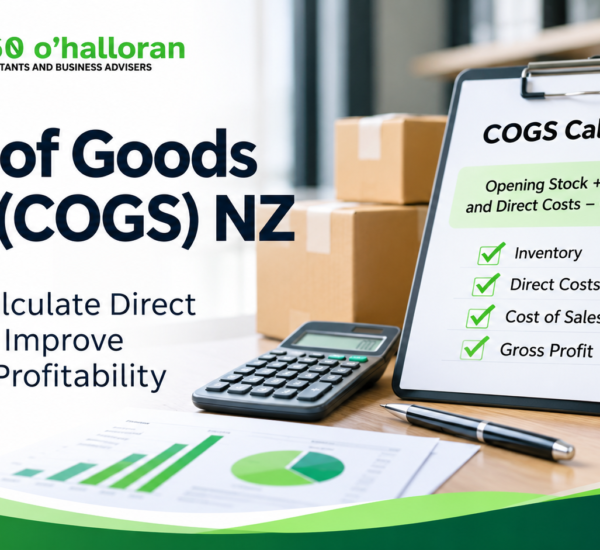
Understanding the Cost of Goods Sold NZ is essential for businesses that purchase, manufacture or sell products. It helps business owners understand how much it costs to deliver the goods they sell, calculate gross profit accurately and make better pricing and purchasing decisions.
Whether you operate a retail store, wholesale business, manufacturing company or service-based business, understanding your direct costs can help you identify where money is being spent and whether your sales are generating sufficient profit.
Cost of Goods Sold (COGS), also known as cost of sales, represents the direct costs associated with the goods or services a business sells during a particular accounting period. For a stock-based business, the standard calculation is opening inventory plus purchases and other eligible direct costs, minus closing inventory. COGS is deducted from revenue to calculate gross profit. Accurate stock records and cost classification help New Zealand businesses monitor profitability and prepare reliable financial statements.
- COGS measures the direct costs associated with products or services sold.
- The standard inventory formula is opening stock + purchases and direct costs − closing stock.
- COGS is deducted from revenue to calculate gross profit.
- Rent, advertising and general administration are usually operating expenses rather than product costs.
- Accurate stocktaking, invoices and accounting records support reliable financial reporting.
- Monitoring COGS can help businesses make better pricing and purchasing decisions.
What Is Cost of Goods Sold (COGS)?
Cost of Goods Sold (COGS) is the direct cost of purchasing or producing the goods that a business sells during an accounting period. It may include inventory purchases, raw materials, production labour and other costs directly attributable to producing goods, depending on the business and its accounting treatment.
In New Zealand, you may also see the term cost of sales used in financial statements. Business.govt.nz explains that cost of goods sold represents the amount it costs to make the product or service being sold, and that it is used to calculate gross profit.
For example, a retailer selling furniture needs to understand the purchase cost of the furniture it sells. A manufacturer needs to account for the materials and production costs associated with its products. A service business may have direct labour or materials involved in delivering its services, even if it does not hold traditional inventory.
COGS is important because sales revenue alone does not show how profitable a business is. A business can generate strong sales but still have weak gross profit if its direct costs are too high.
How to Calculate Cost of Goods Sold in NZ
The standard inventory-based formula for calculating Cost of Goods Sold is:
Each part of the formula represents a different component of the business’s inventory and direct costs.
1. Opening stock
Opening stock is the value of inventory held by the business at the beginning of the accounting period. It generally corresponds to the previous period’s closing stock figure.
2. Purchases and direct costs
This includes the cost of purchasing goods for resale or the eligible direct costs of producing goods. Depending on the business, these may include raw materials, production labour and other directly attributable production costs.
3. Closing stock
Closing stock is the value of inventory remaining at the end of the accounting period. It may include goods held for resale, raw materials, finished products and work in progress where relevant.
Closing stock is deducted because those goods have not yet been sold during the period. Their cost is generally carried forward as inventory rather than included in the current period’s COGS.
Cost of Goods Sold Example for a New Zealand Business
Consider a New Zealand retail business that sells homeware products. The following figures are illustrative and show how COGS can be calculated for an accounting period.
| Item | Amount |
|---|---|
| Opening stock | NZ$20,000 |
| Purchases during the period | NZ$65,000 |
| Closing stock | NZ$15,000 |
| Total COGS | NZ$70,000 |
Calculation:
NZ$20,000 + NZ$65,000 − NZ$15,000 = NZ$70,000
The business has a Cost of Goods Sold of NZ$70,000 for the period.
If the business generated NZ$120,000 in sales revenue, its gross profit would be:
This means the business generated NZ$50,000 in gross profit before deducting its operating expenses and other relevant costs.
For a simple illustration, the figures above exclude GST and assume the amounts are recorded consistently on an appropriate accounting basis. Actual accounting treatment can vary depending on the business, transaction and GST position.
What Costs Are Included in COGS?
Not every business expense belongs in Cost of Goods Sold. The key consideration is whether the cost is directly associated with purchasing or producing the goods or delivering the service being sold.
Common direct costs for product-based businesses
- Inventory purchases: The cost of products purchased for resale.
- Raw materials: Materials used to manufacture or assemble products.
- Direct production labour: Labour directly involved in producing goods.
- Production-related costs: Eligible costs directly attributable to the production process.
- Other attributable costs: Certain freight or packaging costs where they form part of the cost of acquiring or producing inventory under the applicable accounting treatment.
Costs generally treated as operating expenses
- General office rent and administration costs.
- Advertising and marketing expenses.
- General management salaries.
- Professional fees unrelated to production.
- General office utilities and stationery.
The correct classification depends on the nature of the cost and the applicable accounting requirements. Some costs that appear similar can be treated differently depending on whether they relate directly to production or general business operations.
COGS vs Operating Expenses: What Is the Difference?
COGS and operating expenses both affect profitability, but they represent different types of business costs.
| Cost of Goods Sold | Operating Expenses |
|---|---|
| Direct costs associated with goods or services sold. | General costs of running the business. |
| May include inventory, raw materials and direct production labour. | May include rent, marketing and administration. |
| Deducted from revenue to calculate gross profit. | Deducted after gross profit when calculating operating profit. |
| Closely linked to the volume and cost of products or services delivered. | May be incurred even when sales or production are low. |
For example, a retailer’s cost of purchasing products for resale is generally part of COGS. Its monthly office rent and advertising costs are generally operating expenses.
Classifying expenses correctly helps business owners understand whether profitability is being affected by product costs, pricing decisions or general overheads.
COGS vs Cost of Sales: Are They the Same?
The terms Cost of Goods Sold and Cost of Sales are often used interchangeably, particularly for businesses that sell physical products.
However, cost of sales can be a broader term. It may include direct costs associated with delivering services as well as the cost of products sold.
For example:
- A retailer may use COGS to report the cost of products purchased and sold.
- A manufacturer may include eligible materials and production costs.
- A service business may report direct labour and materials used to deliver client services as cost of sales.
In its IR10 financial statements guidance, Inland Revenue explains that direct costs, including labour and other costs for a service business, may be included in the relevant purchases and direct-cost figures. A service business may have no inventory at all.
How Does COGS Differ Across Business Types?
Retail and wholesale businesses
Retailers and wholesalers generally focus on the cost of inventory purchased for resale. They need reliable purchase records, stock movement information and closing stock valuations to calculate COGS accurately.
Manufacturing businesses
Manufacturers need to understand the cost of raw materials, production labour and other eligible production costs. They may also need to account for raw materials, work in progress and finished goods when valuing inventory.
Service-based businesses
Service businesses may not hold inventory in the same way as retailers. However, they can still incur direct costs to deliver services, such as project-specific labour, materials or subcontractor costs. These may be reported as cost of sales or direct costs, depending on the accounting treatment.
For example, a consulting business may have direct contractor costs associated with a client engagement, while its general office rent and administration costs remain operating expenses.
Why Is Accurate COGS Important for Business Profitability?
Understanding Cost of Goods Sold helps business owners assess whether their products or services are generating sufficient gross profit to support the rest of the business.
1. Better pricing decisions
Knowing the direct cost of a product helps a business assess whether its selling price provides an appropriate gross margin. If supplier prices rise but selling prices remain unchanged, gross profit may fall.
2. Improved cost control
Monitoring COGS can highlight increasing supplier costs, production inefficiencies, waste or stock losses. These insights can help management identify where costs need attention.
3. More accurate financial reporting
Incorrect inventory figures or expense classifications can distort gross profit. Accurate records help business owners and advisers understand the financial position of the business.
4. Better cash flow planning
Inventory purchases can tie up working capital before products are sold. Monitoring stock levels and purchase patterns can help businesses plan cash requirements and avoid holding more inventory than they need.
For further guidance, read our article on cash flow management for small businesses in Auckland.
How Can NZ Businesses Reduce Cost of Goods Sold?
Reducing direct costs does not necessarily mean choosing the cheapest supplier or compromising product quality. The objective is to improve cost efficiency while maintaining the value customers expect.
1. Review supplier pricing
Regularly compare supplier prices and terms. Where appropriate, negotiate better pricing, delivery arrangements or volume discounts.
2. Monitor inventory levels
Excess stock can tie up working capital and increase storage costs. Regular stock reviews can help identify slow-moving, obsolete or damaged inventory.
3. Reduce production waste
Manufacturers and product-based businesses can review production processes to identify material wastage, avoidable rework and inefficient use of resources.
4. Review product profitability
Not every product contributes equally to gross profit. Reviewing product-level costs and margins can help businesses understand which products are performing well and which may require pricing or cost adjustments.
5. Improve purchasing processes
Planning purchases around realistic demand can reduce unnecessary stock accumulation and help businesses manage supplier payments more effectively.
6. Maintain accurate accounting records
Consistent recording of purchases, inventory movements and direct costs makes it easier to identify cost changes and investigate unexpected differences.
What Inventory and Cost Records Should NZ Businesses Maintain?
Accurate COGS calculations depend on reliable supporting records. Businesses that deal in goods should maintain records that support their purchases, sales, stock levels and inventory valuations.
Inland Revenue’s record-keeping guidance and the Tax Administration Act 1994 set out business record requirements. Business records generally need to be retained for seven years.
Useful records include:
- Supplier invoices and purchase receipts.
- Sales invoices and transaction records.
- Opening and closing stock records.
- Stocktake sheets and inventory valuation workings.
- Records of damaged, obsolete or written-off stock.
- Production and direct labour records where relevant.
- Accounting reports supporting cost-of-sales calculations.
Businesses should also ensure that inventory figures are supported by a consistent valuation approach and that any changes in accounting treatment are properly considered.
Read Inland Revenue’s guidance on keeping records of income and expenses for more information.
Common COGS Calculation Mistakes to Avoid
Errors in calculating Cost of Goods Sold can lead to misleading gross profit figures and poor business decisions. Common issues include:
- Incorrect closing stock: Inaccurate stock counts can overstate or understate COGS.
- Mixing direct and indirect costs: General overheads should not automatically be included in COGS.
- Missing supplier invoices: Unrecorded purchases can make cost calculations incomplete.
- Ignoring damaged or obsolete inventory: Stock condition and valuation need to be considered appropriately.
- Inconsistent accounting periods: Opening stock, purchases and closing stock must relate to the same reporting period.
- Incorrect GST treatment: Businesses should record amounts consistently with their GST accounting and reporting treatment.
Reviewing these areas regularly can help businesses produce more reliable financial reports and identify problems before they affect decision-making.
How Does Cost of Goods Sold Affect Gross Profit Margin?
COGS is directly connected to gross profit and gross profit margin. Once a business calculates its COGS, it can determine how much revenue remains after covering the direct costs of goods or services sold.
The formulas are:
For example, if a business has revenue of NZ$120,000 and COGS of NZ$70,000, its gross profit is NZ$50,000. Its gross profit margin is approximately 41.67%.
A rising COGS figure does not automatically mean a business is performing poorly. It should be assessed alongside revenue, sales volumes, product mix and gross margin trends.
To understand the relationship in more detail, read our guide to Gross Profit Margin NZ: How to Calculate and Improve Your Business Margins.
How DFK Orb360 Can Help With Cost Management and Financial Reporting
Understanding COGS is one part of managing business profitability. Business owners also need reliable financial reporting, accurate expense classification, cash flow visibility and practical advice to make informed decisions.
DFK Orb360 O’Halloran Chartered Accountants works with businesses on accounting and reporting, tax compliance, financial management and business advisory matters.
Our team can help business owners review financial information, understand cost structures and identify areas that may need closer attention.
Want a clearer picture of your business costs and profitability?
Speak with DFK Orb360 about your accounting, financial reporting and business advisory requirements.
Contact DFK Orb360Frequently Asked Questions About Cost of Goods Sold NZ
1. What is Cost of Goods Sold in New Zealand?
Cost of Goods Sold is the direct cost of purchasing or producing the goods a business sells during an accounting period. It is also commonly called cost of sales and is deducted from revenue to calculate gross profit.
2. What is the formula for calculating COGS?
The standard inventory formula is opening stock plus purchases and other relevant direct costs, minus closing stock. The calculation should reflect the business’s activities and accounting treatment.
3. Is COGS the same as cost of sales?
The terms are often used interchangeably for product-based businesses. Cost of sales can be broader and may include direct costs involved in delivering services as well as physical products.
4. Are wages included in Cost of Goods Sold?
Wages directly associated with producing goods or delivering services may be included in direct costs or cost of sales, depending on the business and accounting treatment. General administration and management salaries are usually treated as operating expenses.
5. Is rent included in COGS?
General office rent is normally an operating expense. However, certain production-related facility costs may be treated as production overheads where the applicable accounting requirements support that treatment.
6. Can a service business have COGS?
Yes. A service business may incur direct labour, contractor or material costs in delivering services. These may be reported as cost of sales or direct costs even when the business does not hold traditional inventory.
7. Why is closing stock deducted when calculating COGS?
Closing stock represents inventory that remains unsold at the end of the accounting period. Deducting it prevents the cost of unsold inventory from being treated as the cost of goods sold for that period.
8. How does COGS affect gross profit?
COGS is deducted from revenue to calculate gross profit. If revenue remains unchanged while direct costs increase, gross profit will generally decrease.
9. How long should New Zealand businesses keep COGS records?
New Zealand businesses generally need to keep tax and supporting business records for seven years. This can include purchase invoices, sales records, stocktake information and inventory valuation workings. Businesses should check Inland Revenue guidance for their circumstances.
10. How often should a business review COGS?
Businesses can review direct costs and gross margins monthly or as frequently as their operations require. Regular reviews can help identify supplier price increases, inventory issues and changes in product profitability.
Final Thoughts: Make COGS Part of Your Business Financial Review
Cost of Goods Sold is more than an accounting figure. It helps business owners understand what it costs to generate sales, assess gross profitability and make informed decisions about pricing, purchasing and cost management.
For New Zealand businesses, accurate inventory records, consistent cost classification and regular financial reviews are important for reliable reporting and better business decisions.
By understanding COGS alongside gross profit, operating expenses and cash flow, business owners can develop a clearer picture of their financial performance and identify opportunities to improve profitability.
Cost of Goods Sold measures the direct costs associated with the goods or services a business sells. For inventory-based businesses, it is generally calculated using opening stock plus purchases and relevant direct costs, less closing stock. Accurate COGS reporting helps New Zealand businesses calculate gross profit, monitor margins, manage inventory and make informed financial decisions.
Disclaimer: This article is intended for general information only and does not constitute accounting, tax or legal advice. The treatment of inventory, direct costs and cost of sales depends on the circumstances of each business and the applicable accounting and tax rules. Speak with a qualified accountant or tax adviser about your specific situation.


 09 377 4238
 Level 2, 6 Kingdon Street, Newmarket, Auckland
 help@orb360.co.nz