

Raising a family comes with ongoing financial responsibilities, from everyday household expenses to childcare, education and housing costs. For eligible households, the Family Tax Credit NZ programme can provide valuable financial support through Inland Revenue’s Working for Families system.
For the 2026–27 tax year, several important payment rates and thresholds apply to New Zealand families. Understanding the Family Tax Credit, income limits, eligibility requirements and payment options can help parents plan their household finances and avoid unexpected repayments.
This guide explains how the Family Tax Credit works in New Zealand, what eligible families may receive, how payments are calculated and where to find official information for the 2026–27 tax year.
Family Tax Credit NZ 2026–27
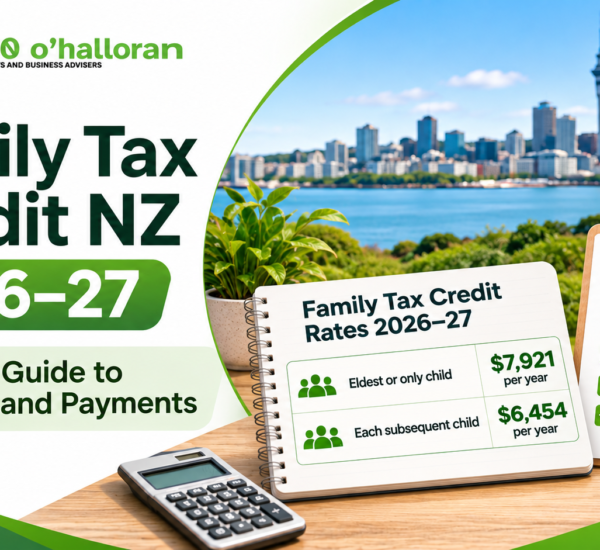
The Family Tax Credit is a key payment within New Zealand’s Working for Families programme. For the 2026–27 tax year, eligible families with annual family income of $44,900 or less may receive the full annual Family Tax Credit of $7,921 for their eldest dependent child and $6,454 for each subsequent child. Above the $44,900 income threshold, the entitlement generally reduces by 27.5% of the income above that threshold. Eligibility and final payment amounts depend on family circumstances, dependent children, income and shared-care arrangements.
Key Takeaways
- Family Tax Credit is part of New Zealand’s Working for Families programme.
- The 2026–27 tax year runs from 1 April 2026 to 31 March 2027.
- The full annual rate is $7,921 for the eldest child.
- Each subsequent dependent child has a full annual rate of $6,454.
- The full payment generally applies when annual family income is $44,900 or less.
- Above that threshold, the Family Tax Credit reduces at an abatement rate of 27.5%.
- Eligible families can generally choose weekly, fortnightly or annual lump-sum payments.
- Changes in income, working arrangements or family circumstances should be updated with Inland Revenue.
What Is the Family Tax Credit in New Zealand?
The Family Tax Credit is a government payment administered by Inland Revenue (IRD) as part of the Working for Families programme. It is designed to help eligible families with the cost of raising dependent children.
The amount a family receives depends on several factors, including total family income, the number of dependent children, the type of income received and any shared-care arrangements.
Unlike the In-work Tax Credit, the Family Tax Credit is not restricted to families earning income from paid employment. Eligibility is assessed under the Working for Families rules and can include different income situations.
Family Tax Credit Rates for 2026–27
The Family Tax Credit rates increased from 1 April 2026 following inflation adjustments. The full annual rates for the 2026–27 tax year are:
| Dependent child | Annual amount | Approximate weekly amount |
|---|---|---|
| Eldest or only child | $7,921 | $152.30 |
| Each subsequent child | $6,454 | $124.10 |
These are the full-year rates before any income-related reduction. Actual instalments may be rounded down to whole dollars.
Who Is Eligible for Family Tax Credit NZ?
To qualify for Working for Families payments, including the Family Tax Credit, you generally need to meet Inland Revenue’s residency and caregiving requirements.
In general, you must:
- Be over 16 years old.
- Care for at least one dependent child under 18.
- Be financially responsible for the child.
- Meet the relevant New Zealand tax residency and living-in-New-Zealand requirements, or meet the qualifying child residency requirements.
The rules can differ depending on shared care, relationship status, residency and other family circumstances. Meeting the basic requirements does not automatically mean you will receive the full payment.
Family Tax Credit Income Threshold for 2026–27
Family income is one of the main factors used to calculate your entitlement. For the 2026–27 tax year, families with annual income of $44,900 or less generally qualify for the full Family Tax Credit amount, provided they meet the other eligibility requirements.
If your annual family income exceeds $44,900, your payment reduces through a process called abatement.
How does the 27.5% abatement work?
Inland Revenue calculates the reduction by subtracting $44,900 from your annual family income and multiplying the difference by 27.5%. The resulting amount is deducted from your full Family Tax Credit entitlement.
Example:
- Annual family income: $60,000
- Income threshold: $44,900
- Income above threshold: $15,100
- Abatement rate: 27.5%
- Annual reduction: $4,152.50
If the family has one dependent child and otherwise qualifies for the full eldest-child rate, the illustrative calculation is:
$7,921 − $4,152.50 = $3,768.50 estimated annual Family Tax Credit.
This is a simplified example. Other Working for Families payments, income adjustments and individual circumstances can affect the final amount assessed by Inland Revenue.
How Much Family Tax Credit Could a Family Receive?
The number of dependent children affects the full payment amount. The following examples show the annual rates before any abatement.
| Number of dependent children | Annual full Family Tax Credit |
|---|---|
| 1 child | $7,921 |
| 2 children | $14,375 |
| 3 children | $20,829 |
| 4 children | $27,283 |
| 5 children | $33,737 |
These examples assume the family qualifies for the full rates and has no income-related reduction. The eldest child receives the eldest-child rate, while each additional child receives the subsequent-child rate.
What Is the Difference Between Family Tax Credit and Working for Families?
Working for Families is the broader government support programme. Family Tax Credit is one of the payments available within it. Eligible families may qualify for more than one type of payment, depending on their income, work situation and family circumstances.
| Payment | What it provides |
|---|---|
| Family Tax Credit | Financial support based on family income and dependent children. |
| In-work Tax Credit | Additional support for eligible families earning income from paid work. |
| Minimum Family Tax Credit | A top-up for qualifying working families who meet the income and minimum-hours requirements. |
| Best Start | Support for eligible families with young children, subject to the applicable rules. |
For the 2026–27 year, the maximum In-work Tax Credit has temporarily increased to $147 per week for eligible families. This increase is subject to the government’s stated conditions and may reduce if petrol prices meet the specified trigger. It is separate from the Family Tax Credit.
The Minimum Family Tax Credit also has separate eligibility rules. For 2026–27, the after-tax family income limit is $36,604, with minimum weekly work requirements. It should not be confused with the $44,900 Family Tax Credit abatement threshold.
How to Apply for Family Tax Credit in New Zealand
Eligible families can apply for Working for Families through Inland Revenue. You can manage your details and payment information through your myIR account.
- Log in to your myIR account or register if you do not have one.
- Find the Working for Families section.
- Provide details about your dependent children and family circumstances.
- Estimate and provide your expected family income for the tax year.
- Choose your preferred payment frequency where available.
- Review your details and notify Inland Revenue if anything changes.
You can also use the official Inland Revenue Working for Families calculator to estimate your entitlement.
When Are Family Tax Credit Payments Made?
Families can generally choose to receive their Working for Families payments in one of three ways:
- Weekly payments: payments are made each week.
- Fortnightly payments: payments are made every two weeks.
- Annual lump sum: the entitlement is calculated after the tax year ends and paid following the end-of-year assessment.
Weekly or fortnightly payments can help households manage regular expenses. However, they are based on the income estimate and circumstances provided to Inland Revenue.
If your actual income is higher than your estimate, you may receive more than your final entitlement and need to repay the difference. Families with variable income may prefer to consider a lump-sum payment after the end of the tax year.
What Happens If Your Family Income or Circumstances Change?
Your Family Tax Credit entitlement may change during the year if your household circumstances change. It is important to update Inland Revenue as soon as possible.
Examples of changes include:
- You or your partner start a new job or change employment.
- Your annual income increases or decreases.
- You become self-employed or start receiving additional income.
- A child joins or leaves your household.
- Your shared-care arrangements change.
- Your relationship or living arrangements change.
Keeping your details up to date can help reduce the risk of overpayments and unexpected repayment obligations.
Family Tax Credit Across New Zealand: Auckland, Wellington and Beyond
The Family Tax Credit is a national programme administered by Inland Revenue. The same national eligibility rules and payment rates apply to qualifying families in Auckland, Wellington, Christchurch, Hamilton, Tauranga, Dunedin and other parts of New Zealand.
Whether you are an employee in Auckland, a self-employed parent in Wellington, a small business owner in Christchurch or a family living in regional New Zealand, your entitlement is assessed according to your family income, dependent children and circumstances rather than your city or region.
Families with changing employment, business income or multiple income sources should take particular care when estimating their annual family income.
Common Mistakes to Avoid When Receiving Family Tax Credit
- Underestimating annual income: this can lead to overpayments that may need to be repaid.
- Not reporting changes: changes to employment, income or shared care can affect entitlement.
- Confusing payment types: Family Tax Credit, In-work Tax Credit and Best Start have different rules.
- Assuming every child qualifies automatically: dependent-child and residency requirements still apply.
- Relying only on an online estimate: the calculator is an estimate and may not cover every family situation.
People Also Ask: Family Tax Credit NZ 2026–27
1. What is the Family Tax Credit in New Zealand?
The Family Tax Credit is a payment within New Zealand’s Working for Families programme. It helps eligible households with the cost of raising dependent children. The amount depends on family income, the number of children and other eligibility requirements.
2. How much is the Family Tax Credit in NZ for 2026–27?
For the 2026–27 tax year, the full annual rate is $7,921 for the eldest or only dependent child and $6,454 for each subsequent child. These are full rates before any income-related abatement.
3. What is the income limit for Family Tax Credit NZ?
Families with annual income of $44,900 or less generally qualify for the full Family Tax Credit, subject to eligibility. Above this threshold, the payment reduces by 27.5% of the income above $44,900.
4. Who qualifies for Working for Families in New Zealand?
In general, applicants must be over 16, care for at least one financially dependent child under 18 and meet the relevant New Zealand residency requirements. Other rules may apply depending on shared care and family circumstances.
5. Can you receive Family Tax Credit if you are self-employed?
Self-employed families may qualify for Family Tax Credit if they meet the Working for Families eligibility requirements. Their income and other family circumstances are considered when calculating the entitlement. The separate In-work Tax Credit has its own paid-work requirements.
6. Is Family Tax Credit the same as Working for Families?
No. Working for Families is the overall support programme, while Family Tax Credit is one of its payment types. Other payments include In-work Tax Credit, Minimum Family Tax Credit and Best Start.
7. How do I calculate my Family Tax Credit in NZ?
Your estimate is based on your annual family income, the number of dependent children and your eligibility. Inland Revenue provides an official Working for Families calculator to help estimate your entitlement for the relevant tax year.
8. Can I receive Family Tax Credit in Auckland or Wellington?
Yes. Family Tax Credit is a national New Zealand programme. Eligible families in Auckland, Wellington, Christchurch, Hamilton, Tauranga and other regions are assessed under the same national rules.
9. Can I receive Family Tax Credit payments weekly or fortnightly?
Eligible families can generally choose weekly or fortnightly instalments, or an annual lump sum after the tax year ends. The payment option should reflect how predictable your household income and circumstances are.
10. What happens if I receive too much Family Tax Credit?
If your payments exceed your final entitlement, Inland Revenue may require you to repay the overpaid amount. This can happen when your actual family income is higher than your estimate or your circumstances change. Updating your details promptly can help reduce this risk.
How DFK Orb360 O’Halloran Can Help
Understanding family income, tax obligations and government payments can be challenging, particularly when your household has multiple income sources, self-employment income or changing financial circumstances.
DFK Orb360 O’Halloran provides accounting, taxation and business advisory services to individuals and businesses across New Zealand. Our team can help you understand relevant tax considerations, organise your financial information and identify when further tax advice may be appropriate.
Need Help Understanding Your Tax Position?
Whether you are managing household finances, earning self-employed income or running a growing business, speak with the team at DFK Orb360 O’Halloran about your accounting and tax requirements.
Talk to Our TeamOfficial Sources and Further Information
The following official resources provide further information about Family Tax Credit and Working for Families payments for 2026–27:
- Inland Revenue – Family Tax Credit
- Inland Revenue – Working for Families Calculator
- New Zealand Government – Working for Families Payments
- Inland Revenue – In-work Tax Credit
Article Information
Published by: DFK Orb360 O’Halloran – Chartered Accountants
Reviewed by: DFK Orb360 O’Halloran team
Published date: 6 November 2026
Last updated: 6 November 2026
This article has been prepared for general information about Family Tax Credit and Working for Families payments in New Zealand for the 2026–27 tax year.
The information is general guidance and is not a substitute for personalised tax, legal or financial advice. Eligibility and payment amounts depend on individual circumstances and current Inland Revenue rules.
Speak with DFK Orb360 O’Halloran
If you need assistance understanding your tax position or managing your business finances, contact DFK Orb360 O’Halloran. Our team works with individuals and businesses across New Zealand.



 09 377 4238
 Level 2, 6 Kingdon Street, Newmarket, Auckland
 help@orb360.co.nz