Financial Controls New Zealand: Lessons Every Business Can Learn from a Recent GST Fraud Case
Updated: July 2026
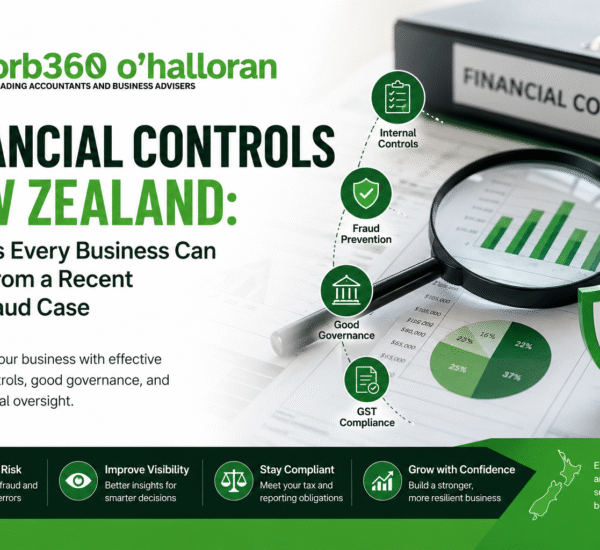
Financial controls New Zealand businesses rely on are essential for protecting assets, improving governance, strengthening GST compliance, and supporting sustainable growth. A recent GST fraud case has highlighted why every business should regularly review its accounting systems, internal controls, and financial reporting processes.
Strong financial controls are one of the most important safeguards for any business. They help protect cash flow, ensure accurate reporting, reduce compliance risks, and build confidence among business owners, investors, lenders, and regulators.
A recent New Zealand GST fraud prosecution serves as a timely reminder that weak financial processes—or deliberate misuse of accounting systems—can result in serious financial, legal, and reputational consequences.
Implementing Financial controls New Zealand businesses can rely on is no longer optional. As organisations grow, structured approval processes, accurate bookkeeping, and regular financial reviews become essential for reducing operational and compliance risks.
While most New Zealand businesses operate honestly and maintain high compliance standards, this case highlights why every organisation should regularly review its internal controls, bookkeeping processes, and governance practices.
Why Financial Controls New Zealand Businesses Need Are More Important Than Ever
Effective Financial controls New Zealand businesses adopt provide greater financial transparency, improve decision-making, and reduce the likelihood of fraud or reporting errors.
Key Takeaway
A recent GST fraud case demonstrates why businesses should implement strong financial controls, maintain accurate accounting records, review GST returns regularly, and establish clear approval processes. Effective governance helps reduce fraud risk while improving business performance and compliance.
A Recent GST Fraud Case Highlights the Importance of Good Governance
Recent court proceedings in New Zealand involving fraudulent GST refund claims have reinforced the importance of maintaining strong accounting controls and accurate financial reporting.
According to publicly reported information, the case involved false GST refund claims supported by inaccurate documentation. It serves as an important reminder that Inland Revenue actively investigates suspected tax fraud and that deliberate non-compliance can have serious consequences.
While this type of conduct represents a small minority of businesses, the lessons extend far beyond tax compliance. Every organisation—regardless of size—benefits from having effective financial controls that reduce the risk of errors, fraud, and poor decision-making.
Strong internal controls don’t just help prevent fraud—they also improve business performance, financial visibility, and long-term sustainability.
Why Financial Controls Matter
Financial controls are the policies, procedures, and review processes that help businesses safeguard their assets and ensure financial information is accurate.
Well-designed financial controls help businesses:
Protect business assets
Reduce fraud risk
Improve cash flow management
Support accurate financial reporting
Strengthen GST and tax compliance
Increase lender and investor confidence
Improve strategic decision-making
For growing businesses, financial controls provide the foundation for sustainable growth while reducing operational risks.
Common Weaknesses That Increase Business Risk
Many financial issues arise not because of intentional fraud, but because businesses lack documented processes or independent oversight.
Common weaknesses include:
No approval process for supplier invoices
Poor separation of accounting responsibilities
Delayed bank reconciliations
Missing supporting documentation
Irregular GST reviews
Manual spreadsheets with limited oversight
No periodic financial health checks
Over time, these weaknesses can increase compliance risks while making it more difficult to identify accounting errors before they become costly problems.
Strong financial controls New Zealand businesses implement help prevent fraud, improve financial reporting, reduce compliance risks, and provide business owners with greater confidence when making strategic decisions.
Financial Controls New Zealand Businesses Should Prioritise
Strong Financial controls New Zealand organisations implement should include segregation of duties, monthly reconciliations, documented approval processes, and independent financial oversight.
1. Segregation of Duties
Where practical, different employees should be responsible for approving invoices, processing payments, recording transactions, and reconciling bank accounts.
Separating responsibilities helps reduce opportunities for errors and fraud while improving accountability throughout the organisation.
2. Monthly Bank Reconciliations
Reconciling bank accounts each month helps ensure accounting records accurately reflect actual business activity.
Regular reconciliations often identify:
Duplicate payments
Missing transactions
Bank errors
Unexpected withdrawals
Cash flow issues
3. Review GST Returns Before Filing
GST returns should never become a simple administrative exercise.
Before filing, businesses should review unusual transactions, verify tax invoices, confirm expense classifications, and ensure GST calculations are accurate.
Taking time to review GST returns can significantly reduce compliance risks and minimise the likelihood of Inland Revenue enquiries.
Reviewing Financial controls New Zealand businesses use on a regular basis helps identify weaknesses before they become costly financial or compliance issues.
Is Your Business Financially Protected?
Strong financial controls aren’t only about compliance—they help businesses make better decisions, improve profitability, and prepare confidently for future growth.
At DFK Orb360, our Chartered Accountants and business advisors help New Zealand businesses strengthen financial reporting, improve governance, manage GST obligations, and implement practical internal controls that support sustainable growth.
How Professional Accounting Advice Helps Reduce Risk
Professional accountants do much more than prepare annual financial statements. They help businesses identify operational risks, improve financial systems, strengthen compliance processes, and provide strategic advice that supports long-term success.
In the next section, we’ll explore practical fraud prevention strategies, warning signs every business owner should recognise, and the financial controls that can significantly reduce business risk.
Practical Fraud Prevention Strategies for Every Business
While high-profile fraud cases often involve deliberate misconduct, many financial losses occur because businesses lack effective processes and oversight. Implementing practical financial controls can significantly reduce the likelihood of fraud while improving operational efficiency.
Whether you operate a small family business or a growing organisation with multiple employees, the following strategies can strengthen your financial management framework.
1. Verify Every Supplier and Invoice
Businesses should establish procedures for verifying new suppliers and reviewing invoices before payment. This helps ensure that purchases are genuine, correctly authorised, and accurately recorded.
Best practices include:
Confirm supplier details before making payments.
Match invoices with purchase orders and delivery records.
Review unusual or duplicate invoices.
Require approval for high-value transactions.
2. Perform Regular Financial Reviews
Monthly financial reviews help identify unusual trends before they become significant issues.
Business owners should regularly review:
Profit and loss statements
Balance sheets
Cash flow reports
Accounts receivable and payable
GST returns before filing
Bank reconciliations
Timely reviews provide greater visibility into business performance while helping identify discrepancies that may require further investigation.
3. Limit Access to Financial Systems
Not every employee requires unrestricted access to accounting software or banking platforms.
Businesses should assign access based on job responsibilities and regularly review user permissions to ensure they remain appropriate.
Use unique user logins.
Enable multi-factor authentication.
Restrict administrator privileges.
Remove access immediately when employees leave.
4. Document Financial Policies
Written policies create consistency across the organisation and reduce uncertainty when financial decisions need to be made.
Policies should cover:
Expense approvals
Credit card usage
Petty cash procedures
Purchasing authority
Invoice approvals
Record retention requirements
Warning Signs That Should Never Be Ignored
Financial irregularities are often detected because something simply “doesn’t look right.” Business owners should investigate unusual patterns rather than assuming they will resolve themselves.
Examples include:
Unexpected GST refund amounts.
Rapid increases in business expenses.
Supplier invoices that appear inconsistent.
Missing receipts or supporting documents.
Frequent accounting adjustments.
Cash flow problems despite reported profits.
Employees unwilling to take leave.
Late financial reporting.
While these indicators do not automatically suggest fraud, they often warrant further review to ensure financial records remain accurate.
Good Governance Supports Better Business Decisions
Governance is often associated with large corporations, but it is equally valuable for small and medium-sized businesses.
Good governance provides a structured approach to decision-making, accountability, and financial oversight. It helps businesses manage risk while creating a stronger foundation for sustainable growth.
Effective governance includes:
Clear financial reporting.
Regular management meetings.
Defined approval processes.
Periodic risk assessments.
Independent financial advice.
Accurate budgeting and forecasting.
The Role of Chartered Accountants in Fraud Prevention
Professional accountants play an important role in helping businesses reduce financial risk. Beyond preparing financial statements and tax returns, they provide strategic advice that strengthens financial controls and supports better decision-making.
Chartered accountants can assist with:
Business health checks.
Internal control reviews.
GST compliance.
Cash flow forecasting.
Business advisory.
Financial reporting.
Cloud accounting implementation.
Risk management strategies.
An independent review often identifies opportunities to improve efficiency while reducing financial and compliance risks.
Financial Controls Checklist for New Zealand Businesses
Use this checklist to assess whether your current financial systems provide appropriate protection:
✔ Reconcile all bank accounts every month.
✔ Review GST returns before filing.
✔ Maintain supporting documentation for all transactions.
✔ Separate financial responsibilities where possible.
✔ Approve significant payments before processing.
✔ Review financial reports monthly.
✔ Conduct periodic internal control reviews.
✔ Work with a qualified Chartered Accountant.
How DFK Orb360 Can Help
At DFK Orb360, we help New Zealand businesses strengthen financial systems, improve governance, and make better-informed business decisions.
Our experienced Chartered Accountants provide practical advice across:
Accounting and bookkeeping
GST compliance and reviews
Business advisory services
Cash flow management
Financial reporting
Virtual CFO services
Business growth planning
Risk management
Whether you’re establishing stronger financial controls or looking to improve business performance, our team is here to help.
Frequently Asked Questions About Financial Controls New Zealand
What are financial controls?
Financial controls are policies and procedures designed to protect business assets, ensure accurate financial reporting, and reduce the risk of fraud or errors.
Why are Financial controls New Zealand businesses important?
Financial controls New Zealand businesses implement help improve governance, reduce fraud risk, strengthen compliance, and support sustainable business growth.
Why are internal controls important for small businesses?
Internal controls help improve accountability, reduce financial risk, support compliance, and provide greater confidence in financial information used for decision-making.
How often should financial controls be reviewed?
Businesses should review financial controls regularly, particularly during periods of growth, organisational change, or after implementing new accounting systems.
Can accountants help prevent fraud?
Yes. Chartered accountants can identify weaknesses in financial processes, recommend stronger controls, improve reporting systems, and provide independent oversight.
What lessons can businesses learn from GST fraud cases?
High-profile GST fraud cases demonstrate the importance of accurate bookkeeping, strong governance, documented financial procedures, and independent oversight to reduce financial and compliance risks.
Whether you’re a start-up or an established company, investing in Financial controls New Zealand businesses trust is one of the most effective ways to protect your organisation and improve long-term performance.
Final Thoughts: Strong Financial Controls Build Stronger Businesses
Recent GST fraud cases serve as an important reminder that sound financial management extends far beyond meeting tax obligations. Businesses with strong internal controls are better equipped to prevent fraud, identify risks early, maintain regulatory compliance, and make informed strategic decisions.
Investing in robust accounting systems, accurate financial reporting, and professional business advice isn’t simply about avoiding problems—it’s about creating a stronger, more resilient business that is prepared for sustainable growth.
At DFK Orb360, we partner with businesses across New Zealand to improve financial performance through practical accounting advice, governance support, and strategic business advisory services.
If you’re looking to strengthen your financial controls or gain greater confidence in your business’s financial systems, contact our team today to discuss how we can help.
People Also Ask About Financial Controls New Zealand
What are financial controls in New Zealand businesses?
Financial controls New Zealand businesses use are policies, procedures, and systems designed to protect company assets, improve financial reporting, ensure regulatory compliance, and reduce the risk of fraud or accounting errors. Examples include bank reconciliations, approval workflows, segregation of duties, and regular financial reviews.
Why are financial controls important for small businesses?
Financial controls help small businesses improve cash flow management, reduce operational risk, strengthen governance, and make informed financial decisions. They also help businesses comply with Inland Revenue requirements and provide more reliable financial information for owners, lenders, and investors.
How can businesses strengthen financial controls?
Businesses can strengthen financial controls by documenting financial procedures, reviewing GST returns before filing, reconciling bank accounts monthly, restricting access to accounting systems, approving supplier payments, and working with experienced Chartered Accountants to review internal processes.
Can poor financial controls increase fraud risk?
Yes. Weak financial controls can increase the likelihood of fraud, accounting errors, and compliance issues. Businesses without clear approval processes, regular reconciliations, or independent oversight may find it more difficult to detect irregular transactions before they become significant problems.
How often should financial controls be reviewed?
Financial controls should be reviewed at least annually and whenever there are significant business changes, such as rapid growth, restructuring, implementing new accounting software, or changes in key financial personnel. Regular reviews help identify weaknesses and improve operational efficiency.
At DFK Orb360, we help clients strengthen Financial controls New Zealand businesses need through practical accounting, governance, and business advisory services tailored to their goals.
Whether you’re reviewing your accounting systems or strengthening financial controls New Zealand businesses depend on, DFK Orb360 can help you improve governance, reduce financial risk, and support long-term growth through practical business advisory services.
Strong financial controls help reduce fraud risk and improve business performance.
Recent GST fraud cases demonstrate why accurate bookkeeping and internal controls matter.
Regular financial reviews improve decision-making and cash flow visibility.
Independent accounting advice strengthens governance and compliance.
Businesses should review financial systems before problems arise.
About DFK Orb360
DFK Orb360 Chartered Accountants provides accounting, tax, advisory, and business consulting services to businesses across New Zealand. Our experienced team works closely with business owners to strengthen financial performance, improve governance, manage tax obligations, and support sustainable business growth.
This article is intended for general informational purposes only and should not be relied upon as accounting, taxation, or legal advice. Every business operates under different circumstances. If you require advice specific to your business, consult a qualified Chartered Accountant before making financial or tax-related decisions.
DFK Orb360 provides accounting, taxation, audit, and business advisory services across Auckland and Lower Hutt, New Zealand.





 09 377 4238
 Level 2, 6 Kingdon Street, Newmarket, Auckland
 help@orb360.co.nz