

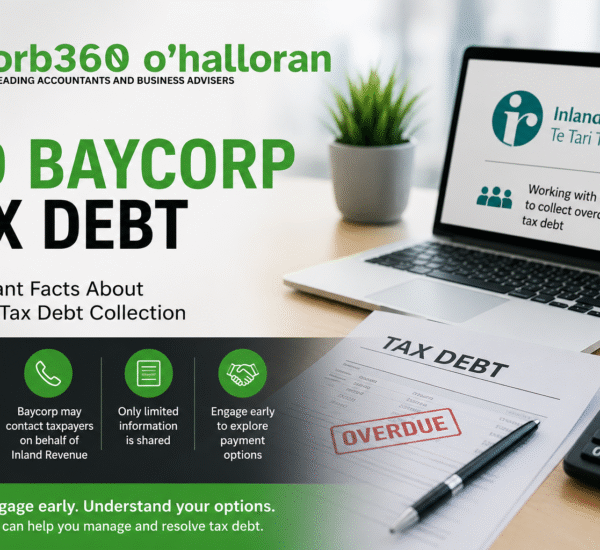
IRD Working With Baycorp: 7 Important Facts About Overdue Tax Debt Collection
IRD Baycorp tax debt collection is becoming an increasingly important topic for New Zealand businesses and taxpayers following Inland Revenue’s decision to work with Baycorp to recover overdue tax debt.
IRD Baycorp tax debt collection is becoming increasingly important for New Zealand businesses and taxpayers who have outstanding tax obligations with Inland Revenue.
Inland Revenue (IRD) has announced it is working with Baycorp to assist with the collection of outstanding tax obligations from taxpayers who have not resolved overdue balances.
Understanding how IRD Baycorp tax debt collection works can help taxpayers avoid additional penalties, interest charges, and potential enforcement action.
For businesses and individuals with overdue tax debt, understanding how the process works can help reduce financial risk and avoid unnecessary penalties and interest charges.
Why Is IRD Baycorp Tax Debt Collection Increasing?
IRD is working with Baycorp to help contact taxpayers who have overdue tax debt. Baycorp acts on behalf of Inland Revenue and may contact taxpayers regarding outstanding balances. The objective is to encourage engagement, improve debt recovery, and help taxpayers explore options such as payment arrangements before more serious enforcement action becomes necessary.
The IRD Baycorp tax debt programme is designed to encourage taxpayers to engage early and resolve overdue tax debt before stronger recovery measures become necessary.
Why Has Inland Revenue Partnered With Baycorp?
Tax debt remains a significant issue across New Zealand, affecting both individuals and businesses.
To improve recovery rates and encourage earlier engagement, Inland Revenue has partnered with Baycorp to assist in contacting taxpayers who have overdue tax obligations.
According to Inland Revenue, the initiative is designed to:
- Encourage taxpayers to address outstanding debt sooner.
- Reduce the accumulation of penalties and interest.
- Improve communication with taxpayers.
- Support voluntary compliance.
- Increase recovery of overdue tax revenue.
You can view Inland Revenue’s announcement here: Working With Baycorp to Collect Overdue Tax Debt
Who Could Be Contacted by Baycorp?
Baycorp may contact taxpayers who have unresolved tax debt, including:
- Individual taxpayers.
- Self-employed contractors.
- Sole traders.
- Business owners.
- Companies with outstanding tax liabilities.
- Employers with unpaid PAYE obligations.
- GST-registered businesses with overdue tax accounts.
Not every taxpayer with debt will necessarily be contacted, but Inland Revenue may refer eligible cases to Baycorp as part of its debt management strategy.
What Information Does Baycorp Receive?
Inland Revenue has previously indicated that only limited information is shared for debt recovery purposes.
This may include:
- Name.
- Contact details.
- Date of birth.
- Outstanding debt amount.
- Relevant tax type.
- Recent communication history.
Sensitive information such as passwords, banking credentials, and credit card information is not shared for debt collection purposes.
For businesses, unresolved IRD Baycorp tax debt issues can affect cash flow, financing opportunities, and overall financial stability.
What Should You Do If Baycorp Contacts You?
1. Verify the Contact
If you receive a phone call, email, text message, or letter, verify that the communication is legitimate.
You can confirm your tax position directly through your myIR account or by contacting Inland Revenue.
2. Review Your Tax Position
Review your tax account and identify:
- Outstanding balances.
- Penalty amounts.
- Interest charges.
- Previous Inland Revenue correspondence.
- Available payment options.
Visit: myIR Online Services
3. Engage Early
Ignoring overdue tax debt generally increases financial risk.
Interest and penalties may continue to accrue while Inland Revenue considers further recovery action.
4. Explore Payment Arrangements
Many taxpayers may be eligible to establish an instalment arrangement with Inland Revenue.
A structured payment arrangement can often provide a practical pathway for resolving debt while maintaining compliance.
What Happens If You Ignore Tax Debt?
Failure to engage with Inland Revenue may result in stronger recovery measures.
Depending on the circumstances, IRD may pursue:
- Additional debt collection activity.
- Direct deductions.
- Recovery proceedings.
- Legal enforcement action.
- Liquidation proceedings.
- Bankruptcy proceedings in serious cases.
Taxpayers who engage early generally have more options available than those who ignore correspondence.
Why Businesses Should Take Tax Debt Seriously
For businesses, unresolved tax debt can create significant operational and financial challenges.
Outstanding tax obligations may impact:
- Cash flow management.
- Access to finance.
- Business growth opportunities.
- Director responsibilities.
- Ongoing compliance obligations.
Addressing tax debt early can help minimise risk and preserve financial flexibility.
How DFK Orb360 O’Halloran Can Help
Managing overdue tax debt can be challenging, particularly when businesses are facing cash flow pressures, compliance obligations, or changing economic conditions.
At DFK Orb360 O’Halloran, we assist businesses and individuals with Inland Revenue matters, including tax debt management, payment arrangements, compliance reviews, and tax advisory services.
Our experienced advisers can help you understand your obligations, communicate effectively with Inland Revenue, and develop practical solutions to resolve outstanding tax issues.
Seeking professional advice early can often improve outcomes and help minimise penalties, interest, and enforcement risks.
Related Services
- Tax Advisory Services
- Business Advisory Services
- Contact DFK Orb360 O’Halloran
- IRD More Information Request Letter: What It Means & What To Do
- Online Gambling Duty (OGD): What Businesses Need To Know
External References
- Inland Revenue – Working With Baycorp To Collect Overdue Tax Debt
- IRD Debt and Insolvency Information
- myIR Online Services
- New Zealand Legislation
Seeking professional advice early when facing IRD Baycorp tax debt collection activity can often improve outcomes and reduce financial risk.
DFK Orb360 O’Halloran regularly assists clients dealing with IRD Baycorp tax debt matters, including payment arrangements, tax debt reviews, and Inland Revenue negotiations.
Frequently Asked Questions
Does Baycorp own my tax debt?
No. Your tax debt remains payable to Inland Revenue. Baycorp acts on behalf of IRD as part of the debt recovery process.
Can I deal directly with Inland Revenue?
Yes. Taxpayers can continue communicating directly with Inland Revenue regarding outstanding tax obligations and payment arrangements.
Can I set up a payment arrangement?
In many situations Inland Revenue may offer instalment arrangements depending on your financial circumstances and compliance history.
Will interest continue to apply?
Interest and penalties may continue to accrue on overdue tax debt until the debt is resolved or alternative arrangements are approved by Inland Revenue.
Need Help Managing Tax Debt?
If you have received correspondence from Inland Revenue or Baycorp regarding overdue tax debt, professional advice can help you understand your options and develop a practical strategy for resolving the issue.
DFK Orb360 O’Halloran provides trusted tax advisory, compliance, and business support services to businesses and individuals throughout New Zealand.
Disclaimer
This article is intended for general information purposes only and does not constitute tax, accounting, legal, or financial advice. Tax laws, Inland Revenue guidance, and regulatory requirements may change over time. Professional advice should be obtained based on your specific circumstances before taking any action.



 09 377 4238
 Level 2, 6 Kingdon Street, Newmarket, Auckland
 help@orb360.co.nz