

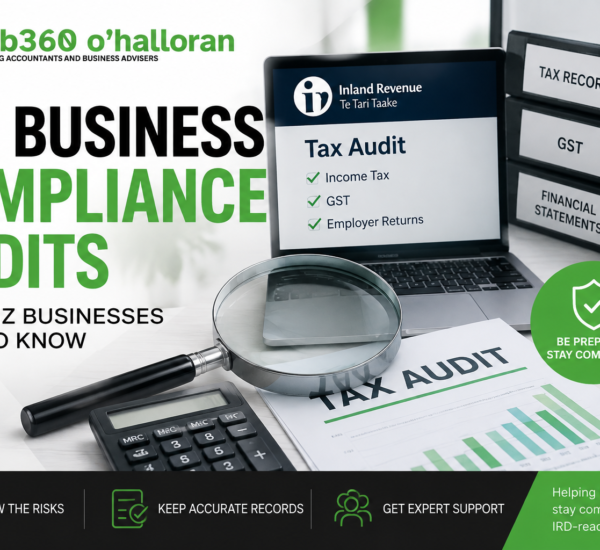
IRD Business Compliance Audits: What NZ Businesses Need to Know
Last Updated: August 2026
IRD business compliance audits are an important consideration for New Zealand business owners. Inland Revenue continues to carry out compliance and audit activity to check whether businesses are meeting their tax obligations and paying the correct amount of tax.
An IRD audit is a check of a business’s tax and financial records. Audits can cover areas including income tax, GST and employer returns. Depending on the outcome, a business may be required to pay additional tax or could be entitled to a refund.
Inland Revenue’s 2026 compliance assessment also reported a sharp increase in audit activity following additional compliance funding, together with a significant increase in audit discrepancies identified. The assessment noted particularly significant compliance returns across micro-businesses, small-to-medium enterprises and significant enterprises.
For business owners, the message is simple: tax compliance should be reviewed before an IRD issue becomes a bigger problem.
With increased compliance activity, IRD business compliance audits are becoming an important consideration for NZ business owners who want to make sure their tax affairs are accurate and up to date.
IRD Business Compliance Audits: Quick Answer
IRD business compliance audits are reviews of business tax and financial records to check whether the correct amount of tax has been paid and whether tax obligations have been met.
An audit can cover GST, income tax and employer returns. A business may be selected because of compliance risks, information available to Inland Revenue, its industry or activity, previous compliance history or random selection.
- IRD audits can cover GST, income tax and employer returns.
- Businesses may be selected based on different compliance and risk factors.
- IRD can review accounting and supporting records during an audit.
- Businesses must generally keep tax records for at least seven tax years.
- An audit can result in additional tax, interest or penalties depending on the circumstances.
- An audit can also result in a refund.
- Keeping accurate records can make responding to an audit easier.
- Businesses with overdue returns or known errors should consider addressing them rather than ignoring them.
What Is an IRD Business Compliance Audit?
An IRD business compliance audit is a review of a business’s tax and business records to determine whether the correct amount of tax has been paid.
Inland Revenue states that audits can cover income tax, GST and employer returns.
The scope of an audit depends on the circumstances. IRD may focus on a particular tax issue, tax type, period or set of transactions, or the review may be broader.
The increased focus on IRD business compliance audits means businesses should not rely on their accounting software alone. Regular reviews of GST, income tax and supporting records can help identify potential issues before they attract attention from Inland Revenue.
Why Is IRD Increasing Its Compliance Focus?
The increased focus on IRD business compliance audits forms part of Inland Revenue’s wider approach to improving tax compliance and addressing tax gaps.
Inland Revenue’s 2026 preliminary assessment reported that the sharp increase in audit activity following additional compliance funding was accompanied by a corresponding increase in audit discrepancies identified.
The report also identified significant compliance returns across micro-businesses, small-to-medium enterprises and significant enterprises.
This does not mean every business will be audited. However, it does highlight why maintaining accurate tax records and filing correct returns is important for businesses of all sizes.
Why Would IRD Audit My Business?
There is no single reason why Inland Revenue selects a business for an audit.
A business may be selected when:
- Its industry or activity is part of an IRD compliance focus.
- Information suggests that its tax returns may not be correct.
- The business has a history of tax non-compliance.
- Inland Revenue has received relevant information about the business.
- The business is selected randomly.
IRD regularly reviews its compliance and audit priorities. The specific reason for selection may not always be disclosed, although Inland Revenue will generally explain the area it intends to review.
What Taxes Can IRD Audit?
IRD business compliance audits can cover several areas of a business’s tax obligations.
GST
IRD may review GST returns, taxable supplies, GST calculations, invoices, adjustments and supporting records to determine whether GST has been correctly accounted for.
Income Tax
An audit may examine business income, deductible expenses, assets, transactions and other information used to calculate taxable income.
Employer Obligations
Businesses with employees may also need to demonstrate that PAYE and other employer obligations have been correctly calculated and reported.
What Records Does IRD Check During an Audit?
Good record keeping is one of the most important parts of preparing for IRD business compliance audits.
IRD requires businesses to keep their tax records for at least seven tax years. This includes electronic records.
Depending on the audit, relevant records may include:
- Sales records
- Purchase records
- Invoices
- Receipts
- Bank statements
- GST records
- PAYE and payroll records
- Accounting records
- General ledgers
- Business expense records
- Asset records
- Financial statements
- Tax returns
- Supporting documentation for deductions
Your accounting records should be organised, accurate and capable of supporting the figures reported in your tax returns.
Can IRD Check Business Bank Records?
Business bank records can be relevant during an IRD audit.
Inland Revenue’s audit guidance identifies records such as bank accounts, ledgers, journals and invoices as information that may be reviewed during an audit.
This is why businesses should regularly reconcile their accounting records with their bank transactions and investigate unexplained differences.
What Happens When IRD Audits a Business?
If your business is selected for an audit, Inland Revenue will communicate with you about the review and the information it requires.
Depending on the audit, you may need to provide information relating to:
- Business income
- Expenses
- GST
- Payroll
- Bank transactions
- Business assets
- Accounting systems
- Previous tax returns
IRD may use different methods to review records, including computer-assisted audit techniques where appropriate.
The best approach is to respond accurately and within the required timeframe. If the audit involves complicated tax issues or multiple years, professional assistance can help you understand what information is required and how to respond.
How Long Does an IRD Business Audit Take?
There is no standard timeframe for an IRD business audit.
A straightforward review may be completed relatively quickly, while a complex audit involving multiple tax years, entities or large volumes of transactions can take considerably longer.
The timeframe can depend on:
- The size and complexity of the business
- The number of tax types being reviewed
- The number of years involved
- How complete the records are
- How quickly information is provided
- The complexity of the issues identified
Well-organised accounting and tax records can make the process easier to manage.
What Happens After an IRD Audit?
An audit does not automatically mean that your business has done something wrong.
After reviewing the information, Inland Revenue may determine that the business has correctly met its tax obligations.
Alternatively, the audit may identify:
- Additional tax that needs to be paid
- Incorrect GST treatment
- Income that was not reported
- Expenses or deductions that cannot be supported
- Other tax compliance issues
An audit can also result in a taxpayer being entitled to a refund.
Can an IRD Audit Result in Penalties?
Potentially, yes.
If an audit identifies a tax shortfall, additional tax may be assessed. Depending on the circumstances, interest and penalties may also apply.
The consequences can depend on factors such as the nature of the error, the circumstances surrounding the tax position and the taxpayer’s behaviour.
If you identify a potential tax error, getting advice early can help you understand how the issue should be addressed.
What Should You Do If IRD Contacts Your Business?
If you receive an IRD audit notice or compliance request, do not ignore it.
Start by:
- Reading the IRD correspondence carefully.
- Identifying the tax years and tax types involved.
- Checking exactly what information IRD has requested.
- Gathering your accounting and supporting records.
- Reviewing the relevant GST and income tax returns.
- Identifying potential discrepancies.
- Getting professional advice if the matter is complex.
If you discover an issue while preparing your records, it is better to understand the issue properly before responding rather than providing incomplete or inaccurate information.
How Can Businesses Prepare for IRD Business Compliance Audits?
You do not have to wait until Inland Revenue contacts you before reviewing your tax compliance.
1. Review Your GST Returns
Check that your GST returns agree with your accounting records and that taxable supplies, expenses and adjustments have been treated correctly.
2. Check Your Income Tax Position
Review business income, expenses and deductions and make sure significant transactions are supported by appropriate documentation.
3. Reconcile Your Bank Accounts
Regularly reconcile your business bank accounts with your accounting records and investigate unexplained transactions.
4. Review Payroll and Contractor Payments
Check that employee and contractor payments are correctly classified and that relevant withholding and reporting obligations have been met.
5. Keep Supporting Documentation
Keep invoices, receipts, contracts, agreements and other documents that support significant business transactions and deductions.
6. Address Overdue Returns
If your business has overdue GST, income tax or employer returns, consider addressing them rather than allowing the issue to continue.
An IRD business compliance audit is a review of a business’s tax and financial records to determine whether the correct amount of tax has been paid. Inland Revenue explains that audits can cover areas including income tax, GST and employer returns.
You can read the official IRD guidance on tax audits to understand how the audit process works.
Which Businesses Should Be Particularly Careful?
Any business can have tax compliance obligations, and any business may potentially be selected for an audit.
Businesses operating in industries or areas that are part of Inland Revenue’s current compliance focus may receive greater attention.
Businesses with complex structures, high transaction volumes, significant cash activity, multiple entities or inconsistent tax reporting may also benefit from a proactive tax compliance review.
Should You Get an Accountant Before an IRD Audit?
Professional support can be particularly useful when:
- The audit covers multiple tax years.
- There are GST or income tax discrepancies.
- Your records are incomplete.
- IRD has raised concerns about your tax position.
- You have overdue tax returns.
- Your business has multiple entities.
- You are concerned about penalties or tax shortfalls.
- You are unsure how to respond to an IRD information request.
An experienced accountant can help review your records, identify potential issues, prepare relevant information and communicate with Inland Revenue where appropriate.
Received an IRD Audit Notice? Let’s Review It Before You Respond.
An IRD audit can be stressful, particularly when you are unsure what Inland Revenue is looking for or whether your business records are complete.
DFK Orb360 can help you understand your tax position, review your GST and income tax records, identify potential compliance issues and prepare for discussions with Inland Revenue.
Whether you have already received an IRD audit notice or simply want to make sure your business is prepared, our team can help you take a proactive approach.
Don’t wait until a tax compliance issue becomes more difficult to resolve.
People Also Ask About IRD Business Compliance Audits
What is an IRD business compliance audit?
An IRD business compliance audit is a review of a business’s tax and financial records to check whether the correct amount of tax has been paid and tax obligations have been met.
Why would IRD audit my business?
A business may be selected because of its industry or activity, information suggesting its returns may not be correct, previous compliance history, other information available to Inland Revenue or random selection.
What taxes can IRD audit?
IRD audits can cover income tax, GST and employer returns.
How many years can IRD audit?
The scope of an audit depends on the circumstances and issues being reviewed. Businesses should generally retain relevant tax records for at least seven tax years.
What records does IRD check during an audit?
IRD may review accounting records, invoices, receipts, bank records, GST records, payroll information, ledgers, tax returns and other documents relevant to the audit.
Can an IRD audit result in more tax to pay?
Yes. If an audit identifies a tax shortfall, additional tax may be assessed. Interest or penalties may also apply depending on the circumstances.
Can an IRD audit result in a refund?
Yes. An IRD audit may result in a taxpayer being entitled to a refund.
What should I do if IRD sends my business an audit letter?
Read the letter carefully, identify the information requested, gather your records and consider getting professional advice if the audit involves complex tax issues or multiple years.
How can I prepare my business for an IRD audit?
Keep accurate records, reconcile accounting and bank information, review GST and income tax returns, maintain supporting documentation and address overdue returns or known errors promptly.
Frequently Asked Questions About NZ Tax Audits
Does every business get audited by IRD?
No. Businesses are selected for audits based on various compliance and risk factors, although Inland Revenue may also select businesses randomly.
How long should a business keep tax records?
Businesses generally need to keep their tax records for at least seven tax years.
Should I ignore an IRD audit letter?
No. If Inland Revenue contacts your business about an audit or compliance matter, review the correspondence and respond appropriately within the required timeframe.
What if I find a mistake before an IRD audit?
If you identify a potential tax error, review the circumstances and consider getting professional advice about the appropriate correction or disclosure process.
Make Sure Your Business Is IRD-Ready
With Inland Revenue continuing its compliance and audit activity, now is a good time to make sure your business tax records and returns are accurate, complete and up to date.
DFK Orb360 helps New Zealand businesses with tax compliance, GST, accounting and Inland Revenue matters.
If you want to review your business tax position before an issue becomes an IRD problem, our team is here to help.
About DFK Orb360 O’Halloran
DFK Orb360 O’Halloran provides accounting, tax advisory, compliance and business advisory services to businesses throughout New Zealand.
Our team helps business owners manage their tax obligations, understand compliance requirements and make informed financial decisions.
Learn more about DFK Orb360 O’Halloran.
For businesses concerned about IRD business compliance audits, a proactive tax compliance review can provide greater clarity about your current position and any areas that may need attention.
For businesses concerned about IRD business compliance audits, a proactive tax compliance review can provide greater clarity about your current position and any areas that may need attention.
Disclaimer
This article provides general information about Inland Revenue audits and New Zealand business tax compliance. It does not constitute tax, accounting or legal advice. Tax obligations and audit processes can depend on individual circumstances and legislation or Inland Revenue guidance can change. Businesses should obtain professional advice based on their circumstances.



 09 377 4238
 Level 2, 6 Kingdon Street, Newmarket, Auckland
 help@orb360.co.nz