

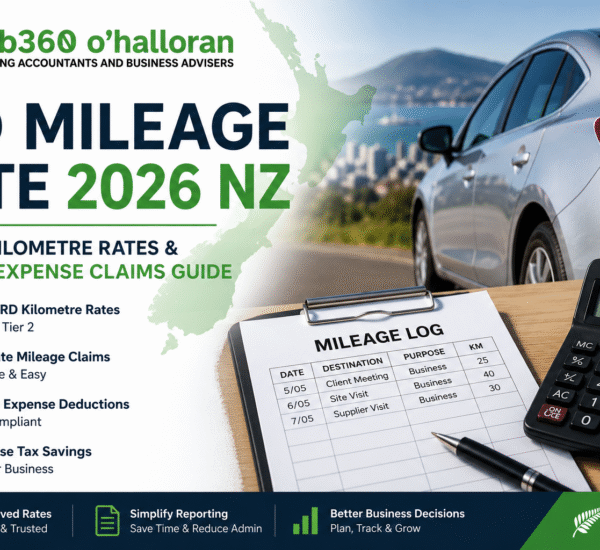
IRD Mileage Rate 2026 NZ: Latest Kilometre Rates & Vehicle Expense Claims Guide
The IRD Mileage Rate 2026 NZ helps businesses, contractors, and self-employed professionals calculate vehicle expense claims using Inland Revenue approved kilometre rates. These rates simplify tax reporting while helping businesses estimate fuel, maintenance, insurance, and depreciation costs more accurately.
What Is the IRD Mileage Rate in New Zealand?
The IRD mileage rate is a kilometre-based method used to estimate business vehicle expenses for work-related travel in New Zealand.
Instead of tracking every fuel, insurance, repair, and maintenance cost separately, businesses may use approved kilometre rates to simplify expense reporting.
The mileage method is commonly used by:
- Sole traders
- Contractors
- Self-employed professionals
- Trades businesses
- Consultants
- Employers reimbursing staff
Read additional guidance from IRD Guru and the official IRD Vehicle Expenses Guide.
Latest IRD Kilometre Rates NZ
| Vehicle Type | Tier 1 Rate | Tier 2 Rate |
|---|---|---|
| Petrol | $1.17 per km | $0.37 per km |
| Diesel | $1.26 per km | $0.35 per km |
| Petrol Hybrid | $0.86 per km | $0.21 per km |
| Electric Vehicle | $1.08 per km | $0.19 per km |
Understanding Tier 1 and Tier 2 Mileage Rates
What Is Tier 1?
Tier 1 includes both fixed and running vehicle costs and generally applies to the first 14,000 kilometres travelled during the income year.
What Is Tier 2?
Tier 2 applies after the 14,000 km threshold and mainly covers running vehicle expenses.
How to Calculate Mileage Claims in NZ
- Track business kilometres travelled.
- Identify the correct IRD vehicle rate.
- Multiply kilometres by the approved rate.
- Maintain supporting records and logbooks.
Example Calculation
If a petrol vehicle travels 5,000 business kilometres:
5,000 × $1.17 = $5,850 estimated mileage claim
Who Can Claim Mileage Expenses?
Eligible business-related travel may include:
- Client meetings
- Business errands
- Site visits
- Travel between work locations
- Deliveries and operational travel
Common Mileage Claim Mistakes
- Claiming personal travel incorrectly
- Using outdated IRD mileage rates
- Not maintaining a vehicle logbook
- Double claiming fuel and mileage expenses
- Incorrect business-use percentage calculations
Mileage Method vs Actual Cost Method
Mileage Method
Uses IRD-approved kilometre rates to estimate business vehicle expenses.
Actual Cost Method
Tracks actual vehicle expenses including:
- Fuel
- Insurance
- Repairs
- Registration
- Maintenance
- Depreciation
Employee Mileage Reimbursements NZ
Employers commonly reimburse staff who use personal vehicles for work-related travel.
Businesses should ensure reimbursement policies remain:
- Consistent
- Documented
- Tax compliant
- Accurately recorded
How Businesses Track Vehicle Mileage Efficiently
Many New Zealand businesses now use digital mileage tracking apps, GPS tools, and cloud accounting software to improve vehicle expense management and simplify tax reporting.
Accurate mileage tracking is important because vehicle expenses are one of the most commonly claimed business deductions in New Zealand. Without proper documentation, businesses may struggle to support their claims during financial reviews or IRD audits.
Modern mileage tracking systems help businesses:
- Reduce manual administrative work
- Improve tax compliance accuracy
- Track fuel and travel-related costs more efficiently
- Maintain audit-ready records
- Improve reimbursement transparency for employees
- Generate more accurate business expense reports
Businesses that frequently use vehicles for operational travel should regularly review mileage records throughout the financial year instead of waiting until tax filing periods. Consistent record keeping can help reduce errors and improve overall financial visibility.
Industries That Commonly Use IRD Mileage Claims
IRD kilometre rates are widely used across multiple industries in New Zealand where employees or business owners regularly travel for work purposes.
Industries that commonly use mileage claims include:
- Construction and trades businesses
- Real estate agencies
- Healthcare and mobile care providers
- Delivery and courier services
- Freelancers and consultants
- Sales and field service teams
- Mobile beauty and wellness professionals
- Property management businesses
- Cleaning and maintenance services
Businesses with regular client visits, operational travel, or mobile service teams often benefit most from simplified mileage reimbursement methods using IRD-approved kilometre rates.
Why Accurate Mileage Reporting Matters
Incorrect mileage claims may create compliance risks, inaccurate financial reporting, and unexpected tax adjustment issues for businesses and self-employed professionals.
Maintaining accurate vehicle logbooks and using updated IRD kilometre rates can help businesses:
- Avoid tax reporting mistakes
- Improve bookkeeping accuracy
- Support better expense forecasting
- Strengthen audit preparedness
- Improve operational cost visibility
- Reduce the risk of compliance penalties
Businesses should also separate personal and business travel clearly to avoid incorrect deductions. Clear travel records help ensure that vehicle expenses are allocated accurately according to business usage percentages.
Benefits of Using the IRD Mileage Rate 2026 NZ
- Simplifies business vehicle expense reporting
- Improves tax compliance accuracy
- Reduces manual bookkeeping workload
- Supports accurate mileage reimbursements
- Helps businesses estimate travel costs efficiently
The IRD Mileage Rate 2026 NZ helps businesses calculate vehicle expense claims more accurately while simplifying tax reporting and reimbursement processes.
How the IRD Mileage Rate 2026 NZ Is Calculated
The IRD Mileage Rate 2026 NZ is based on estimated vehicle operating costs including fuel, maintenance, insurance, depreciation, and registration expenses.
Common Questions About IRD Mileage Claims in New Zealand
“`- How do I calculate business mileage in NZ?
- What expenses are included in IRD mileage rates?
- Can sole traders claim vehicle expenses in New Zealand?
- What records are required for mileage claims?
- How do employers reimburse employee travel in NZ?
- What is the difference between Tier 1 and Tier 2 mileage rates?
- Can contractors claim fuel and mileage together?
Why IRD Mileage Rates Matter for Businesses
Understanding IRD mileage rates helps businesses:
- Simplify tax reporting
- Improve expense tracking
- Reduce administrative workload
- Improve financial visibility
- Support compliance with IRD requirements
Frequently Asked Questions About the IRD Mileage Rate 2026 NZ
Many businesses search for updated IRD Mileage Rate 2026 NZ information to understand current kilometre rates, vehicle expense deductions, and reimbursement methods.
What is the IRD mileage rate in New Zealand?
The IRD mileage rate is a kilometre-based method used to estimate business vehicle expenses in New Zealand.
Does the mileage rate include fuel?
Yes. IRD kilometre rates estimate broader operating costs including fuel and maintenance.
Can contractors claim mileage?
Yes. Eligible contractors and self-employed professionals may claim business-related mileage expenses.
Can I claim fuel separately?
Generally, businesses should avoid double claiming expenses when using the kilometre rate method.
Internal Resources
External Resources
Final Thoughts
The IRD Mileage Rate 2026 NZ helps businesses and self-employed professionals simplify vehicle expense calculations while improving tax compliance and financial visibility.
For accounting, tax planning, GST compliance, payroll, and business advisory support in New Zealand, visit DFK Orb360 Chartered Accountants.


 09 377 4238
 Level 2, 6 Kingdon Street, Newmarket, Auckland
 help@orb360.co.nz