

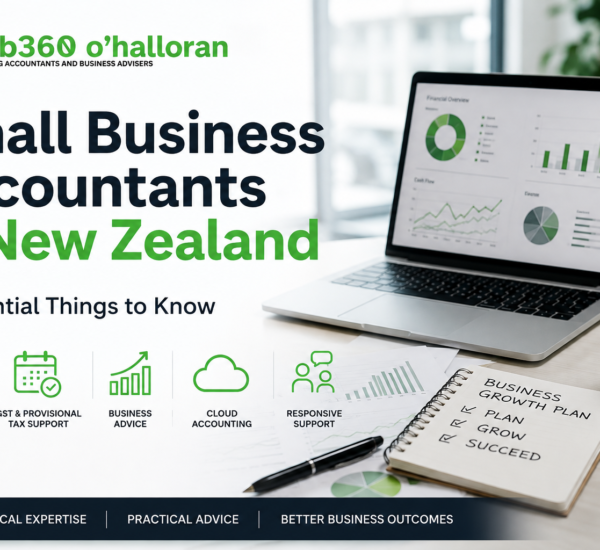
9 Things to Know About Small Business Accountants in New Zealand
Running a small business in New Zealand involves more than generating sales and managing customers. You also need to stay on top of GST, income tax, provisional tax, financial reporting, record keeping and other Inland Revenue (IRD) obligations.
That is why choosing the right small business accountants in New Zealand can make a significant difference. The right accountant should not simply prepare your annual accounts and tax return. They should help you understand your numbers, stay compliant, manage cash flow and make better business decisions.
Whether you are searching for Auckland accountants, Wellington accountants, or an accounting firm that can support your business remotely, here are nine things to consider.
Quick Answer: What Should You Look for in a Small Business Accountant?
If you are comparing small business accountants in New Zealand, look for a firm with strong New Zealand tax knowledge, SME experience, responsive communication, modern accounting systems, proactive tax planning and business advisory capabilities.
The right accountant should offer more than basic tax filing. They should understand your business, explain your financial position clearly and help you make better decisions about cash flow, profitability and growth.
Ideally, your accountant should become a trusted financial adviser who understands your business goals and helps you plan for growth—not just someone you contact at tax time.
1. Look for Strong New Zealand Tax Expertise
Tax is one of the most important reasons small businesses work with professional accountants.
Your accountant should understand the New Zealand tax system and how different obligations apply to your business structure and circumstances.
Depending on your business, this can include:
- Income tax
- GST
- Provisional tax
- PAYE and payroll obligations
- Business expenses and deductions
- Tax planning
- Tax return preparation
- IRD correspondence and compliance
- Tax audits and disputes
For example, provisional tax can become an important cash-flow consideration as your business becomes profitable. Businesses should understand when their provisional tax payments are due and which calculation method may apply to their circumstances.
A knowledgeable accountant can help you understand not only how much tax you owe, but when you need to pay it and how to plan for it.
What to Ask an Accountant
Before choosing between small business accountants in New Zealand, ask:
“How will you help me plan for my tax obligations throughout the year?”
A good answer should go beyond simply preparing your annual tax return.
2. Make Sure They Understand Small and Medium-Sized Businesses
Small businesses have different needs from large corporations.
An SME accountant should understand issues such as:
- Managing irregular cash flow
- Controlling operating costs
- Hiring employees
- GST obligations
- Business growth
- Financing and lending
- Profitability
- Business structure
- Budgeting and forecasting
The accountant should also understand the stage your business is at. A startup may need help setting up its accounting systems, while an established business may need management reporting, cash-flow forecasting or strategic advice.
The best accounting services are tailored to your business rather than based on a one-size-fits-all package.
3. Check What Accounting Services Are Actually Included
Do not assume every accountant provides the same services.
When comparing small business accountants in New Zealand, look beyond the basic services included in the advertised fee. Before signing an engagement, ask exactly what is included.
Depending on your business, useful accounting services may include:
- Bookkeeping
- Annual accounts
- Tax returns
- GST returns
- Payroll
- Financial reporting
- Cash-flow forecasting
- Tax planning
- Business advisory
- Budgeting
- Management reporting
- IRD audit support
- Business structure advice
DFK Orb360’s accounting and reporting services include bookkeeping, financial reporting, tax planning and compliance, payroll and cloud accounting support.
Understanding the full service offering makes it easier to compare accounting firms based on value rather than simply comparing hourly rates.
4. Responsiveness Matters More Than You Think
Imagine receiving an important IRD letter and waiting two weeks for your accountant to respond.
For a small business owner, that can create unnecessary stress.
Before choosing an accountant, consider:
- How quickly do they respond to emails?
- Do you have a dedicated contact?
- Can you speak to someone when something urgent happens?
- Do they explain financial matters in plain English?
- Will they contact you proactively about important deadlines?
Good communication is particularly important when dealing with tax deadlines, IRD correspondence, cash-flow problems or unexpected financial issues.
Your accountant should make financial matters simpler, not more confusing.
5. Ask About GST and Provisional Tax Support
GST and provisional tax can have a direct impact on your business cash flow.
Experienced small business accountants in New Zealand can help you plan for GST and provisional tax rather than simply calculate what you owe after the fact.
If your business is GST registered, you need to keep appropriate records, file GST returns and pay any GST owing by the relevant due dates.
Provisional tax also needs careful planning. Depending on your circumstances, you may use different calculation options available through Inland Revenue.
Ask your accountant:
“How will you help me forecast GST and provisional tax so I don’t get caught by an unexpected bill?”
A proactive accountant should help you prepare for these obligations rather than simply tell you what you owe after the fact.
6. Look for Modern, Cloud-Based Accounting Systems
Modern accounting technology can make financial management much easier.
Cloud accounting allows business owners and accountants to access financial information without relying entirely on spreadsheets or manual processes.
Look for an accountant who can help you use systems such as:
- Xero
- Cloud bookkeeping platforms
- Digital invoicing
- Automated bank feeds
- Online payroll systems
- Digital expense management
- Real-time financial reporting
DFK Orb360 provides cloud accounting support designed to help businesses access and manage their financial information.
Technology should not replace professional advice—but it can make the information your accountant works with more accurate, accessible and timely.
7. Choose an Accountant Who Can Help You Understand Your Numbers
Financial statements are only useful if you understand what they mean.
A good small business accountant in New Zealand should explain your financial reports in a way that helps you make practical business decisions.
A good accountant should be able to explain:
- Revenue
- Gross profit
- Net profit
- Operating expenses
- Cash flow
- Debtors
- Creditors
- Tax liabilities
- Business performance
For example, your business might have strong revenue but weak cash flow. Without understanding the difference between profitability and cash availability, you could make decisions based on incomplete information.
Financial clarity helps business owners identify problems earlier and make more informed decisions.
This is why modern SME accounting should go beyond compliance and include meaningful financial reporting and interpretation.
New Zealand businesses also need to understand their wider tax obligations, including income tax, GST and record-keeping requirements. Read the Business.govt.nz guide to business tax.
8. Consider Their Business Advisory Experience
Your accountant can potentially become one of your most valuable business advisers.
As your business grows, you may need help with decisions such as:
- Should I hire another employee?
- Can the business afford to expand?
- Should I restructure the business?
- Why is profitability falling?
- How much cash should I keep in the business?
- Can I afford to purchase another asset?
- What should my financial targets be?
- How can I improve margins?
- Should I prepare a succession plan?
This is where business advisory becomes particularly valuable.
DFK Orb360’s services include business review and improvement, succession planning, cloud accounting, bookkeeping and reporting , alongside broader accounting and tax services.
The goal is to move from “What tax do I owe?” to “What do my numbers tell me about the future of my business?”
9. Compare Value, Not Just Accounting Fees
Price matters, particularly for a small business.
But the cheapest accountant is not necessarily the best choice.
Instead of asking only:
“How much do you charge?”
ask:
“What value will I receive for that fee?”
| What to Compare | Questions to Ask |
|---|---|
| Tax expertise | Do they understand my industry and tax obligations? |
| Services | What is included in the accounting package? |
| Communication | How quickly can I get help? |
| Technology | Do they use cloud accounting systems? |
| Reporting | Will I receive useful financial reports? |
| Tax planning | Do they provide proactive advice? |
| Business advisory | Can they help with growth and profitability? |
| Compliance | Will they help manage GST, tax and IRD obligations? |
| Scalability | Can they support me as the business grows? |
A good accountant should ideally save you time, reduce financial risk and help you make better decisions.
That makes the real question not “What does my accountant cost?” but “What value does my accountant create?”
Auckland Accountants vs Wellington Accountants: What Should You Look For?
Whether you’re comparing small business accountants in New Zealand in Auckland, Wellington or another region, the same core selection criteria apply.
You want someone who understands New Zealand tax requirements, communicates clearly and can provide accounting support appropriate to your business.
Whether you are searching for Auckland accountants or Wellington accountants, look for relevant SME experience, transparent pricing, modern accounting systems and the ability to provide proactive tax and business advice.
DFK Orb360 supports businesses in Auckland, including Newmarket and Rosedale, as well as businesses in Wellington and Lower Hutt.
If your business operates across different regions, you may also want an accountant who can work effectively with you remotely rather than limiting support to face-to-face meetings.
7 Questions to Ask Before Hiring a Small Business Accountant
- Do you specialise in small and medium-sized businesses?
- What accounting services are included in your fees?
- Can you help with GST and provisional tax planning?
- Which cloud accounting platforms do you support?
- How often will we review my business finances?
- Can you provide business and tax advisory—not just compliance?
- Who will be my main point of contact?
The answers can tell you a lot about whether the accountant is likely to be a good long-term fit.
When Should You Hire a Small Business Accountant?
You do not necessarily need to wait until your business becomes complicated.
If you’re unsure whether you need professional support, speaking with small business accountants in New Zealand can help you understand which accounting services are appropriate for your business.
Consider professional accounting support if:
- You are starting a business
- Your revenue is growing
- You are registering for GST
- You are hiring employees
- Your bookkeeping is taking too much time
- You are unsure about your tax obligations
- Your cash flow is difficult to manage
- You are receiving IRD correspondence
- You want to improve profitability
- You are planning to expand
- You are considering selling or transferring the business
Why DFK Orb360 for Small Business Accounting?
Choosing an accountant is ultimately about finding a team that understands both your finances and your business goals.
DFK Orb360 O’Halloran Chartered Accountants provides accounting, tax and business advisory support for businesses looking for small business accountants in New Zealand.
Our accounting services include bookkeeping, financial reporting, tax planning and compliance, payroll and cloud accounting support. We also provide broader business advisory services to help businesses improve profitability, manage risk and plan for sustainable growth.
With accounting, tax and business advisory expertise, our team can support businesses at different stages—from startups and sole traders to established SMEs and growing companies.
Whether you are a startup, sole trader, established SME or growing company, the right accounting support can give you greater financial clarity and confidence.
People Also Ask About Small Business Accountants in New Zealand
What does a small business accountant do in New Zealand?
A small business accountant can help with bookkeeping, GST returns, income tax, provisional tax, payroll, financial reporting, tax planning and business advisory. Depending on your needs, an accountant can also help with cash-flow forecasting, profitability analysis and business growth planning.
How much do small business accountants in New Zealand cost?
The cost of small business accountants in New Zealand varies depending on your business structure, transaction volume and the services you need. Basic compliance services may cost less than a package that includes bookkeeping, GST, payroll, tax planning and ongoing business advisory.
Do I need an accountant for my small business?
You may not be legally required to hire an accountant, but professional accounting support can make it easier to manage tax obligations, maintain accurate financial records and understand your business performance.
When should a small business hire an accountant?
A business can benefit from an accountant from the early stages, particularly when setting up its business structure, registering for GST, hiring employees or becoming profitable. Established businesses may also need an accountant when dealing with cash-flow challenges, expansion, tax planning or succession planning.
What tax services do small business accountants provide?
Small business accountants can provide services including income tax return preparation, GST support, provisional tax planning, tax compliance, tax planning and assistance with IRD matters.
Can an accountant help with GST?
Yes. An accountant can help determine whether GST registration is appropriate, prepare and file GST returns, maintain GST records and help you understand your GST obligations and payment deadlines.
Can an accountant help reduce my business tax?
An accountant can help you understand legitimate deductions, tax planning opportunities and the tax implications of business decisions. Tax planning should always be based on your actual business circumstances and comply with New Zealand tax law.
What is the difference between an accountant and a bookkeeper?
A bookkeeper generally focuses on recording and maintaining day-to-day financial transactions, while an accountant can provide broader services such as financial reporting, tax preparation, compliance, tax planning and business advisory.
Should I choose an Auckland accountant or a Wellington accountant?
The most important factors are expertise, services, communication, technology and understanding of your business needs. While choosing a local accountant can be useful, many modern accounting firms can support businesses remotely across New Zealand.
Can an accountant help improve my business profitability?
Yes. An accountant can analyse revenue, expenses, margins, cash flow and financial reports to identify areas where your business may be able to improve profitability.
Small Business Accounting FAQs
What should I ask before hiring an accountant?
Ask about their experience with businesses similar to yours, the services included in their fees, their approach to GST and tax planning, accounting software they support, communication process and whether they provide ongoing business advice.
How often should I meet with my accountant?
There is no single schedule that works for every business. Some small businesses may only need support around tax and GST deadlines, while growing businesses may benefit from monthly or quarterly financial reviews.
What accounting software should a small business use?
The right accounting software depends on the business. Cloud accounting platforms can help businesses manage invoices, expenses, bank transactions, GST and financial reporting while allowing their accountant to access up-to-date information.
What financial records should a New Zealand business keep?
Businesses should maintain accurate records of income, expenses, invoices, receipts, bank transactions and other relevant financial information. New Zealand businesses generally need to keep business and tax records for at least seven years.
Can an accountant deal with IRD on my behalf?
Depending on the engagement and authority provided, an accountant can communicate with Inland Revenue on business tax matters and assist with tax-related correspondence and compliance.
What is SME accounting?
SME accounting refers to accounting services designed for small and medium-sized enterprises. It can include bookkeeping, GST, tax compliance, financial reporting, payroll, cash-flow management, tax planning and business advisory.
Is a Chartered Accountant better for a small business?
Not necessarily. The right accountant depends on your business requirements, the services you need and the level of expertise and advice you expect. A Chartered Accountant may be particularly valuable when your business requires more complex accounting, tax or advisory support.
How can I find the best small business accountant in New Zealand?
Look for an accounting firm with relevant SME experience, strong New Zealand tax knowledge, transparent pricing, responsive communication, modern accounting systems and services that match your business needs. You should also consider whether the firm can support your business as it grows.
Need Help From Small Business Accountants in New Zealand?
Choosing the right accountant can help you stay compliant, manage your tax obligations and make better financial decisions as your business grows.
If you’re looking for small business accountants in New Zealand, DFK Orb360 can help with accounting, tax, GST, financial reporting, bookkeeping and business advisory services.
Get Accounting Advice for Your Business
Tell us a little about your business and what you need help with. Our team can assess your requirements and help you understand the right accounting and business support for your situation.
Get in touch today to discuss:
- Small business accounting and reporting
- GST and tax compliance
- Provisional tax planning
- Bookkeeping and payroll
- Cash-flow and financial reporting
- Tax planning and advisory
- Business growth and profitability
- Business review and improvement
- Succession planning
Talk to DFK Orb360
Complete the form below and our team will get in touch to discuss your accounting and business needs.
Looking for a trusted accountant in Auckland or Wellington?
DFK Orb360 provides professional accounting, tax and business advisory services for New Zealand businesses. Whether you’re a startup, sole trader or established SME, we can help you understand your numbers, meet your tax obligations and plan for sustainable growth.
Final Takeaway
The right small business accountants in New Zealand should do more than prepare your accounts once a year.
Look for an accountant who can help you:
- Stay compliant
- Manage GST and tax obligations
- Plan for provisional tax
- Understand your financial performance
- Improve cash flow
- Use modern accounting technology
- Identify opportunities to improve profitability
- Make better business decisions
Whether you are comparing Auckland accountants, Wellington accountants or accounting firms that work with businesses throughout New Zealand, focus on expertise, communication, services and long-term value.
Your accountant should not just tell you what happened financially. They should help you understand what to do next.


 09 377 4238
 Level 2, 6 Kingdon Street, Newmarket, Auckland
 help@orb360.co.nz