
Published: 25 June 2026 | Last Updated: 25 June 2026 | Author: DFK Orb360 Tax Advisory Team | Reviewed By: Senior Chartered Accountants at DFK Orb360
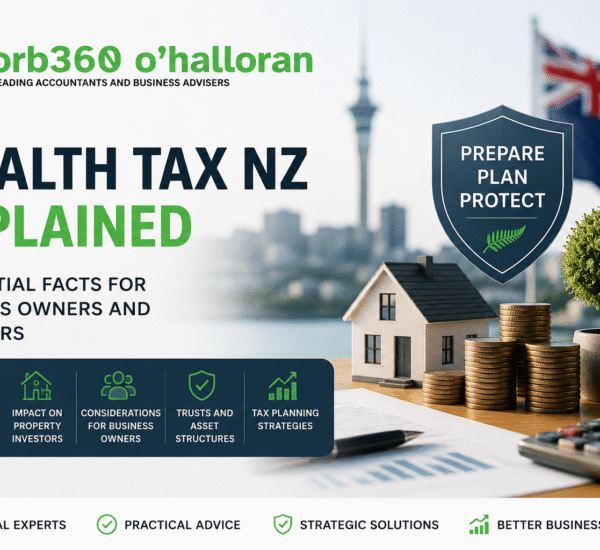
Wealth Tax NZ has become one of the most discussed tax policy topics in New Zealand. While New Zealand currently does not have a general wealth tax, proposals have been made that could impose an annual tax on high-value net assets. If introduced, a Wealth Tax NZ could affect property investors, business owners, trust structures, high-net-worth families, and individuals with significant investment portfolios.
A wealth tax is an annual tax imposed on a person’s net wealth rather than their income. Net wealth generally includes assets such as property, investments, business ownership interests, shares, trusts, and other valuable assets after deducting liabilities.
Unlike income tax, which applies to earnings, a Wealth Tax NZ would apply based on the value of assets held.
No. New Zealand currently does not have a broad-based wealth tax. Individuals generally pay income tax, GST, and other taxes, but there is currently no annual tax on overall net wealth.
However, proposals for an annual tax on net wealth have become increasingly prominent in political and economic discussions across New Zealand.
While no wealth tax currently exists, proposals have suggested that individuals with net assets above specified thresholds could be required to pay an annual percentage of their net wealth.
Potential assets that may be considered include:
A Wealth Tax NZ would primarily affect taxpayers with substantial net assets.
Groups that could potentially be impacted include:
Property investors are often identified as one of the groups most likely to be affected by Wealth Tax NZ proposals. Investors holding multiple residential or commercial properties may see increased tax obligations if wealth tax measures are introduced.
Property ownership structures, investment strategies, and long-term succession planning may all require review.
Business owners may need to assess how business valuations, shareholder structures, retained earnings, and succession plans could be affected by a Wealth Tax NZ.
Many business owners hold substantial wealth through privately owned companies rather than personal income, making wealth taxation a significant consideration.
Trust structures are commonly used in New Zealand for asset protection and succession planning. If a Wealth Tax NZ were introduced, trust-owned assets may become a significant consideration depending on future legislation.
Trustees should monitor developments and seek professional advice regarding trust structures and tax planning.
| Current System | Potential Wealth Tax System |
|---|---|
| No annual wealth tax | Annual tax on qualifying net assets |
| Income-based taxation | Asset-based taxation |
| Focus on income earned | Focus on wealth accumulated |
Although Wealth Tax NZ remains a proposal rather than law, taxpayers may wish to:
Wealth taxation proposals are among the most widely discussed tax reform initiatives in New Zealand. Advocates view them as a way to improve tax equity, while opponents highlight potential challenges relating to investment, compliance, and asset valuation.
The actual impact of a Wealth Tax NZ would depend on future legislation, exemption thresholds, asset valuation rules, and implementation details.
No. New Zealand currently does not have a broad-based wealth tax.
Property investors, business owners, trust beneficiaries, and high-net-worth individuals could potentially be affected depending on future legislation.
Trust treatment would depend on the final design of any future wealth tax legislation.
Yes. DFK Orb360 assists businesses, investors, trustees, and high-net-worth individuals with tax planning, structuring, and understanding proposed New Zealand tax reforms.
If you own investment properties, operate a successful business, hold significant investment assets, or use trust structures, it is important to stay informed about Wealth Tax NZ proposals. Early planning and professional advice can help taxpayers understand potential implications and prepare for future tax changes.

Copyright © 2025 Marketing Transformers | All Rights Reserved.


 09 377 4238
 Level 2, 6 Kingdon Street, Newmarket, Auckland
 help@orb360.co.nz