
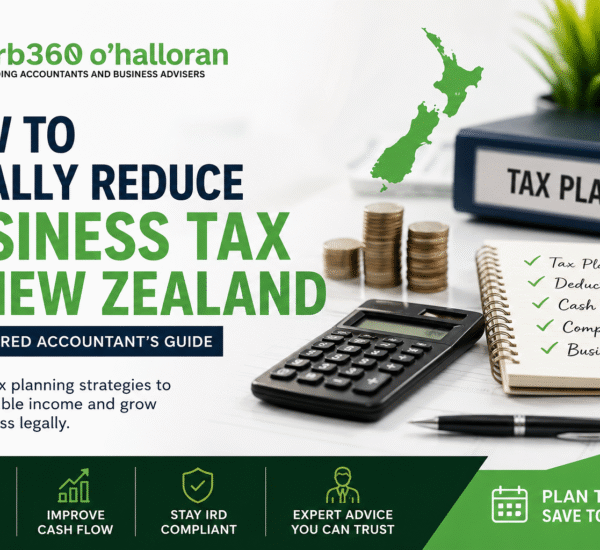
Every successful business aims to improve profitability—and effective tax planning plays an important role in achieving that goal.
If you’re wondering how to legally reduce business tax in New Zealand, the answer isn’t about finding loopholes or avoiding tax. It’s about understanding the deductions, concessions, and planning opportunities available under New Zealand tax law while remaining fully compliant with Inland Revenue (IRD).
Many business owners unknowingly pay more tax than necessary simply because they overlook legitimate deductions, delay tax planning until year-end, or fail to review their business structure. With proactive planning, businesses can often improve cash flow, reduce unnecessary tax costs, and make more informed financial decisions.
In this guide, the Chartered Accountants at DFK Orb360 explain practical tax planning strategies that may help New Zealand businesses reduce their tax liability legally while maintaining full IRD compliance.
Businesses can legally reduce tax by claiming eligible deductions, maintaining accurate financial records, planning asset purchases, reviewing their business structure, managing depreciation correctly, and seeking professional tax advice before the end of the financial year. The right strategy depends on your individual business circumstances and Inland Revenue requirements.
Businesses that understand how to legally reduce business tax in New Zealand are often better positioned to improve cash flow, maximise legitimate deductions, and make informed financial decisions throughout the year.
Many business owners think about tax only when it’s time to file a return. However, the most effective tax savings usually happen throughout the financial year—not at the filing deadline.
Good tax planning enables businesses to:
Businesses that review their tax position before year-end are often better placed to identify legitimate deductions and make informed financial decisions before tax obligations become fixed.
One of the biggest misconceptions is that reducing tax means avoiding tax. It doesn’t.
Understanding how to legally reduce business tax in New Zealand begins with proactive tax planning rather than waiting until your tax return is due. Businesses that review their financial position throughout the year are often better placed to identify legitimate deductions and make informed decisions.
| Tax Planning | Tax Avoidance |
|---|---|
| Using deductions and tax rules as intended by legislation. | Artificial arrangements designed primarily to avoid tax. |
| Fully legal when done correctly. | May breach New Zealand tax law. |
| Supported by proper records and documentation. | Often lacks commercial purpose. |
The focus of this guide is on legal tax planning strategies that help businesses minimise tax while complying with Inland Revenue requirements.
One of the simplest ways to legally reduce business tax is to ensure you’re claiming every deductible expense your business is entitled to.
Many businesses miss legitimate deductions because expenses aren’t recorded correctly or supporting documentation isn’t retained.
The value of a deductible expense isn’t just in claiming it—it’s in ensuring the claim is supported by accurate records and aligns with IRD requirements. Reviewing expenses regularly throughout the year can help reduce errors and identify missed opportunities before your tax return is prepared.
Mixing personal and business expenses is one of the most common reasons businesses experience bookkeeping issues and tax adjustments.
Maintaining separate business bank accounts and credit cards makes it easier to identify deductible expenses, prepare financial statements, and support your claims if Inland Revenue requests additional information.
Accurate records are the foundation of effective tax planning. Without reliable bookkeeping, businesses may miss deductions, make reporting errors, or spend unnecessary time correcting financial information at year-end.
Modern cloud accounting software, combined with regular reviews by a Chartered Accountant, can help improve accuracy, save time, and support better financial decision-making.
Many businesses purchase equipment, vehicles, computers, office furniture, and machinery throughout the year. Rather than claiming the full purchase cost immediately, these assets may qualify for depreciation under Inland Revenue rules.
Depreciation recognises that business assets lose value over time and allows eligible businesses to claim deductions across the asset’s useful life.
Understanding depreciation rules before purchasing major business assets can improve cash flow forecasting and ensure you’re claiming all eligible deductions over the life of the asset.
Reviewing vehicle expenses is an important part of understanding how to legally reduce business tax in New Zealand, particularly for businesses that regularly use vehicles for work.
Vehicle expenses are one of the most commonly overlooked tax planning opportunities for New Zealand businesses.
Depending on your circumstances, you may be able to claim business vehicle expenses using either the IRD Kilometre Rate Method or the Actual Cost Method.
Choosing the appropriate method can influence the value of your deductible expenses while helping maintain compliance with Inland Revenue requirements.
The timing of business purchases can affect when deductions become available.
If your business plans to invest in equipment, technology, vehicles, or office improvements, consider discussing the timing with your Chartered Accountant before making the purchase.
Strategic planning may help improve cash flow and align deductions with your broader business objectives.
Business decisions should never be made solely for tax purposes. Asset purchases should support your commercial objectives first, with tax planning considered as part of the overall decision-making process.
Your business structure influences how income is taxed, your legal obligations, and future growth opportunities.
As your business grows, the structure that worked when you first started may no longer be the most suitable option.
Learning how to legally reduce business tax in New Zealand is only one part of effective financial management. Ongoing tax planning helps businesses identify eligible deductions, improve cash flow, prepare for future obligations, and remain compliant with Inland Revenue requirements.
Working with a Chartered Accountant allows business owners to review changing tax rules, assess the impact of business decisions, and develop strategies that support sustainable growth rather than focusing only on reducing tax in a single year.
| Business Structure | Suitable For |
|---|---|
| Sole Trader | Individuals starting a business |
| Partnership | Businesses with multiple owners |
| Limited Company | Growing businesses seeking separation between personal and business affairs |
| Trust | Suitable in specific circumstances following professional advice |
Reviewing your business structure regularly helps ensure it continues to align with your commercial goals and tax obligations.
Many business owners continue using the same structure for years without reviewing whether it still meets their needs. Regular reviews can help identify opportunities to improve operational efficiency, manage risk, and support long-term business growth.
One of the biggest misconceptions is that tax planning only happens at the end of the financial year.
In reality, the most effective tax planning takes place throughout the year. Regular financial reviews provide more opportunities to identify deductible expenses, monitor profitability, and make informed business decisions before tax obligations are finalised.
GST compliance is another essential component of how to legally reduce business tax in New Zealand because accurate reporting supports legitimate claims and reduces the risk of adjustments.
Goods and Services Tax (GST) is one of the most significant tax obligations for many New Zealand businesses. Accurate GST reporting not only helps maintain compliance with Inland Revenue (IRD) but also ensures you’re claiming eligible GST credits.
Errors in GST returns can lead to unnecessary adjustments, penalties, or cash flow issues.
Regular GST reviews can identify reporting errors early, helping businesses avoid costly corrections and improving confidence in their financial reporting.
Many growing businesses are surprised when they become liable for provisional tax.
Rather than treating provisional tax as an unexpected expense, successful businesses incorporate it into their annual cash flow planning.
Working with a Chartered Accountant throughout the year allows businesses to forecast tax obligations more accurately rather than relying solely on historical results.
One of the most effective ways to legally reduce business tax in New Zealand is to review your financial position before the financial year ends.
Waiting until your tax return is being prepared often limits the planning opportunities available.
A proactive year-end review allows businesses to assess deductions, identify potential issues, and consider future planning opportunities before tax obligations become final.
Many businesses don’t pay more tax because tax rates are higher—they pay more because opportunities are missed.
| Common Mistake | Potential Impact |
|---|---|
| Missing deductible expenses | Higher taxable income |
| Poor record keeping | Difficulty supporting tax claims |
| Mixing personal and business expenses | Bookkeeping complications |
| Ignoring depreciation opportunities | Reduced deductions over time |
| No year-end tax planning | Limited planning opportunities |
| Incorrect GST reporting | Potential IRD adjustments |
Use this checklist before the end of your financial year to ensure you’ve considered common tax planning opportunities.
Has your business generated a profit?

             │
             ▼

            YES

             │
             ▼

Have you reviewed your deductible expenses?

        │                 │
       NO                YES
        │                 │
        ▼                 ▼

Review expenses      Have you reviewed
before year-end.     your business structure?

                       │            │
                      NO           YES
                       │            │
                       ▼            ▼

            Schedule a tax      Review vehicle
            planning review.    claims and depreciation.
A growing consultancy arranged a tax planning review several months before year-end. During the review, the business identified previously unrecorded deductible expenses, updated its depreciation schedule, reviewed vehicle expense claims, and improved its GST record keeping. By planning before the end of the financial year, the business was better prepared for tax time and strengthened its financial reporting processes.
Every business is different, and the outcome of any tax planning review depends on its individual circumstances.
Tax planning works best when it’s proactive rather than reactive. The Chartered Accountants at DFK Orb360 help businesses identify legitimate tax planning opportunities, improve compliance, and make informed financial decisions throughout the year—not just at tax return time.
Every business has different circumstances, which is why how to legally reduce business tax in New Zealand should always be considered as part of a broader tax planning strategy rather than a single action.
The following frequently asked questions explain common concerns about how to legally reduce business tax in New Zealand while remaining compliant with Inland Revenue requirements.
Yes. Understanding how to legally reduce business tax in New Zealand involves using legitimate tax planning strategies that comply with Inland Revenue (IRD) rules. Businesses can reduce taxable income by claiming eligible deductions, maintaining accurate records, and planning their finances throughout the year.
There is no single strategy that suits every business. The best approach to how to legally reduce business tax in New Zealand depends on your industry, business structure, operating expenses, business assets, cash flow, and future plans. A Chartered Accountant can help identify the most appropriate tax planning opportunities for your circumstances.
Yes. Small businesses can often improve their tax position by claiming eligible business expenses, reviewing vehicle expense claims, planning asset purchases, maintaining accurate bookkeeping, and reviewing their tax position before the financial year ends.
The best time to begin planning how to legally reduce business tax in New Zealand is before the financial year ends. Ongoing tax planning throughout the year generally provides more opportunities than waiting until your tax return is due.
A Chartered Accountant can help ensure your business remains compliant with Inland Revenue requirements while identifying legitimate tax planning opportunities based on your business’s financial position and long-term objectives.
Before filing your next tax return, ask yourself the following questions.
You may also find these business tax guides helpful:
For official guidance and additional information, refer to these trusted New Zealand government resources:
Learning how to legally reduce business tax in New Zealand isn’t about finding loopholes or avoiding tax—it’s about making informed financial decisions throughout the year.
By claiming eligible deductions, maintaining accurate financial records, reviewing business expenses, planning asset purchases, understanding depreciation, and regularly assessing your business structure, you can improve your business’s tax efficiency while remaining fully compliant with Inland Revenue requirements.
The most effective approach to how to legally reduce business tax in New Zealand is proactive planning. Businesses that review their financial position before the end of the financial year are often better prepared to identify legitimate tax planning opportunities and avoid unnecessary surprises at tax time.
Every business is different, which means there is no one-size-fits-all solution for how to legally reduce business tax in New Zealand. The most suitable strategy depends on your business activities, industry, growth plans, cash flow, and overall financial position.
The Chartered Accountants at DFK Orb360 work with businesses across New Zealand to develop practical tax planning strategies, improve compliance, and identify legitimate opportunities to optimise their tax position.
Whether you’re a sole trader, partnership, company, or growing business, we can help you understand how to legally reduce business tax in New Zealand while ensuring your business meets all Inland Revenue obligations.
This guide has been reviewed by the Chartered Accountants at DFK Orb360. It is intended as general information only and should not be relied upon as professional tax advice. Every business has unique circumstances, and tailored advice should be obtained before making tax planning decisions.

Copyright © 2025 Marketing Transformers | All Rights Reserved.


 09 377 4238
 Level 2, 6 Kingdon Street, Newmarket, Auckland
 help@orb360.co.nz